
Seele AI · Create
AI Game Design Brief to Playable Prototype
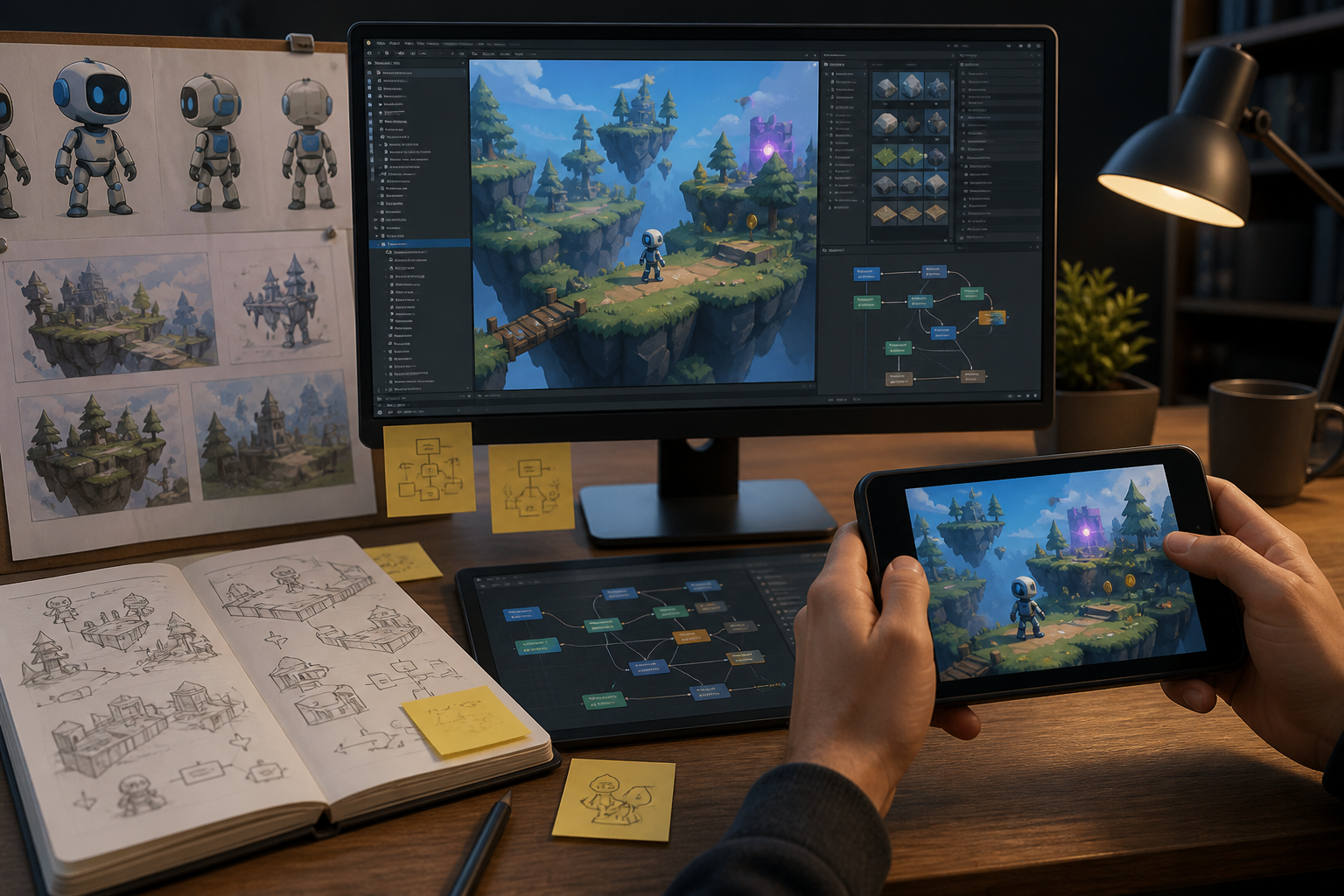
Move from a broad creation goal to a clearer playable direction faster in Seele AI.
An AI game workflow is most useful when it turns a focused design brief into a playable prototype that answers one clear product question.
The working loop
From Brief To A Reviewable Result
Name The Question
Describe the player action, uncertainty, and acceptance test. Seele structures the brief around one reviewable decision.
Generate A Focused Slice
Request one mechanic, one goal, and only the assets needed to test it. The workflow prepares a playable direction without pretending to be a full game.
Compare And Decide
Play variants while keeping the acceptance test constant. The creator can record what changed and what the test showed.
What leaves the page
What This Workflow Prepares
Playable Core Loop
A small prototype that makes the intended mechanic observable.
Variant Record
A comparison of controlled changes to pacing, controls, balance, or visual direction.
Human Review Boundary
A list of what the prototype proves and what still needs production work.
Fit and limits
Best For And What Still Needs Review
Best for
- Designer-led prototype exploration
- Testing several mechanic variants
- Playable pitch preparation
Still needs human review
- Game design and player experience decisions
- Code, assets, rights, and performance
- Production scope and release decisions
Before you start
FAQ
Can a designer create a prototype without coding?
A focused workflow can help a designer reach a playable direction, but the result still needs review of controls, state transitions, assets, and the next engineering step.
How many variants should I test?
Test a small number of variants with one acceptance test and change one major variable at a time. More output is not more evidence when every version changes the whole game.
Can AI balance a game economy?
It can propose or apply controlled tuning changes, but the team should define the target progression, play representative paths, and inspect edge cases before relying on the result.
What should a prototype prove?
It should answer the question that motivated it, such as whether a core loop is readable, fun enough to continue, or worth implementing in a production engine.
Can I use the prototype as a commercial foundation?
Only after reviewing structure, maintainability, assets, rights, performance, testing, and the work required for the intended release.
What makes iteration safe?
Keep the core loop and acceptance test explicit, record each change, review the result in the intended runtime, and preserve a known-good checkpoint.
Next move
Build AI Game Design Brief to Playable Prototype faster in Seele AI
Turn a rough creation goal into a clearer prompt, direction, and next step inside Seele AI.