
Seele AI · Create
AI Game Project Generator
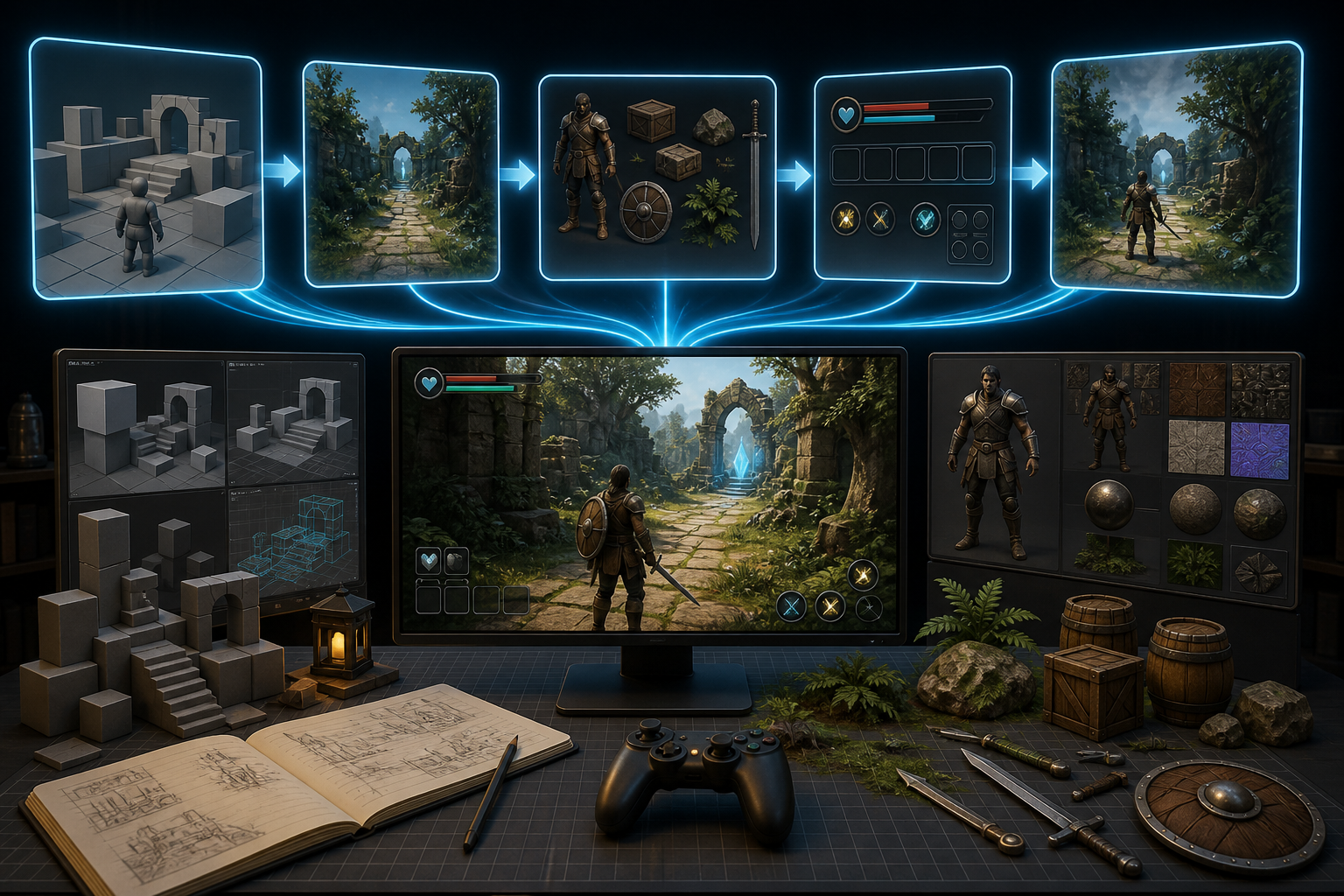
Move from a broad creation goal to a clearer playable direction faster in Seele AI.
An AI game project generator should turn a focused design brief into a reviewable project direction with scenes, systems, assets, and clear human review boundaries.
The working loop
From Brief To A Reviewable Result
Bound The Slice
Name the runtime, player goal, systems, and acceptance test. Seele structures the brief around a project boundary.
Generate A Direction
Request the smallest coherent set of scenes and systems. The workflow turns the idea into a reviewable project candidate.
Inspect And Extend
Play the slice, inspect structure, and make one controlled change. The workspace supports a clearer decision about continuation.
What leaves the page
What This Workflow Prepares
Project Boundary
A defined runtime, scene scope, core loop, and first acceptance test.
System Map
A reviewable outline for gameplay systems, assets, and project ownership.
Extension Checklist
A human review list for maintainability, rights, performance, and release fit.
Fit and limits
Best For And What Still Needs Review
Best for
- Playable vertical-slice planning
- Small project scaffolds
- Testing whether a game idea deserves more investment
Still needs human review
- Architecture and code quality
- Asset and IP review
- Performance, platform, and release validation
Before you start
FAQ
Can an AI project generator build a complete commercial game?
It can help create a concrete starting direction or prototype, but a complete commercial game still requires architecture, content production, testing, optimization, rights review, and a team-owned release process.
How should I test project complexity?
Use a vertical slice that makes each required system observable. An inventory, quest, combat system, or save system should be tested through a real player path rather than accepted because it appears in a description.
Can it extend an existing project?
Give the workflow a narrow feature boundary, the behavior that must remain stable, and a reproducible test. Review the change before expanding scope so unrelated systems are not changed accidentally.
What makes a project handoff useful?
A useful handoff identifies scenes, systems, assets, data ownership, next editing steps, and review limits. It lets another team member understand what to test and what still needs conventional engineering.
Is source-code access enough?
Source access helps, but maintainability also depends on structure, tests, naming, data flow, and the team’s ability to make the next change safely.
Who should use this workflow?
Solo creators, designers, and small teams can use it to move from a brief to a testable project direction before committing to a larger engine and production path.
Next move
Build AI Game Project Generator: From Brief to Editable Project faster in Seele AI
Turn a rough creation goal into a clearer prompt, direction, and next step inside Seele AI.