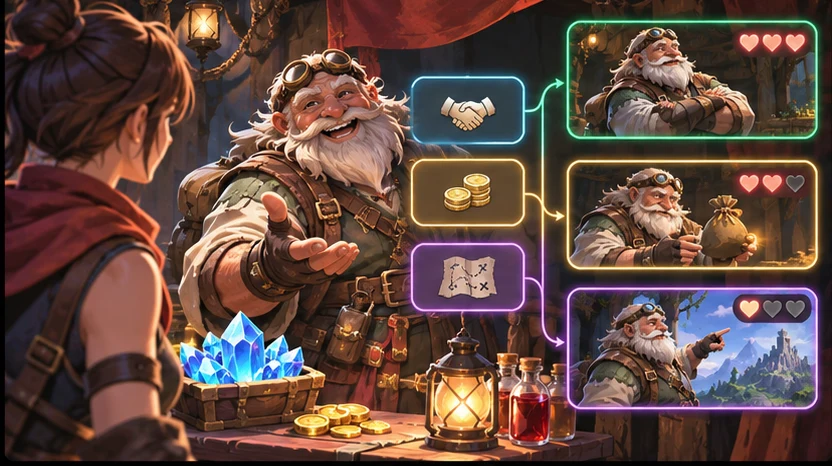

Build a focused first pass
Use your game context to prepare a branching dialogue draft with character voice, choice conditions, and outcome states.

Turn one player choice into a consequence worth seeing. Ask seeleAgent for a branching dialogue draft with character voice, choice conditions, and outcome states. Describe what you are making and how the player will use it.
Partners and teams

















How it works
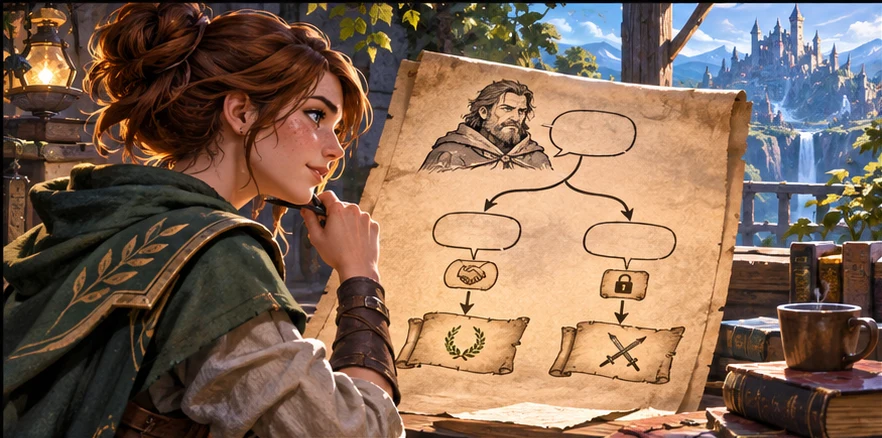
Describe the genre, camera or screen size, and what the player should notice or do. Start with a branching dialogue draft with character voice, choice conditions, and outcome states.
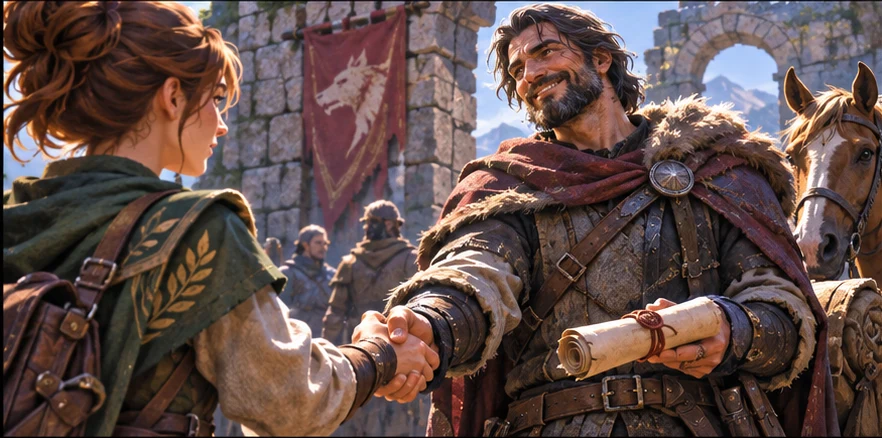
Ask for two versions around the same scene or player action. Vary one choice at a time so you can compare the result.
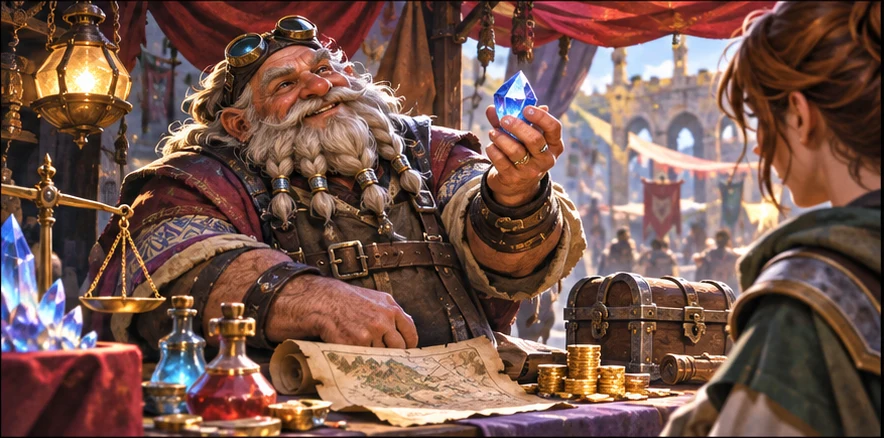
Use a small scene or sample to check your choice. The consequence follows from the player choice. Keep the decisions you want to carry into your next pass.
Pick a starting point
Use a starting prompt from this tool and adapt it to your own game.
Generate a branching merchant dialogue with trust states, barter choices, and quest hooks.
Why SEELE
Use your game context to prepare a branching dialogue draft with character voice, choice conditions, and outcome states.

Keep the same game scene and compare two approaches before deciding what to make.

Set one acceptance check for the next pass. The consequence follows from the player choice.
FAQ
It helps turn a text prompt into branching NPC conversations, choice consequences, and implementation notes that you can refine inside Seele AI before implementation.
The hero handoff opens /workspace and passes your textarea content as the prompt query parameter.
Yes. Seele AI supports Unity and Three.js workflows, so the generated plan can include engine-ready handoff notes.
Review gameplay balance, visual quality, naming, licensing needs, and any engine-specific constraints before shipping.
Describe the game, the moment the player sees or uses the result, and the constraint that matters most. Ask for a branching dialogue draft with character voice, choice conditions, and outcome states.
Try it in a small scene or review it from the player camera. For the first example, check that the consequence follows from the player choice.
Yes. Pick one small scene or interaction and describe what the player should see or do. You can revise the prompt as the idea becomes clearer.
Bring a game idea to Workspace and work through a branching dialogue draft with character voice, choice conditions, and outcome states.
Write a game prompt