A small level with player, platforms, collectible, hazard, exit gate, and readable camera framing.
levelplatformsexit
1 day playable demo · for studios, publishers, and UA tests
Use Seele to turn a mechanic, ad idea, or asset direction into a focused 2D playable package: fun contract, real asset manifest, simple controls, build steps, and browser QA targets.
Mechanic brief · Real 2D assets · Browser-playable demo · QA checklist
Example output · 1 day playable demo
This URL can keep the HTML5 keyword, but the useful page promise is concrete: a small browser-playable demo with a visible scene, controls, win/fail states, and export target.
Casual puzzle platformer · first playable in one day · keyboard and mobile tap · start, win, fail, restart.
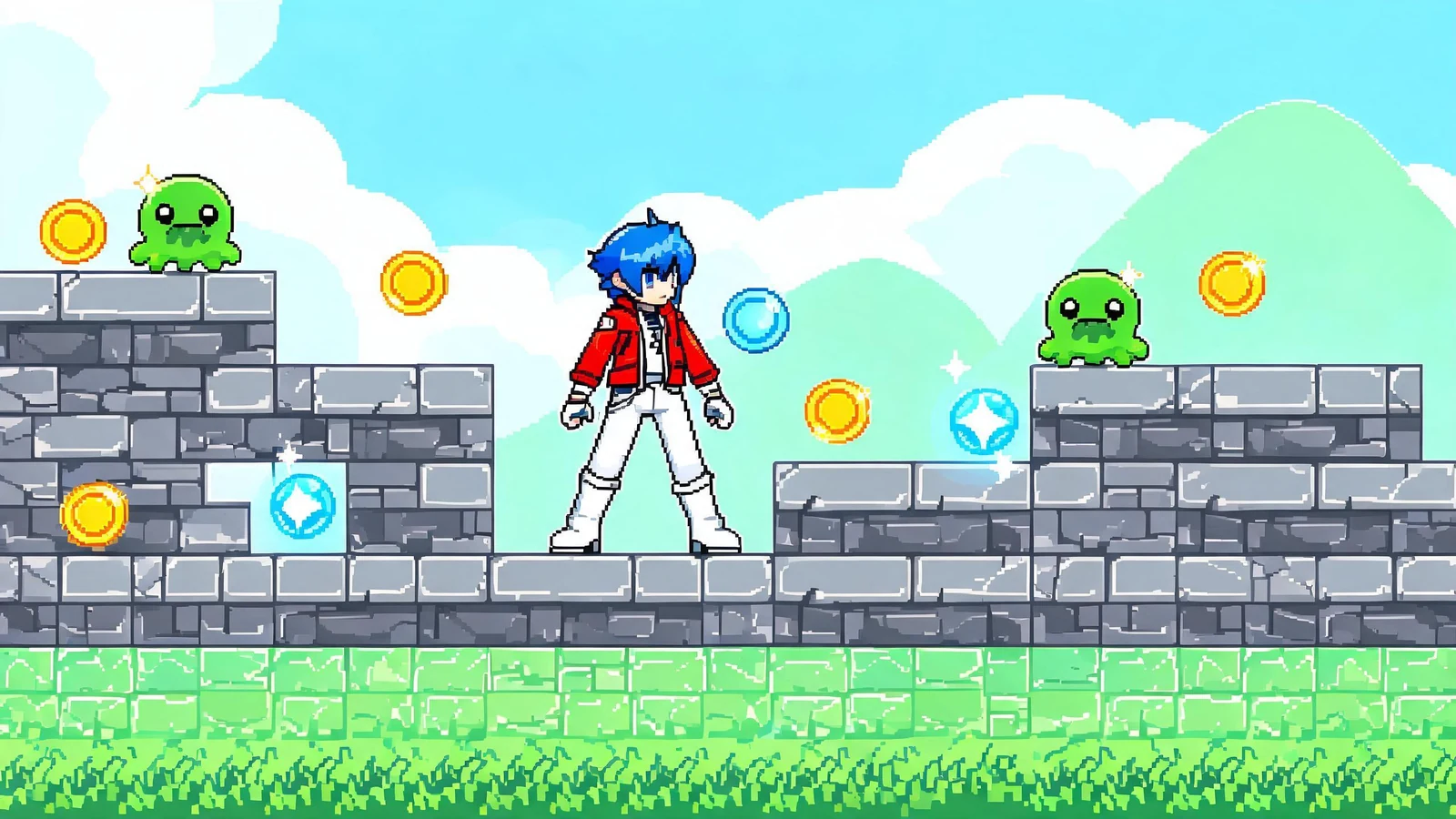 SCORE 1280RESTARTPlayable level
Browser-playable level mock: move, jump, collect, avoid hazard, reach the exit, restart.
A small level with player, platforms, collectible, hazard, exit gate, and readable camera framing.
The demo shows the control surface clearly so teams can test it on desktop and mobile.
The deliverable is useful because it includes the basic states needed to actually test a loop.
Workflow
Choose the mechanic, audience, session length, platform context, and what decision the demo should inform.
Create controls, objective, opposition, fail/retry, asset needs, UI states, and browser output requirements.
Use the package to build, test, or hand off a focused browser-playable demo instead of a vague concept deck.
Positioning
Game studios, publishers, UA and creative teams
Test a mechanic or creative direction before production
Playable contract, asset manifest, browser QA checklist
Who it is for
HTML5 is only the delivery format. The actual job is faster validation: can the mechanic, character, or creative angle become a playable loop worth testing?
Examples
Need a mobile web demo for a casual puzzle mechanic with a 20-second first session.
Three-level browser-playable flow with hint state, success state, failure state, asset checklist, and QA target.
Validate the puzzle loop internally or with early users.
Need a fast test for a character reveal that may become a playable ad.
Tap challenge with character sprite, score feedback, reveal reward, end-card CTA, and mobile controls.
Decide whether the creative direction deserves production budget.
Output
The strongest page here is not “H5 because H5”. It is a one-day playable demo promise: real 2D assets, a fun loop, focused scope, and enough browser verification to make a product or creative decision.
Open Workspace →FAQ
No. The delivery is browser-playable, but the useful promise is a focused 2D playable demo with real assets, clear controls, and browser verification. HTML5 is a distribution format, not the whole product value.
Yes. Seele AI Workspace is designed around reviewable, shareable, downloadable, and exportable outputs, so teams can move useful prototypes, playable packages, and assets into testing, creative review, or production handoff.
Seele is strongest at early playable prototypes, 2D browser-playable mini games, playable ad variants, and creative validation. Teams can use the output as a fast starting point before investing in a full production build.