
Seele AI · Game Prototype Builder
Build a playable Dungeon Survivors arena
Describe the hero roster, dungeon pressure, auto-attacks, and upgrade loop. Then test a focused Three.js prototype before expanding the game.
Playable proof
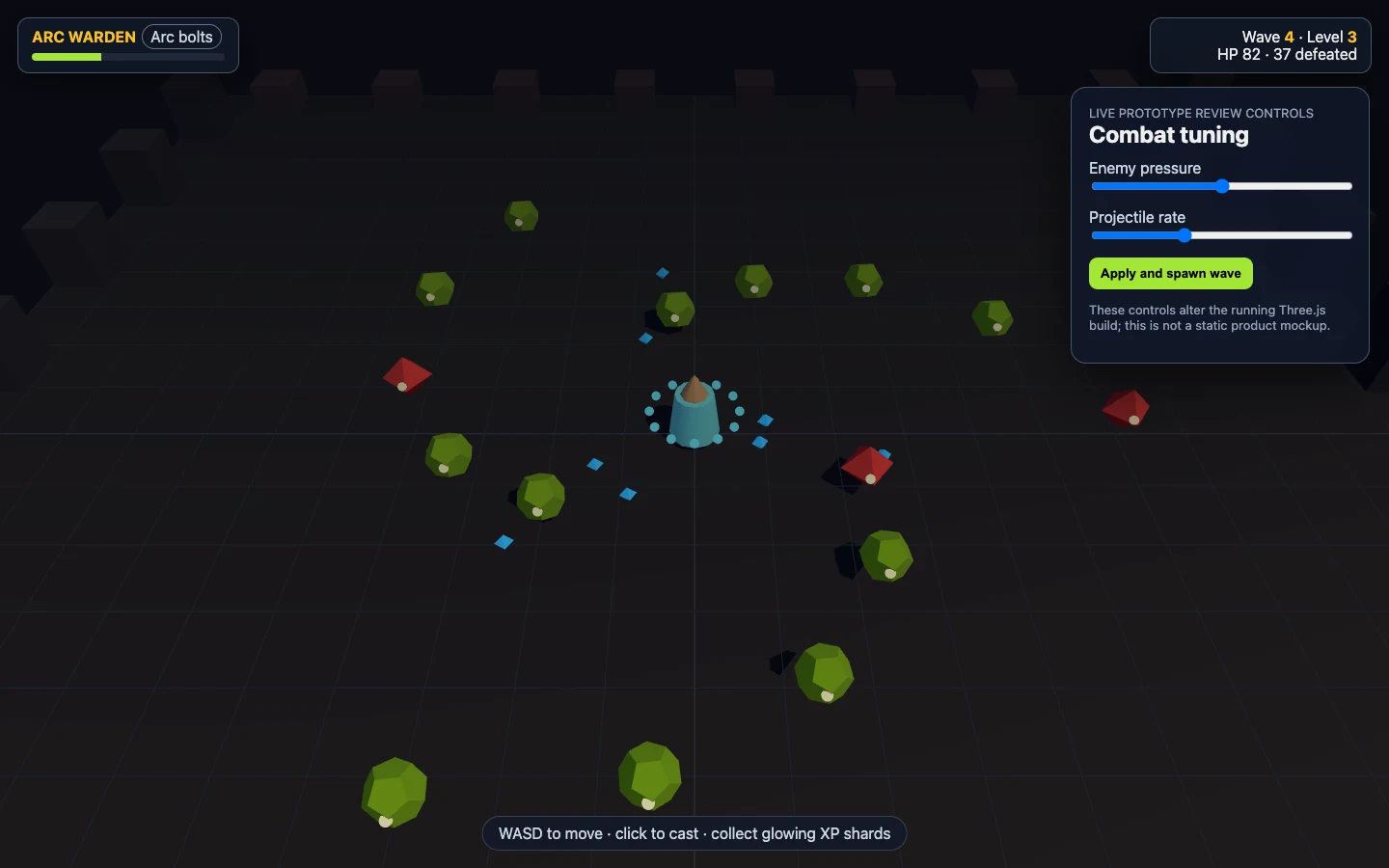
Tune the arena while the build is running
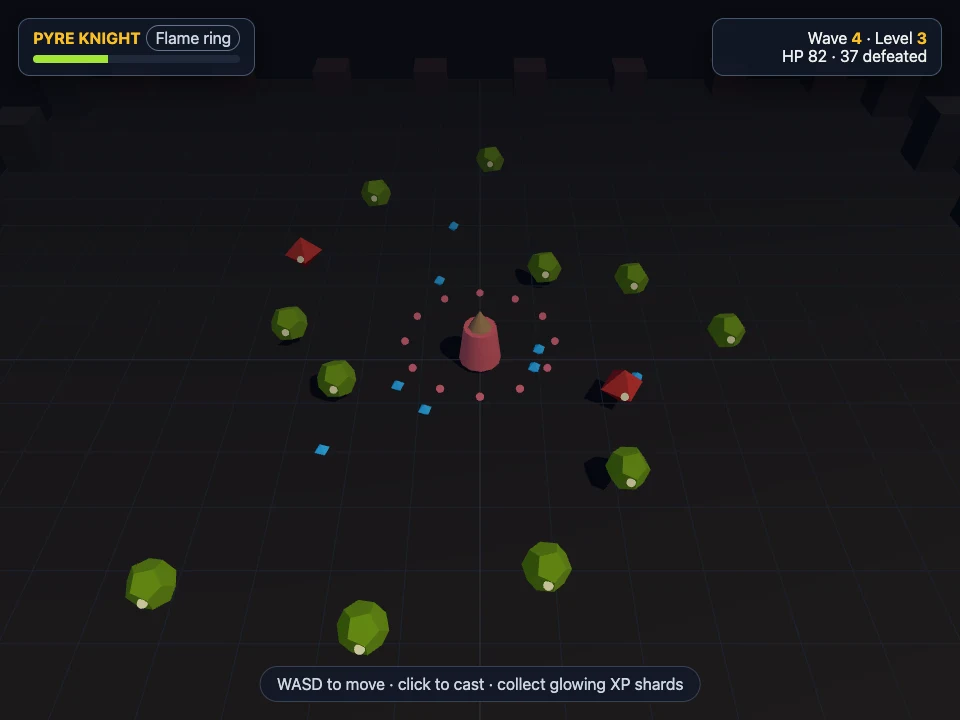
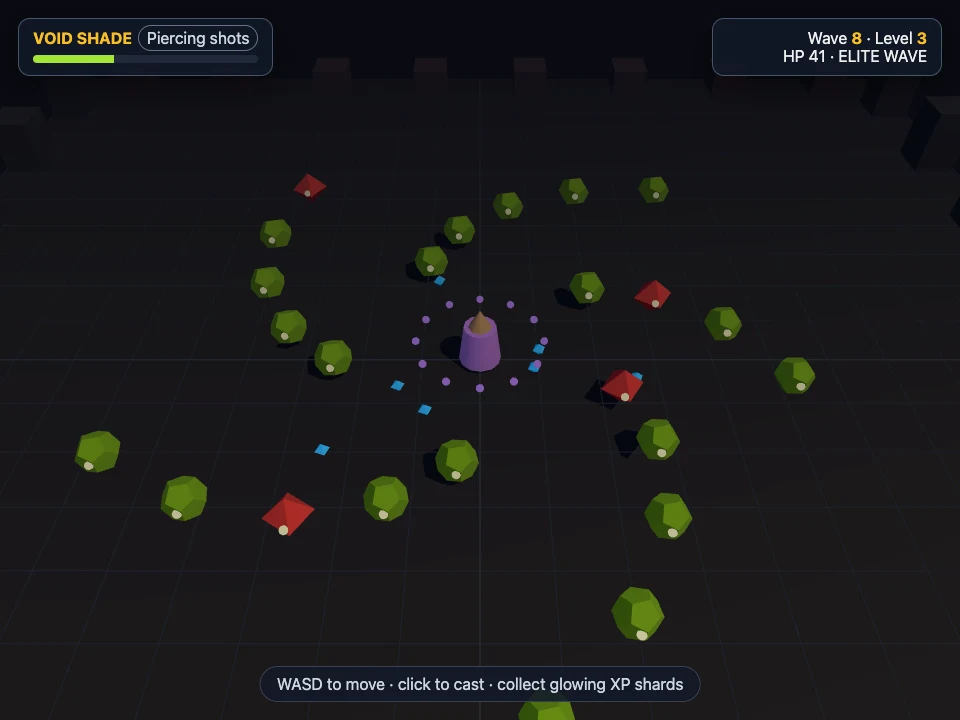
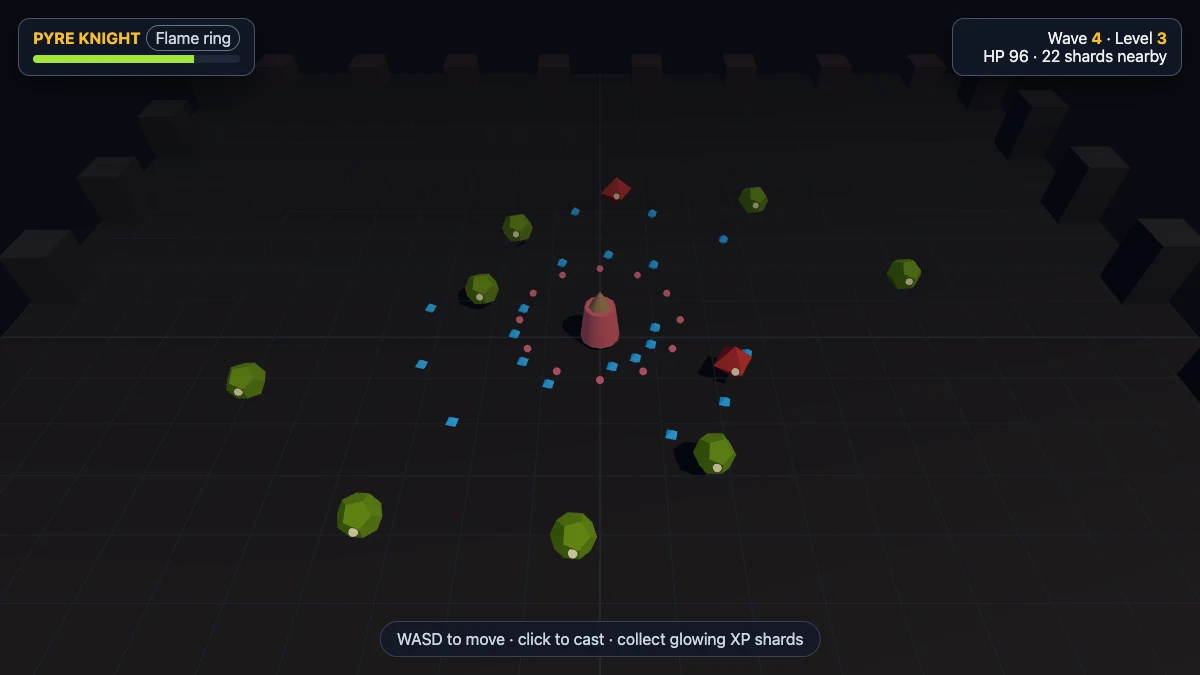
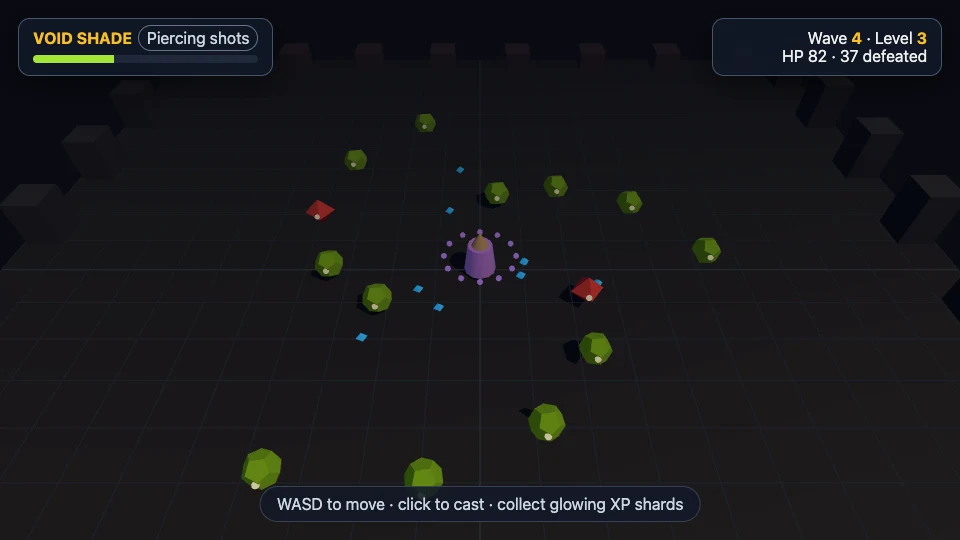
Review enemy pressure, projectile rhythm, movement, and pickups in a functioning prototype. The proof shown here is an original local Three.js build created for this page, not a shipped customer game or a production-ready result.
Core loop first
Test the decisions that make survivor combat readable
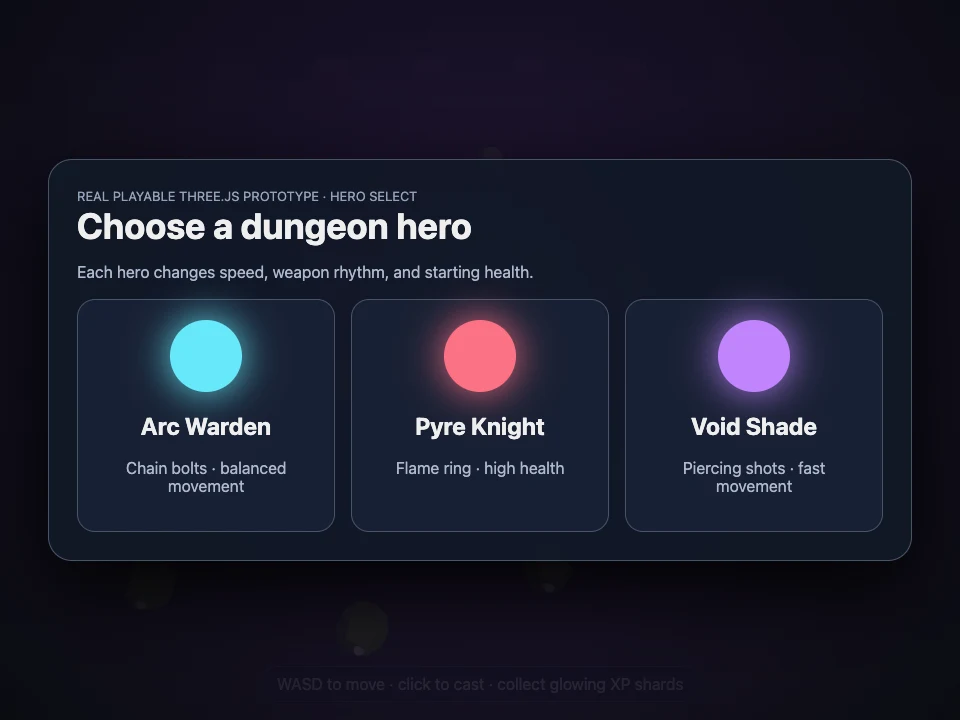
Start from heroes with different colors, weapons, movement profiles, and health assumptions.
Move through a live arena while enemies close in, projectiles fire, and XP shards accumulate.
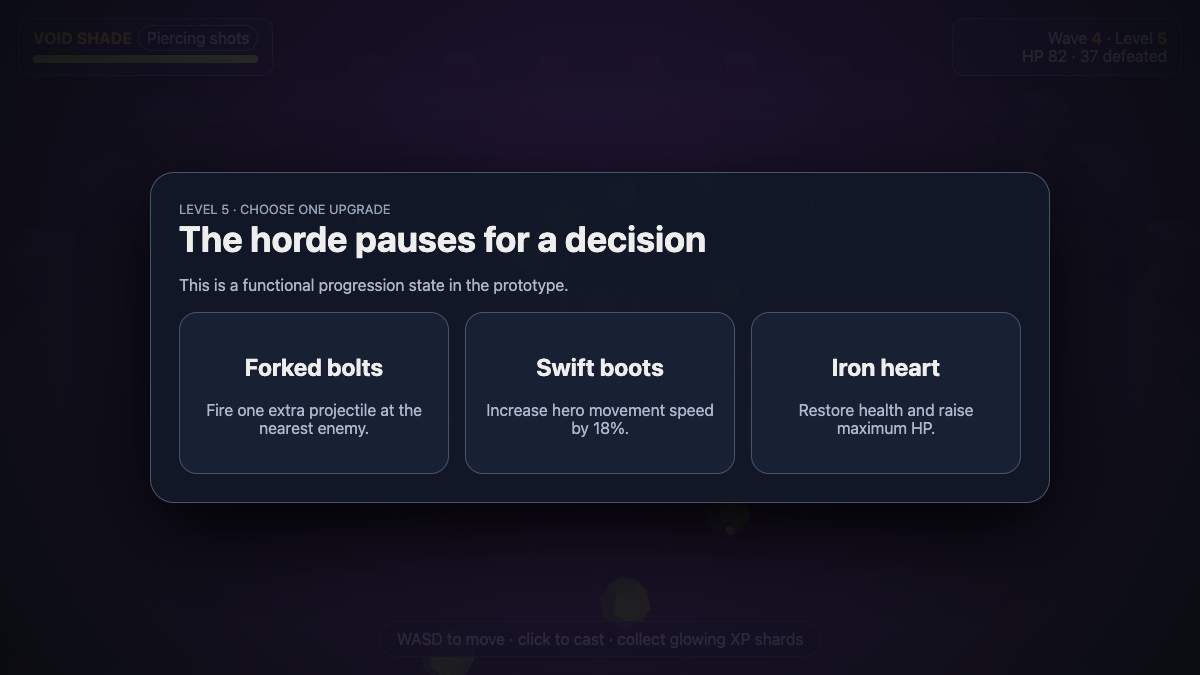
Pause at upgrade choices and inspect whether each option creates a meaningful next decision.
Independent signals
Trust is part of the build.
Prototype two critical moments
Validate the arena and the upgrade break
Prompt to playable build
Keep the first Dungeon Survivors scope testable
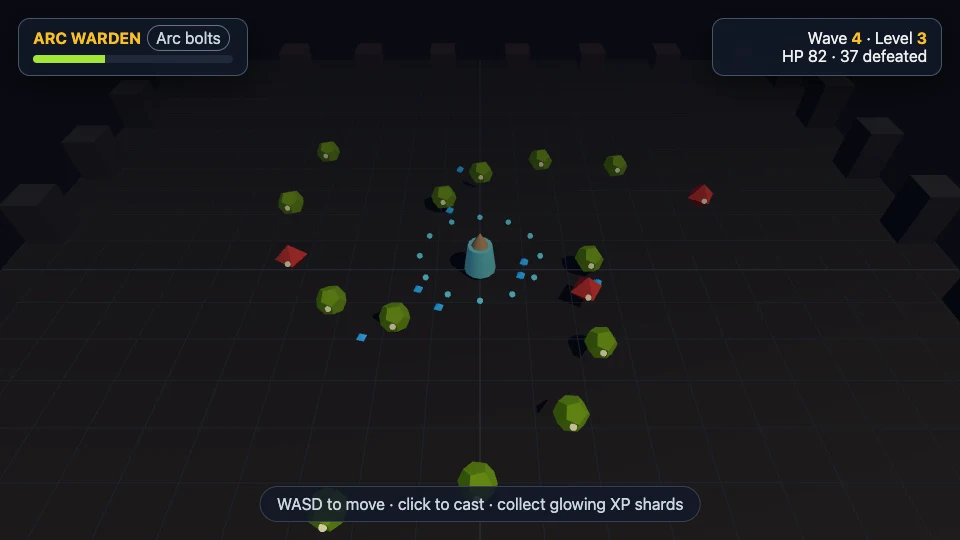
Define the hero roster
Describe each hero's role, weapon rhythm, movement feel, and visual identity before expanding content.
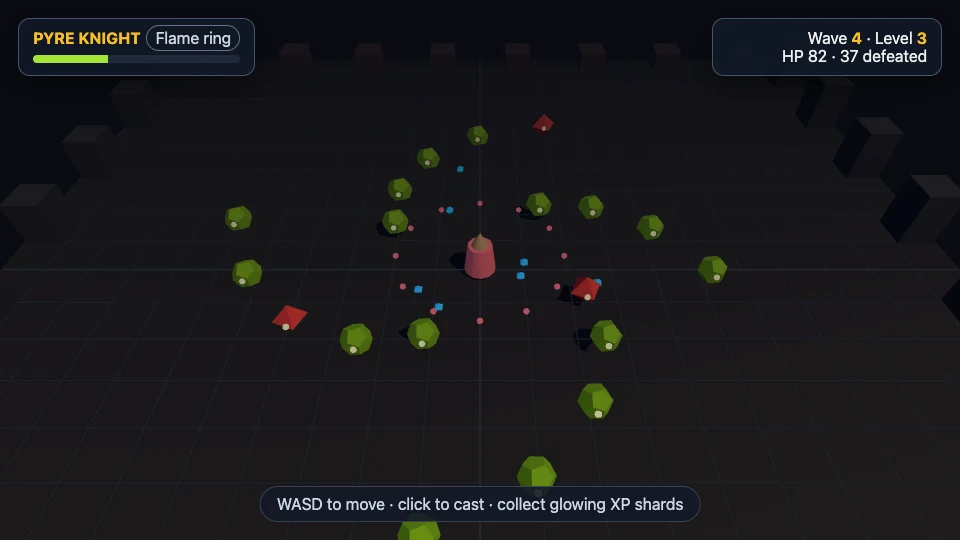
Shape the survival loop
Test movement, enemy approach, projectiles, pickups, wave pressure, and feedback in one compact arena.
Iterate from observed play
Use the running build to decide what to tune next instead of treating the first generation as final.
Dungeon Survivors FAQ
Questions before you build
What is a Dungeon Survivors game prototype?
It is an early playable arena build used to test movement, enemy pressure, automatic or repeated attacks, pickups, and upgrades. A narrow prototype helps reveal whether the core survival loop stays readable and satisfying before the project grows. The screenshots on this page show an original proof prototype, not a finished customer game.
How do I prototype a Three.js dungeon survivor game?
Start with one arena, a small hero roster, one enemy approach behavior, a clear attack rhythm, XP pickups, and a single upgrade pause. Describe those mechanics in a focused prompt, play the first build, then adjust only the systems that affect the core loop. Production systems such as persistence, performance budgets, full balance, and release packaging still need deliberate engineering.
What should the hero selection include?
Each hero should communicate a different play style through weapon behavior, movement, health, and visual identity. A compact three-hero roster is enough to test whether choices feel different without creating a large content burden. Final balance requires repeated playtesting; labels alone do not prove distinct gameplay.
What can I test in a survivor-style dungeon arena?
You can test combat readability, enemy density, movement space, pickup visibility, attack rhythm, wave escalation, and upgrade choices. These are useful prototype questions because they can be observed directly in a short playable session. A compact arena does not validate a full metagame, economy, narrative, or long-term retention model.
Is the generated prototype production-ready?
No. A prototype is evidence for the next design decision, not a finished or automatically publishable game. It can help you find useful mechanics and obvious problems while changes are still inexpensive. Human review remains necessary for quality, rights, accessibility, safety, performance, monetization, and release requirements.
How do I start a Dungeon Survivors build in Seele AI?
Open the Seele workspace and describe the smallest playable arena that would prove your idea. Name the heroes, dungeon mood, enemy movement, attack behavior, pickup, upgrade choices, and the test outcome you want to observe. Keep the first scope narrow so the core loop is visible instead of buried under content.
From idea to first result
Start building with Seele AI
Turn your idea into an interactive experience you can test and improve.