
Godot stealth workflow
Use a Godot stealth game generator to plan a cat-burglar loop
A Godot stealth game generator helps you frame guard awareness, quiet routes, treasure objectives, and a reviewable prototype direction.
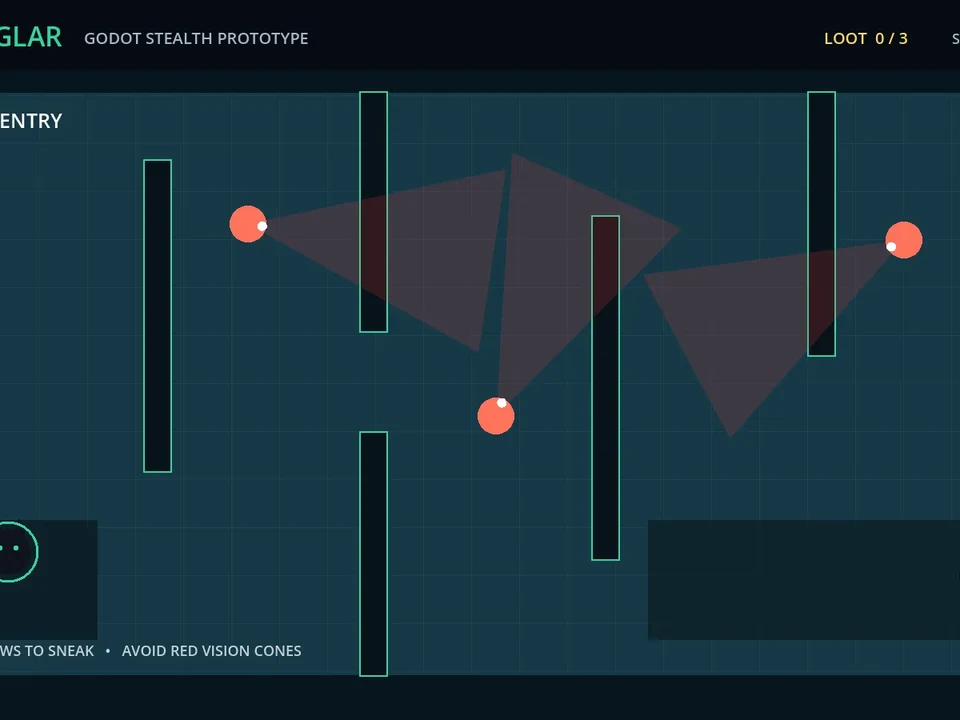
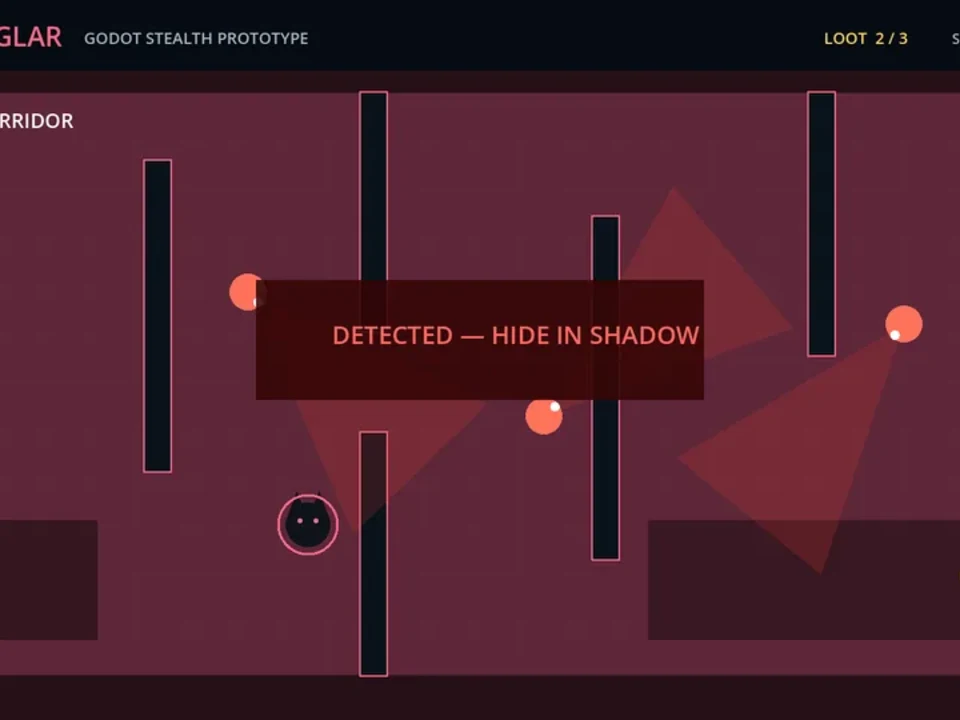
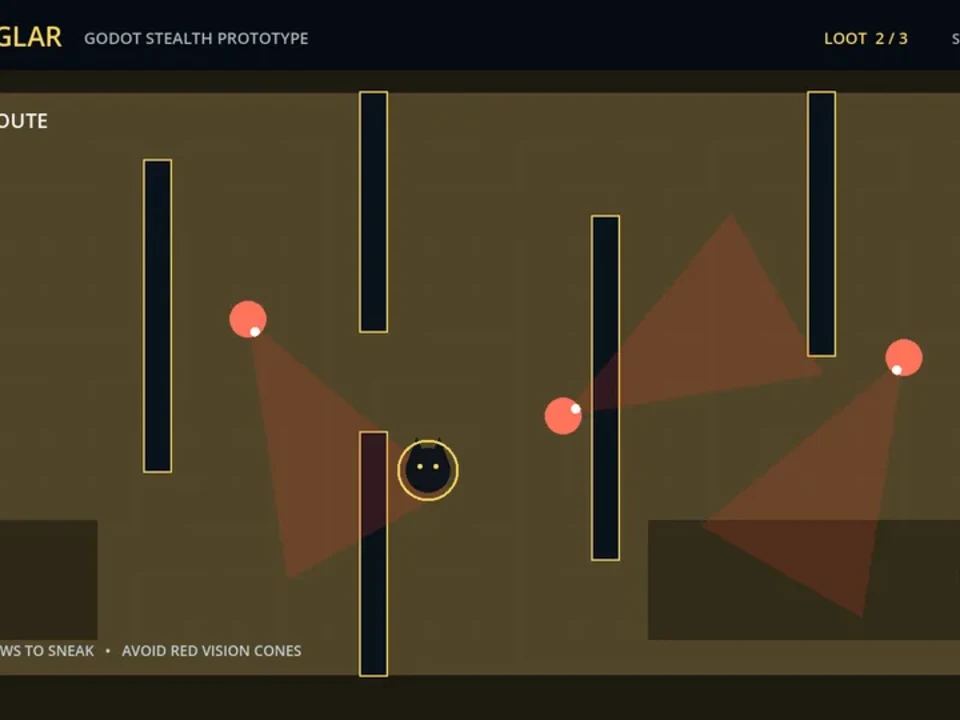
Visible result
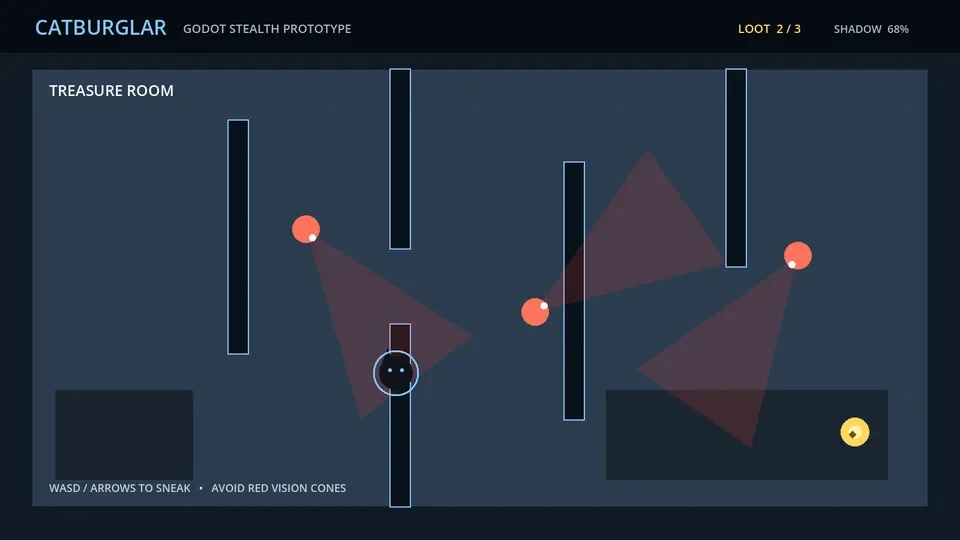
Make the stealth loop reviewable
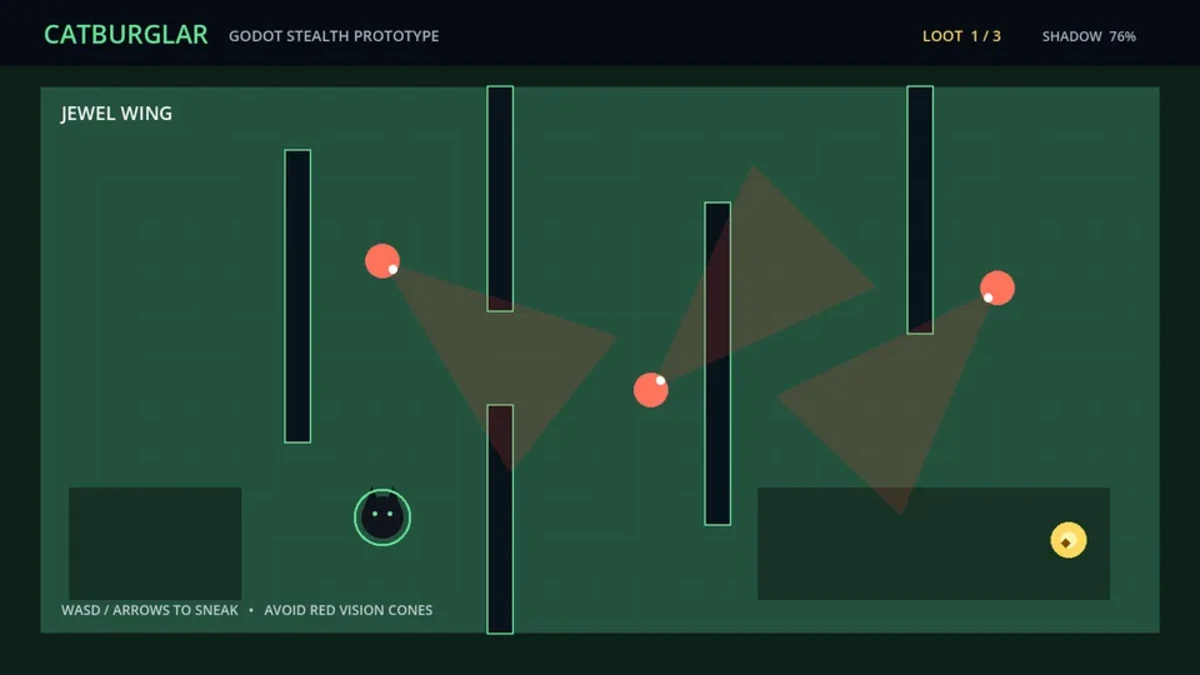
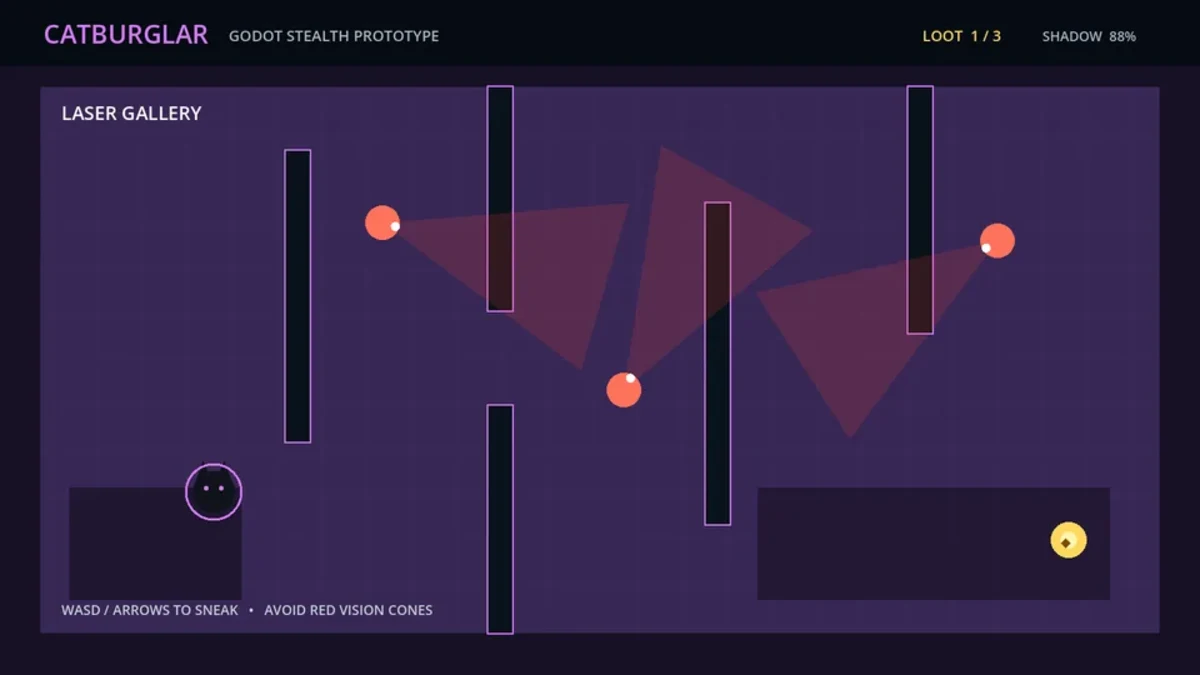
Inspect guard feedback, route choices, objectives, and recovery states before expanding a Godot stealth prototype.
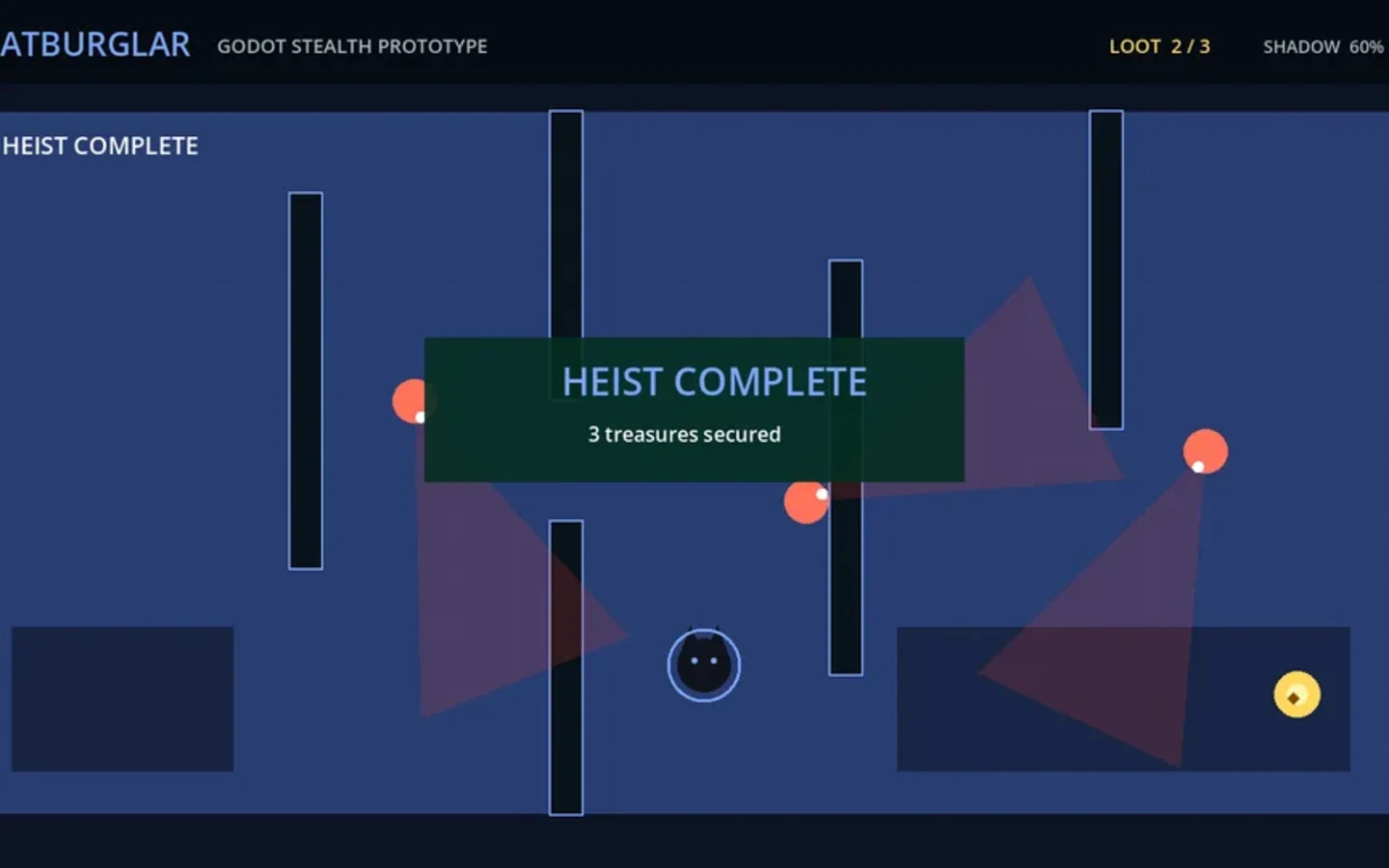
Focused workflow
Move from a concise brief to a reviewable next step
Describe patrols, vision cones, shadows, alarms, and detection recovery in one focused brief.
Tie treasures, routes, extraction, and failure feedback to a compact player goal.
Review and refine the system choices before investing in a larger implementation.
Independent signals
Trust is part of the build.
Built for the next step
Keep the important decisions visible
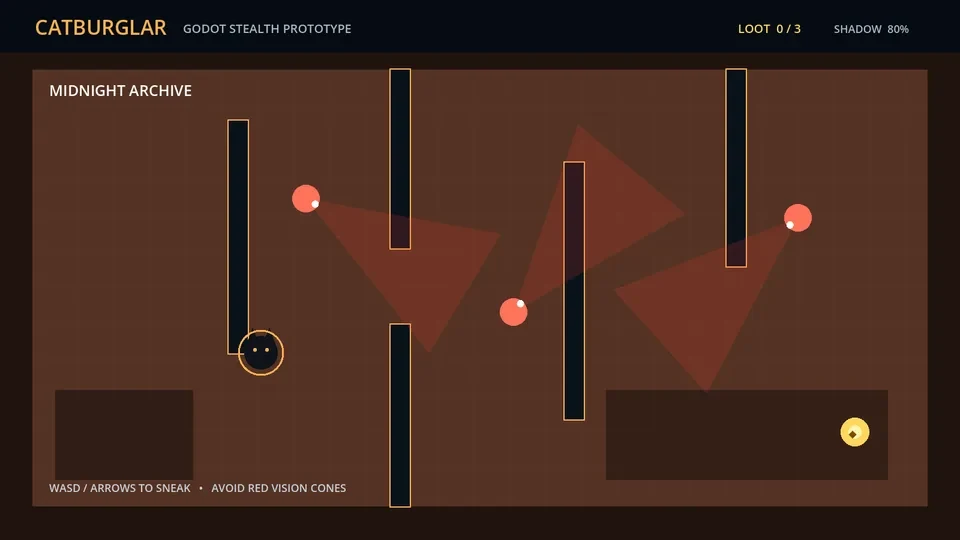
Stealth-system briefs
Set guard awareness, cover, objectives, and visible consequences deliberately.
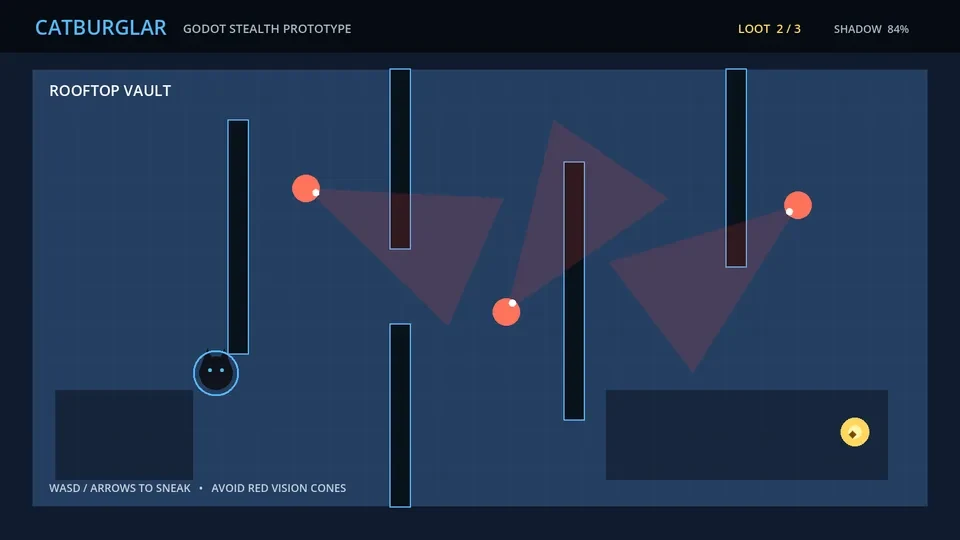
Focused level concepts
Keep rooms, routes, and goals small enough to discuss and test as one loop.
Human-reviewed iteration
Use the workspace direction as a draft, then validate behavior and balance in a real Godot build.
Questions before you start
Godot stealth game generator FAQ
What is a Godot stealth game generator?
A Godot stealth game generator is a workflow for turning a concise stealth idea into reviewable prototype direction. It can help organize guards, routes, objectives, detection feedback, and escape conditions in Seele AI. It does not replace a complete Godot implementation or hands-on stealth playtesting.
How does a Godot stealth game generator workflow work?
A Godot stealth game generator begins with the player goal, guard awareness rules, cover or route choices, and a failure or recovery state. Review the focused output, then revise the brief as the loop becomes clearer. Developers still need to implement and test the real game behavior in Godot.
What do I need before using a Godot stealth game generator?
You need a defined player objective, a small playable area, and clear rules for guard awareness, cover, detection, and success. State the intended scope before generating a concept. Asset licensing, Godot compatibility, controls, balance, and accessibility still need technical and human review.
What can I use a Godot stealth game generator for?
Use a Godot stealth game generator for a laser gallery, rooftop vault, archive infiltration, treasure-room puzzle, alert-recovery corridor, or compact escape route. It is useful for narrowing a stealth loop before production work begins. It should not be used to claim a finished or fully balanced game.
What are the limits of a Godot stealth game generator?
A Godot stealth game generator cannot guarantee bug-free guard AI, balanced detection, optimized performance, or a complete Godot project. It does not replace player testing, implementation review, asset checks, or platform compliance work. Human developers must validate the final game.
How do I get started with a Godot stealth game generator?
Start with one player goal, one guard-awareness system, one route choice, and one clear escape or completion state. Generate a focused direction, inspect it in Seele AI, and revise it before implementation. Test the actual Godot build with players before expanding scope.
From idea to first result
Start building with Seele AI
Turn your idea into an interactive experience you can test and improve.