Key takeaways
- If you use existing anime or video game characters in an AI-generated fan game, assume you may be using someone else’s protected expression and brand identifiers. That can create copyright, trademark, music, artwork, asset, derivative-work, and platform-enforcement risks. “Fan-made,” “free,” or “AI-generated” does not automatically remove those risks. The safest default is to build with original characters, setting, names, art, music, code, and assets—or obtain clear permission—and keep a source and license record for every included element. This is general information, not legal advice; rules and enforcement vary by jurisdiction. Consult a qualified lawyer before release, monetization, or a project that closely resembles a known brand.
If you use existing anime or video game characters in an AI-generated fan game, assume you may be using someone else’s protected expression and brand identifiers. That can create copyright, trademark, music, artwork, asset, derivative-work, and platform-enforcement risks. “Fan-made,” “free,” or “AI-generated” does not automatically remove those risks. The safest default is to build with original characters, setting, names, art, music, code, and assets—or obtain clear permission—and keep a source and license record for every included element. This is general information, not legal advice; rules and enforcement vary by jurisdiction. Consult a qualified lawyer before release, monetization, or a project that closely resembles a known brand.
What makes an AI fan game legally exposed
A fan game usually combines several rights layers. A character’s visual depiction, written biography, distinctive costume, story setting, dialogue, illustrations, and game assets may be protected expression. The U.S. Copyright Office describes a derivative work as one based on one or more preexisting works, including adaptations and other forms in which a work may be recast, transformed, or adapted. A new game that reproduces recognizable characters or story elements can therefore raise derivative-work questions even when its code and some artwork are new.
Names, titles, symbols, and other source-identifying elements can also create trademark concerns. Trademark analysis is about whether a use may confuse people about source, sponsorship, affiliation, or approval; the USPTO explains that trademarks identify and distinguish goods or services. A disclaimer may help communicate that a project is unofficial, but it is not a permission substitute and does not decide the facts. Jurisdiction, the exact use, and the audience all matter.
The rights checklist: character, code, art, music, and assets
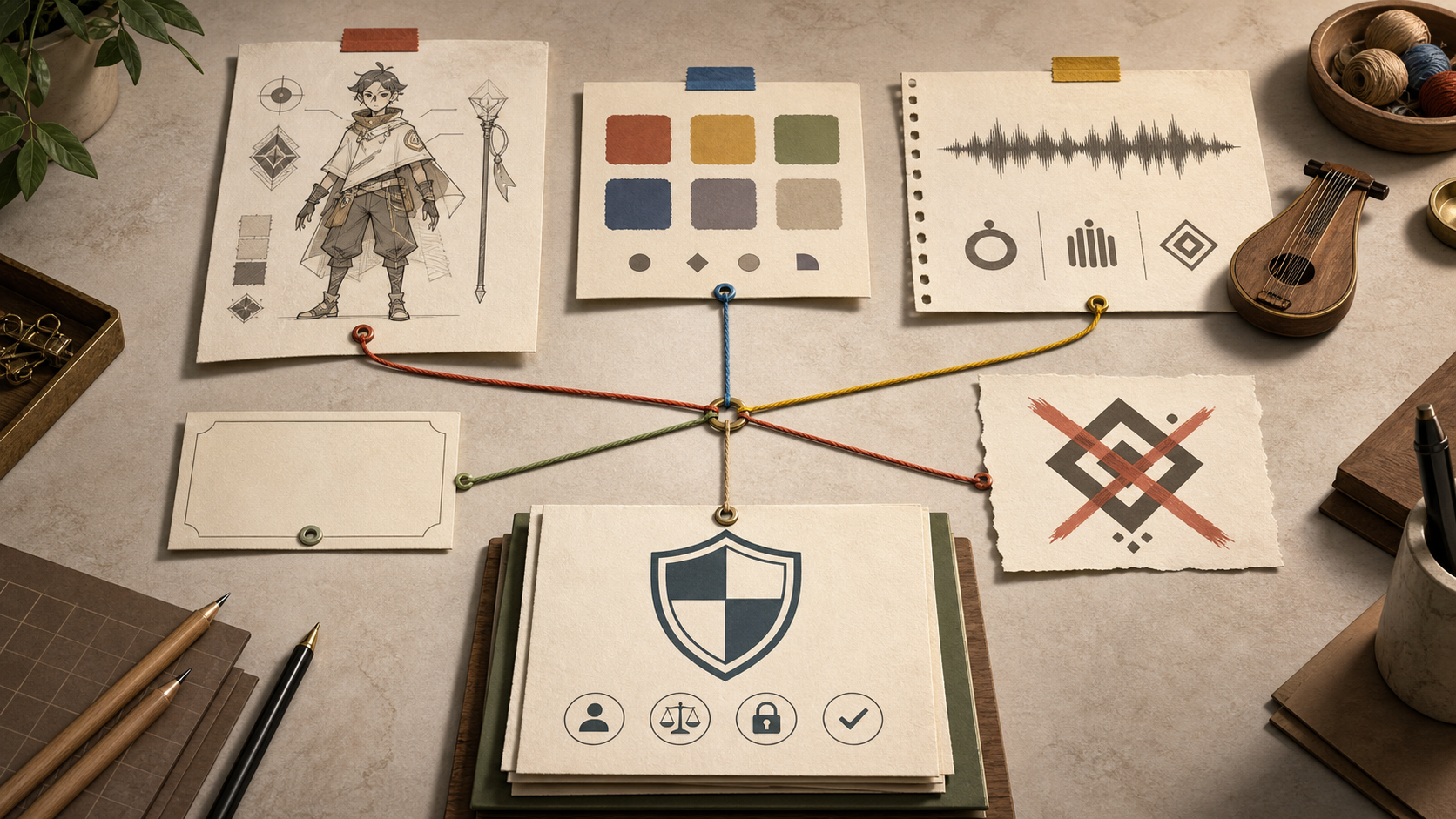
Review the whole build, not just the prompt. Ask whether you copied or closely recreated character art, logos, title treatments, maps, creatures, dialogue, plot, sound effects, music, fonts, UI motifs, 3D models, textures, sprites, screenshots, or code. Music and sound recordings can involve separate works and owners; a track that came with a reference video is not automatically cleared for your game. Third-party packs, datasets, plugins, and model terms may impose additional conditions.
Separate ownership from permission to use. Finding an image online, buying a game, or owning a subscription does not normally mean you may redistribute the underlying artwork or sound in a new game. A model or asset marketplace license may cover some uses while excluding trademarks, recognizable people, resale, or training. Check whether collaborators supplied material under compatible terms, too. A clean-room replacement pass is often easier to document than trying to prove that a pile of loosely sourced references is harmless. When in doubt, remove the item, replace it with an original, or obtain written permission that names the intended use.
Keep an inventory with the asset name, creator or source, URL, date obtained, license or permission, allowed media, territory, attribution requirement, and any AI-use restriction. If a source is unknown, treat the asset as unresolved rather than assuming it is public domain. “I changed the prompt” is not a provenance record.
Why AI generation does not make third-party rights disappear
AI can change how content is produced, but it does not by itself grant permission to reproduce a protected character, mark, music recording, or artwork. A generated image that is recognizably based on a known character may still create practical clearance and takedown exposure. Training and output questions can also be fact-specific and jurisdiction-dependent; do not treat a model’s output as a rights opinion.
Avoid rules such as “change 10%” or “add enough differences.” There is no universal percentage that makes a use safe. Also avoid assuming that a model’s terms transfer rights in third-party material or cover your downstream distribution. Read the relevant model, asset, music, and platform terms, and preserve the prompts and source references used during production.
Commercial and free projects: different exposure, not a safe/unsafe switch
Charging money, taking sponsorship, selling items, running ads, or using a familiar mark to promote the game can increase practical risk and make permission more important. But a free download is not automatically safe. Noncommercial status can be one fact in a legal analysis, not a blanket exemption. Likewise, calling a project a tribute or fan work does not prevent a rights holder or platform from objecting.
Fair use is a U.S. doctrine assessed case by case, including purpose, nature, amount, and market effects; the Copyright Office explains its basic factors but does not turn them into a guaranteed fan-game license. Other jurisdictions have different exceptions and procedures. Do not promise a fair-use defense without a fact-specific legal review.
Platform takedowns and a safer release workflow
Even if you believe a defense may exist, a host, storefront, video service, or social platform may receive an IP complaint and restrict, remove, or suspend content under its own policy and process. A takedown is a distribution problem before it is a final court decision, and an appeal may require evidence of permission or a defensible basis. Check the current official policy for every service you plan to use.
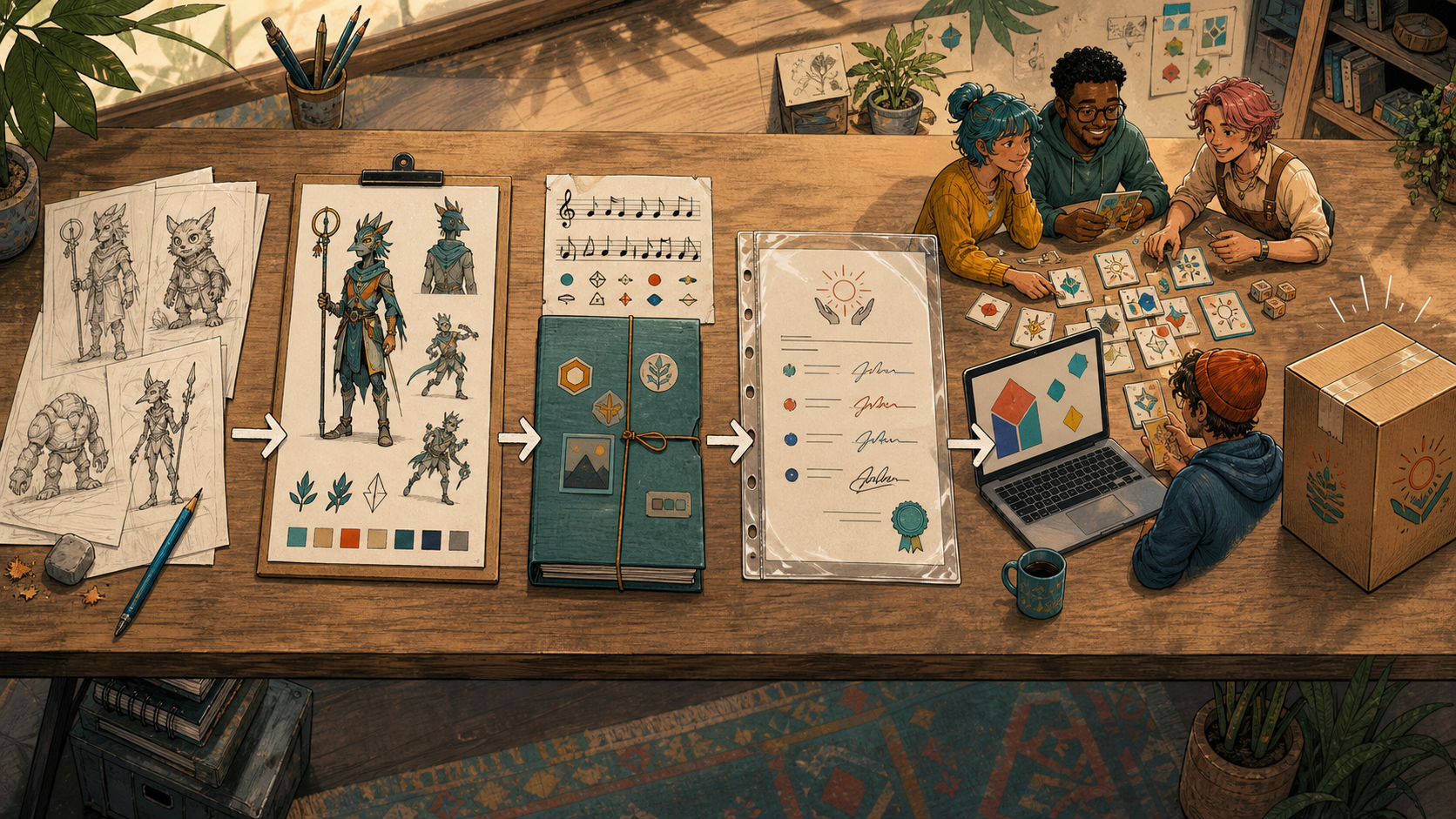
A safer workflow is: (1) list every recognizable reference and third-party asset; (2) replace franchise characters, names, logos, music, and art with original equivalents wherever possible; (3) obtain written, scope-specific permission for anything retained; (4) run trademark and copyright review in the jurisdictions and channels that matter; (5) remove unresolved material before launch; (6) prepare a credits, license, and takedown-response file. Keep project versions so you can identify and remove one asset without rebuilding blindly.
Decision guide: when to stop and get legal review
Use the original-work path when you can: original characters, worldbuilding, names, logos, music, sound, code, and visuals reduce dependency on third-party rights, though they do not eliminate every legal issue. If you retain a reference, ask whether permission expressly covers AI-assisted creation, game distribution, promotion, commercial use, territories, duration, edits, and third-party materials. Save the signed permission and any limitations.
Pause for qualified counsel when the game is being monetized, funded, widely promoted, submitted to a store, built around a recognizable franchise, or using a name or logo that could imply endorsement. Counsel can assess local law and your specific facts.
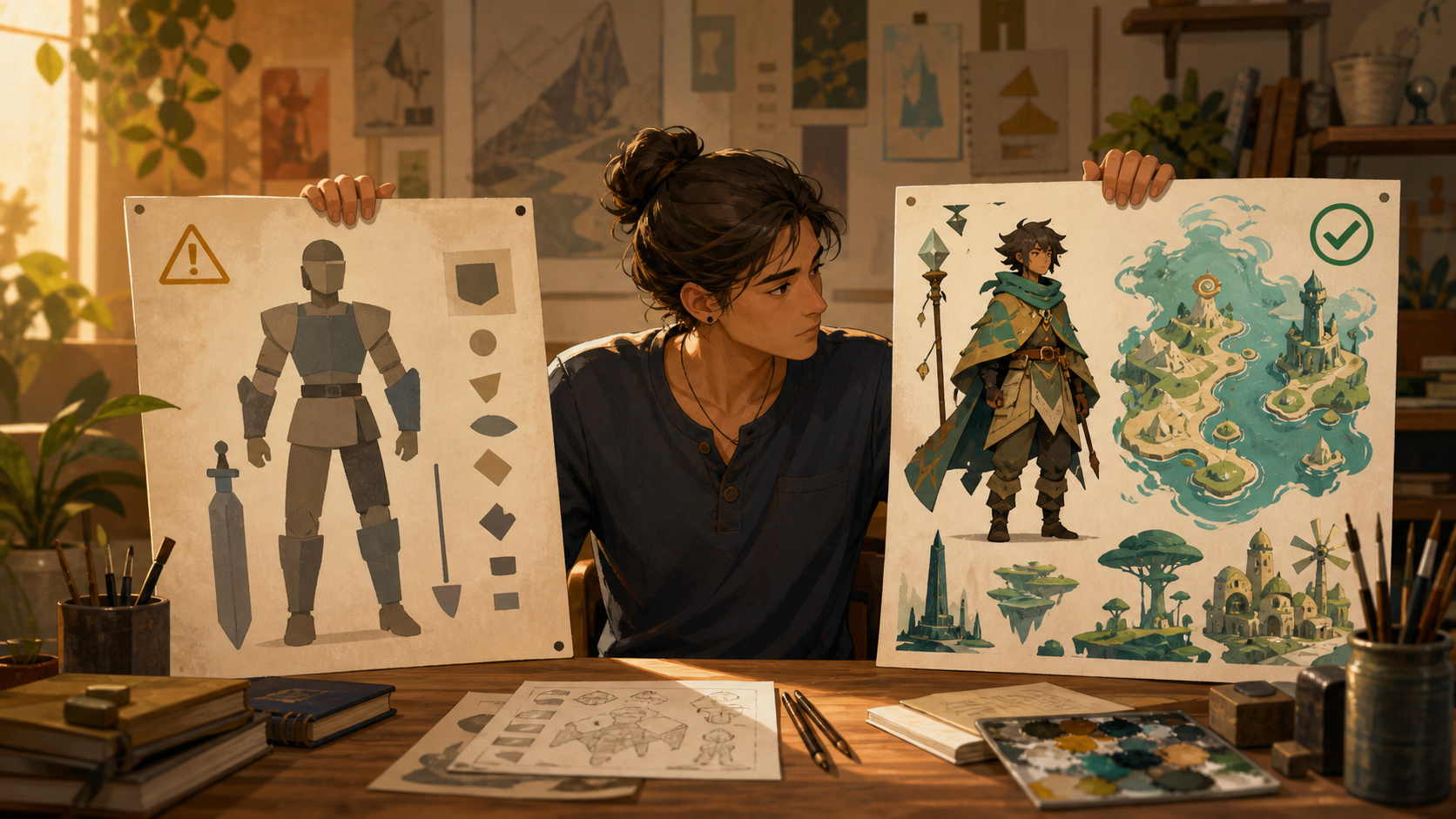
A practical red-flag test is recognizability: if a reasonable player would identify the source from the combined name, silhouette, costume, backstory, sound, or presentation, do not rely on cosmetic edits. Record the decision to replace it and why. For a team, assign one person to approve incoming assets and one release checkpoint that can block unresolved items. This is process control, not a legal conclusion, but it makes gaps visible before a public launch.
SEELE AI can support creative workflows, but it is not a substitute for rights clearance or legal advice.
Frequently Asked Questions
Is a free fan game automatically legal?
No. Free distribution may change the facts, but it does not automatically authorize copyrighted characters, music, art, code, or trademarks. A rights holder or platform may still object, and the applicable exceptions differ by jurisdiction. Treat noncommercial status as one consideration, not a blanket safe harbor.
Does AI-generated art avoid copyright infringement?
No. AI generation does not automatically erase third-party rights. If an output reproduces or closely evokes protected expression, or uses a confusingly similar brand identifier, risk can remain. Review the output, model terms, source materials, and intended distribution rather than relying on the label “AI-generated.”
Can a disclaimer protect my fan game?
A disclaimer can clarify that a project is unofficial and may reduce some confusion, but it is not permission and cannot resolve every copyright or trademark question. It should not be presented as a legal shield. Obtain authorization or use original material when release or monetization matters.
How much must I change a character to make it safe?
There is no universal percentage, checklist, or number of edits that guarantees safety. The analysis is fact-specific and jurisdiction-dependent. Replacing the character’s name while preserving distinctive expression may not solve the issue. The safer default is an independently designed character and setting, reviewed before publication.
What should I document before release?
Keep an asset ledger naming each character, image, model, song, sound, font, code component, and dataset reference; record its source, license or permission, dates, scope, attribution terms, AI restrictions, and intended channels. Preserve prompts, approvals, credits, and replacement decisions so unresolved material can be traced and removed.
When should I speak with a lawyer?
Seek qualified legal advice before monetization, sponsorship, store submission, major promotion, use of a recognizable franchise, or use of a similar name or logo. A lawyer can evaluate the actual assets, permissions, jurisdictions, platform plans, and possible defenses. This article is general information, not legal advice.