
Key takeaways
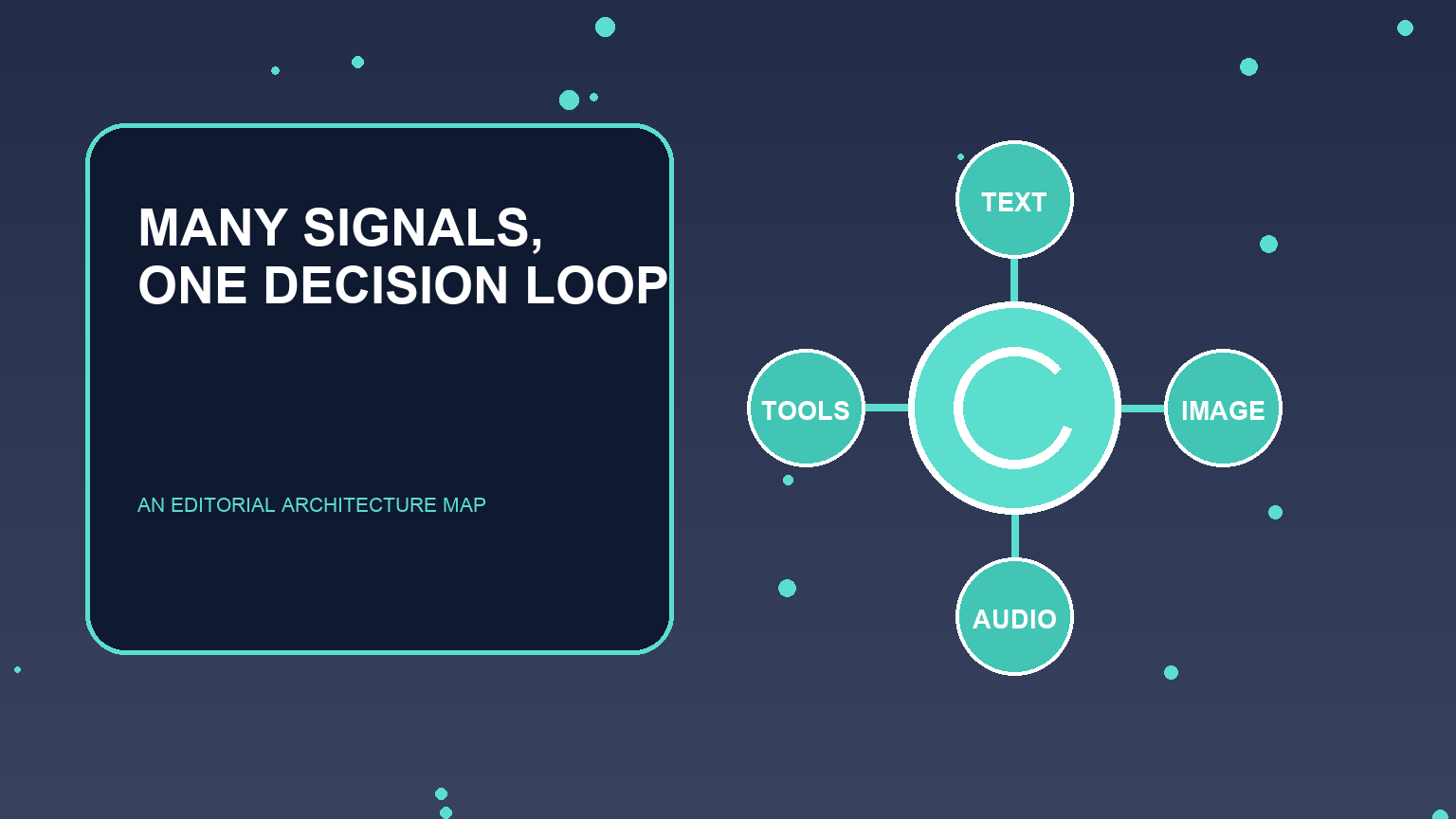
- Building AI agents with multimodal models requires more than adding images to a prompt. A dependable system tracks the source and timing of every modality, converts perception into structured observations, checks uncertainty, and prevents untrusted media from directly authorizing tool actions.
Building AI agents with multimodal models requires more than adding images to a prompt. A dependable system tracks the source and timing of every modality, converts perception into structured observations, checks uncertainty, and prevents untrusted media from directly authorizing tool actions.
Choose modalities from the job
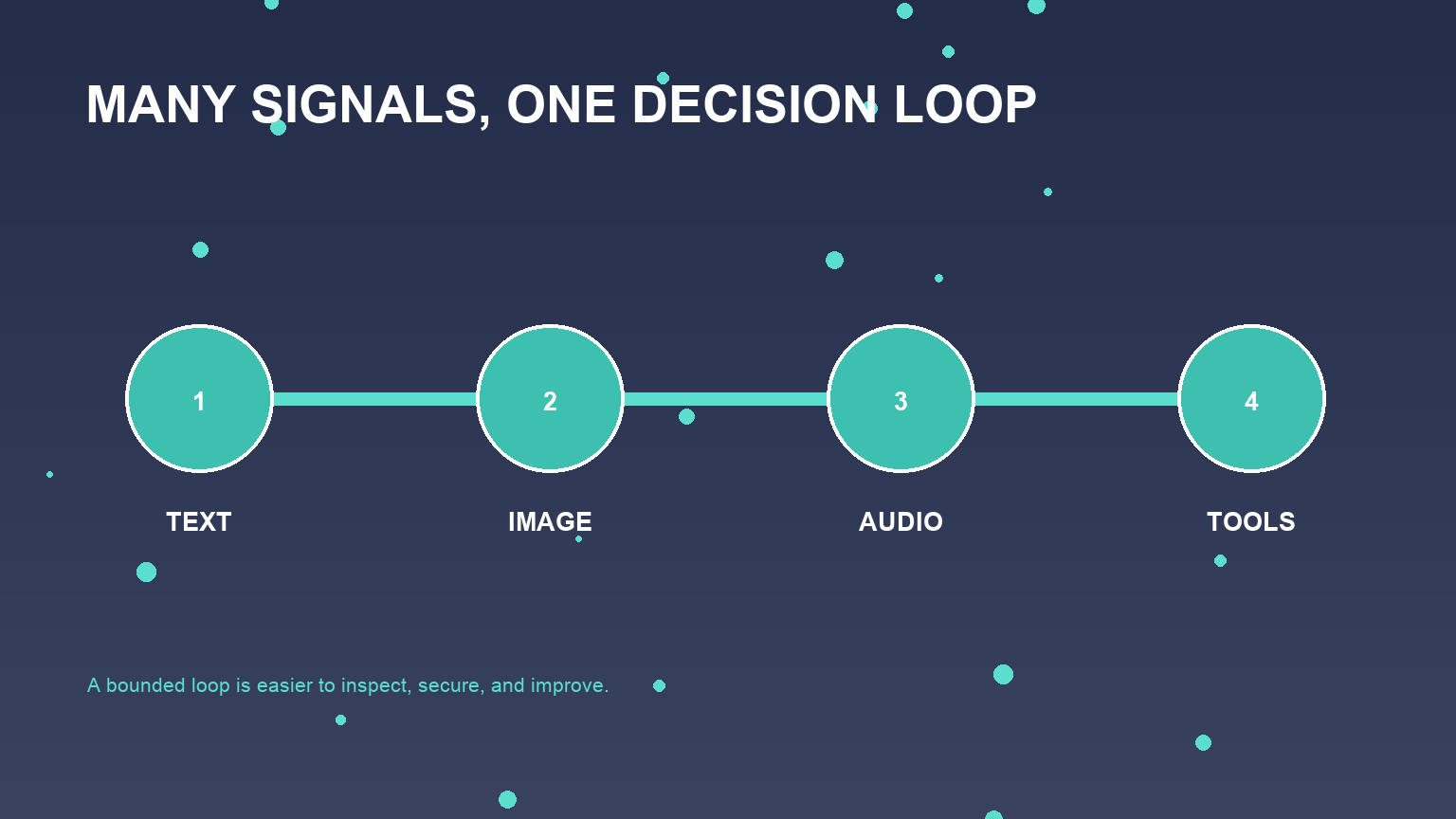
Start with the decision the agent must support. Images help with spatial or visual state, audio with speech and acoustic events, video with change over time, and documents with layout plus text. Adding every modality increases cost, privacy exposure, and synchronization problems. Use the minimum set that improves a measured task.
Define what the model may infer. A screenshot can show visible interface state but not prove who owns the account. A camera frame can suggest an object but may not establish identity, safety, or intent. High-impact conclusions need stronger sensors, metadata, or human confirmation.
Ingestion, timing, and provenance
Each input should carry a source, capture time, content type, dimensions or duration, transformations, and access scope. Preserve the original when policy allows and derive thumbnails, transcripts, or frames as separate artifacts. Hashes and IDs make it possible to trace a conclusion back to evidence.
Time matters. A stale screenshot and a current API response can conflict. Video frames may be sampled too sparsely to capture an event. Audio transcripts can lose speaker or tone information. The agent should expose these limits and avoid merging observations as if they were simultaneous.
Turn perception into structured observations
Do not pass an unbounded visual description directly into an executor. Extract typed observations such as detected control labels, bounding regions, transcript segments, confidence bands, and unresolved ambiguities. Then apply deterministic rules before choosing an action.
Ground visual actions to the current state. For browser or desktop agents, re-observe after navigation and before a consequential click. Coordinate-based actions are brittle when layout changes. Prefer semantic accessibility data or product APIs where available, while using pixels as supporting evidence rather than silent authority.
Multimodal prompt injection and privacy
Images can contain instructions, QR codes, hidden text, or misleading interface elements. Audio can include commands from an untrusted speaker. Documents can place hostile text in headers or backgrounds. Treat recognized content as data with provenance. It cannot override policy or grant tool access.
Multimodal data is often sensitive. Faces, voices, screens, locations, and documents may reveal personal or confidential information. Minimize capture, crop or redact before model processing, restrict retention, and obtain appropriate consent. Keep secrets and unrelated screen regions out of context.
Verification and fallback design
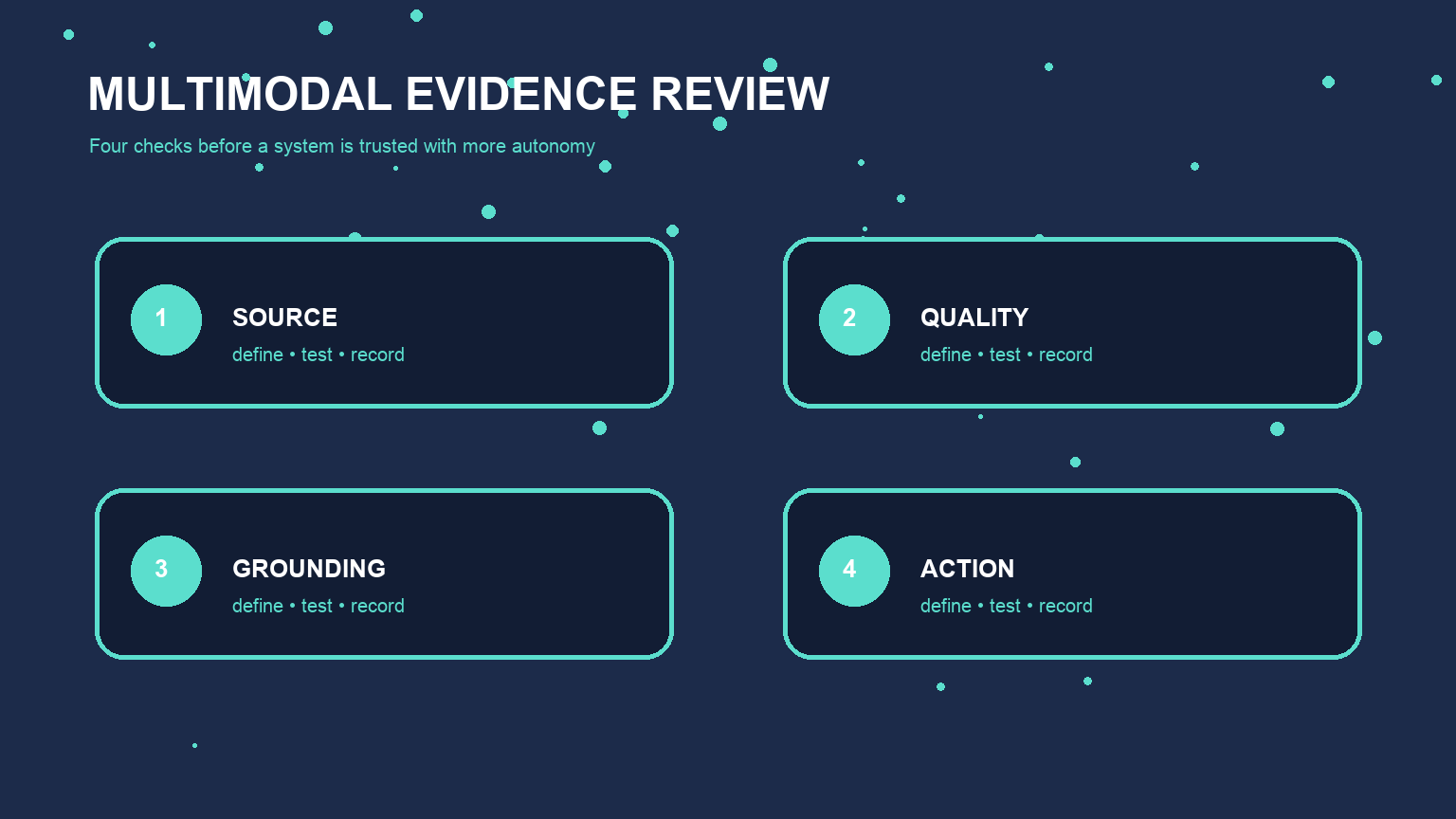
Use cross-checks matched to risk. OCR can verify a visible label; an API can confirm transaction state; a second frame can show that a change persisted. Agreement between modalities is useful but not proof when both derive from the same manipulated source. For ambiguous or safety-critical cases, stop and ask a person.
Fallback should preserve function at lower autonomy. If vision fails, request a clearer image or switch to structured input. If audio transcription is uncertain, show the transcript for confirmation. If a video exceeds limits, select user-approved segments rather than silently dropping content.
Evaluate realistic multimodal failures
Build a dataset with blur, glare, occlusion, accents, background noise, layout changes, stale frames, conflicting captions, injected text, and missing metadata. Score perception separately from decision and execution so teams know where errors begin. Also measure latency, bandwidth, cost, and privacy handling.
Replay complete traces after changing models or preprocessing. Monitor modality-specific failure rates and human correction time. Multimodal agents can interact with richer environments, but safe performance comes from provenance, bounded actions, and verification—not from assuming that seeing and hearing imply understanding.
Implementation worksheet
Create a modality data sheet for each input: source, capture time, transformations, expected quality, sensitive content, retention, and known blind spots. Test perception separately from action policy. Add cases with stale screenshots, hidden text, noisy audio, missing frames, layout shifts, and conflicting API state. Require the agent to cite the artifact behind each observation and to request clarification when confidence is insufficient. Review whether every captured modality is necessary; removing an input can improve privacy, latency, and reliability.
Frequently Asked Questions
What is a multimodal AI agent?
It is an agent that uses two or more input or output modalities—such as text, images, audio, video, or sensor data—while planning and using tools.
Can an image instruct an agent to take action?
Image text should be treated as untrusted data. It can inform a proposal but cannot override policy, grant permission, or authorize a consequential tool call.
How should multimodal evidence be stored?
Track source, capture time, transformations, access scope, artifact IDs, and hashes where appropriate so observations remain traceable.
How do you test a multimodal agent?
Test perception, decision, and execution separately using realistic blur, noise, occlusion, layout shifts, stale evidence, conflicting modalities, and prompt injection.