Key takeaways
- Borrow the feeling or design problem, not the franchise assets. Rewrite the inspiration as one original action, goal, constraint, and feedback signal; use replaceable characters and world rules; build a 30-second round; then watch one person play before adding story or polish.
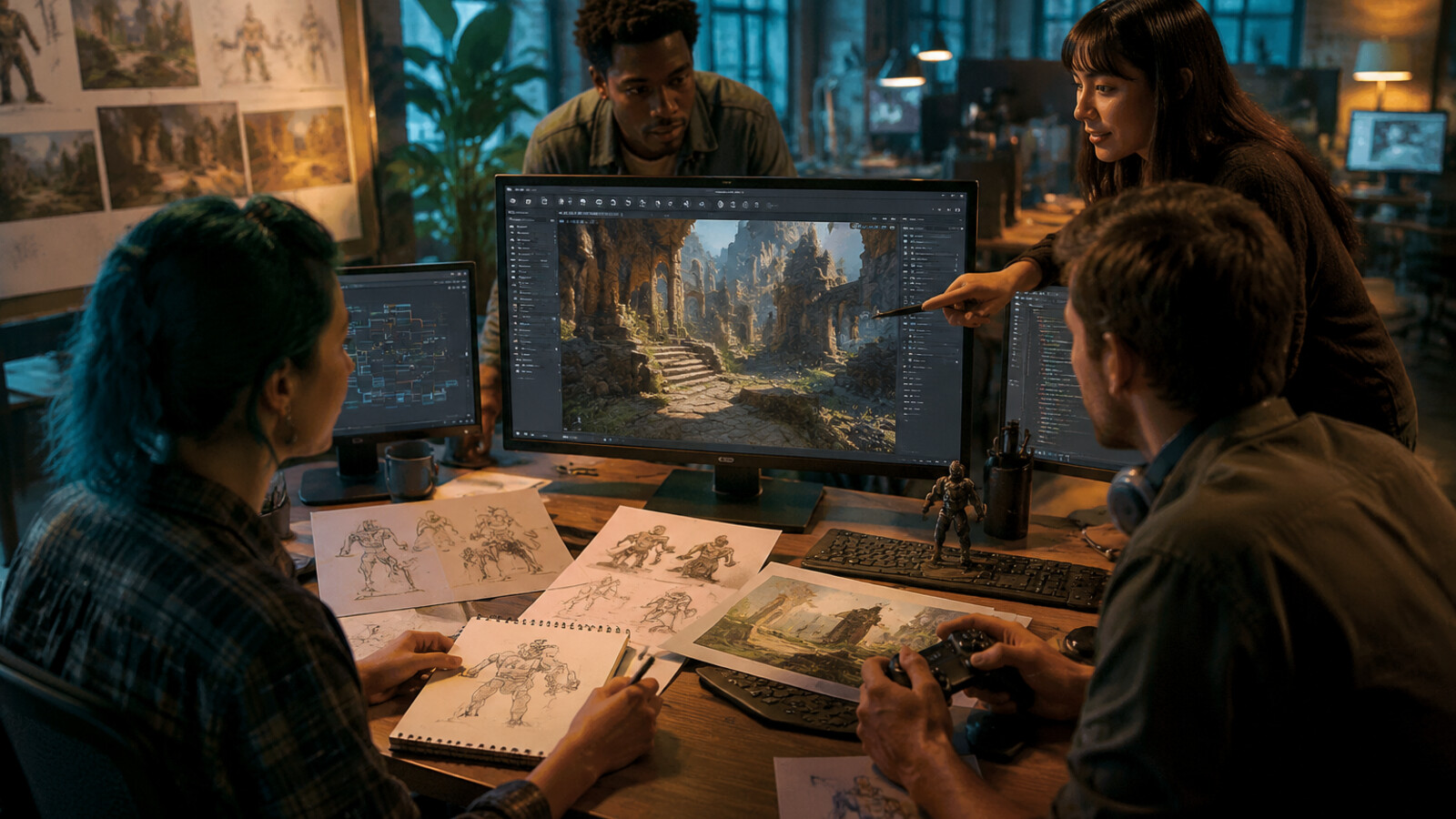
The easiest way to start is to borrow the feeling or design problem you love, not the franchise assets that express it. Rewrite that inspiration as one original core loop, replace the recognizable characters and world with your own flexible stand-ins, build a 30-second playable prototype, and watch one person try it. Your first goal is evidence that the interaction works—not a complete fan game.
For example, do not begin with “make a game starring my favorite hero in their famous city.” Begin with “the player swaps between two movement modes to rescue fragile creatures before a storm closes the route.” The second version preserves a playable attraction while giving you room to invent your own protagonist, setting, rules, visuals, sounds, and story.
A four-step starting plan
- Name the attraction. Write what you love as a feeling, decision, pace, or mechanic: tense preparation, comic companionship, grappling movement, creature care, or deduction under pressure.
- Originalize the core loop. Turn that attraction into a repeatable action, goal, constraint, and feedback signal without using protected names or recognizable story material.
- Build one 30-second round. Use simple, original stand-ins and one win or loss condition. Do not add a campaign, progression system, or polished assets.
- Run one playtest. Let a fresh player try it without a lore explanation. Keep the next change tied to something you observed.
This sequence is deliberately small. It moves you from admiration to a testable design while making originality a design input from the beginning rather than a cleanup task at the end.
What “inspired by” should mean in a first prototype
“Inspired by” is most useful when you can describe the influence without naming a franchise. Ask which underlying experience matters:
- Do you like the rhythm of preparing, attempting, failing, and trying again?
- Is the appeal a movement verb, such as swinging, gliding, climbing, or switching gravity?
- Do you enjoy a relationship dynamic, such as reluctant partners learning to cooperate?
- Is it a structure, such as investigating three clues before making an accusation?
- Is it a mood, such as cozy maintenance interrupted by brief danger?
These are starting abstractions, not finished concepts. Combine one with a new constraint and a new context. “Fast aerial movement” can become a wind courier navigating moving gardens. “Collecting companions” can become restoring musical weather instruments. “Mystery with time pressure” can become diagnosing a failing habitat before sunrise.
A practical originality test is the blank-name test: remove every proper noun and franchise-specific image from your description. If the idea becomes empty, it depends too heavily on borrowed expression. If a clear player action, goal, pressure, and result remain, you have material to prototype.
Keep a clear boundary between influence and copied material
General creative influence is different from copying recognizable protected material. For a safer early workflow, avoid importing or closely recreating a franchise's characters, names, logos, music, voice lines, artwork, animations, maps, dialogue, plot scenes, or other distinctive story assets. Do not assume that a small audience, free release, disclaimer, or “fan-made” label automatically removes risk.
Instead, create replaceable originals from the start:
- Character: define a role, ability, flaw, and silhouette that work without the famous character.
- World: change the social rules, geography, visual motifs, history, and central conflict—not only the color palette.
- Objects: use new shapes, materials, terminology, sound identities, and functions.
- Story: start from a different inciting problem and relationship, then let your mechanics create new events.
- Presentation: use your own title, iconography, interface language, music, sound, and art direction.
This is a practical risk-reduction approach, not a legal conclusion. Copyright, trademark, publicity, contract, and platform issues can depend on jurisdiction and specific facts. If you plan to publish, monetize, market with comparisons, or use any third-party asset, review the relevant rights and platform rules and seek qualified legal advice when the stakes justify it.
Turn the inspiration into an original core loop
Write one sentence:
The player repeatedly [original action] to [observable goal], while [constraint] changes the decision, and the game responds with [clear feedback].
Suppose the inspiration is the exhilaration of a famous web-swinging hero. Copying that hero, city, costume, logo, music, villains, and story is not necessary to test what you enjoy. An original loop might be:
The player redirects wind ribbons between floating gardens to carry a seed courier to three beacons, while each redirected current destabilizes the route, and the garden lights show which path remains safe.
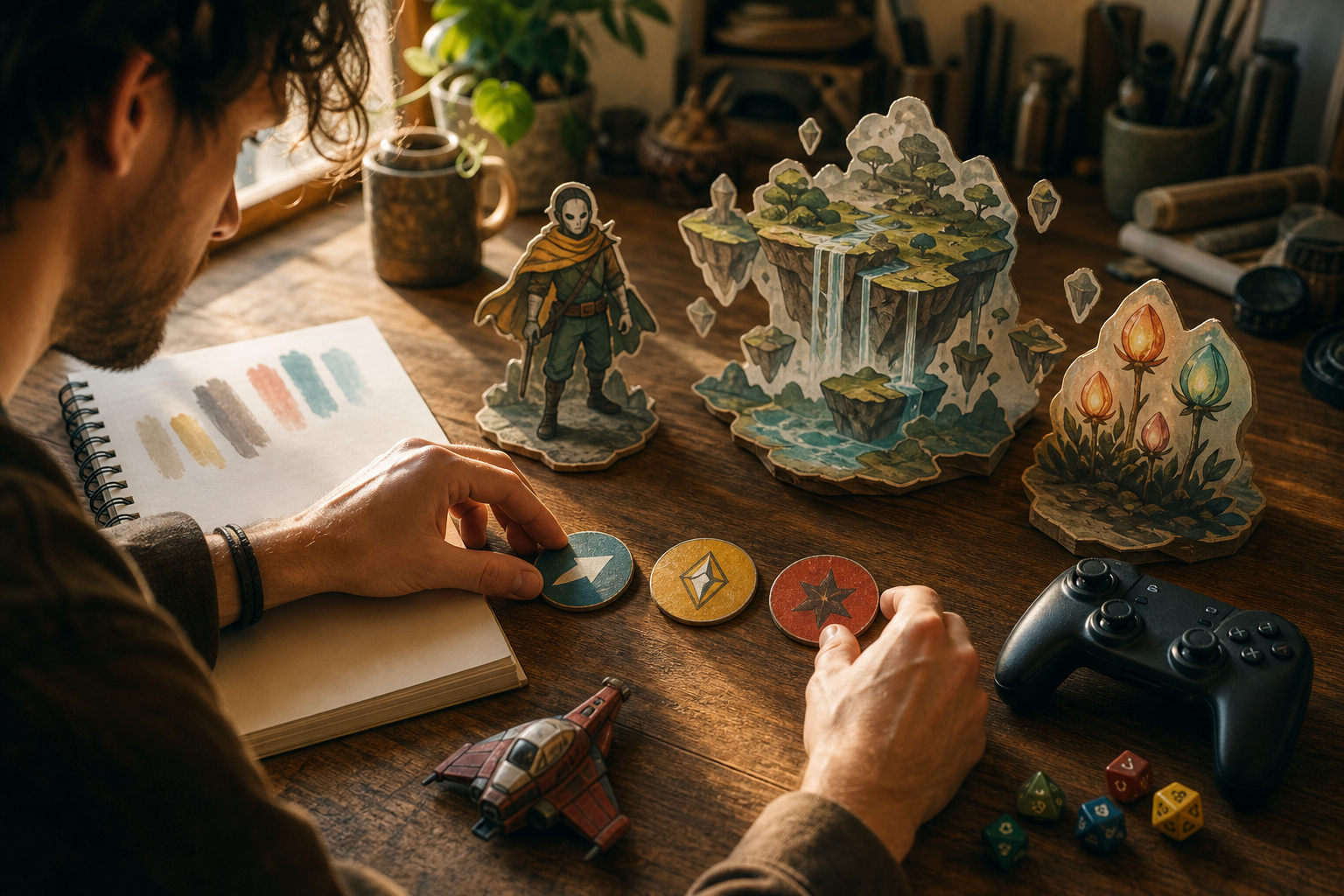
That sentence gives you a movement action, goal, changing constraint, and feedback. It also points toward a different world and protagonist. The prototype can use a translucent courier token, curved wind trails, garden platforms, and color changes—assets created for this experiment rather than extracted from another work.
Use three questions to challenge your loop:
- Can it be played before the player knows the story?
- Can every recognizable franchise noun be replaced without breaking the rule?
- Can one complete attempt end within 30 seconds?
If any answer is no, shrink or rewrite again.
Design characters and worlds as replaceable systems
Your first character does not need a detailed biography. Give them four original design anchors:
- Function: what they let the player do.
- Limitation: what creates interesting decisions.
- Motivation: why the immediate goal matters.
- Visual rule: one shape, material, or motion principle that makes them readable.
For the wind-courier example: the courier redirects currents, cannot touch storm zones, wants to deliver living seeds, and appears as a folded translucent figure whose cape bends toward safe airflow. None of those choices needs a borrowed name or costume.
Treat the world the same way. Build only what the 30-second loop needs: three floating platforms, one changing wind source, a beacon goal, and a storm boundary. Keep nouns replaceable in your prototype brief. If “castle,” “academy,” or “space empire” pulls you back toward a particular franchise, use neutral functional labels until your own setting earns specific language.
Originality is not achieved by changing one color or misspelling a familiar name. It comes from a connected set of new choices that change how the character looks, acts, belongs in the world, and produces play.
Build the 30-second prototype
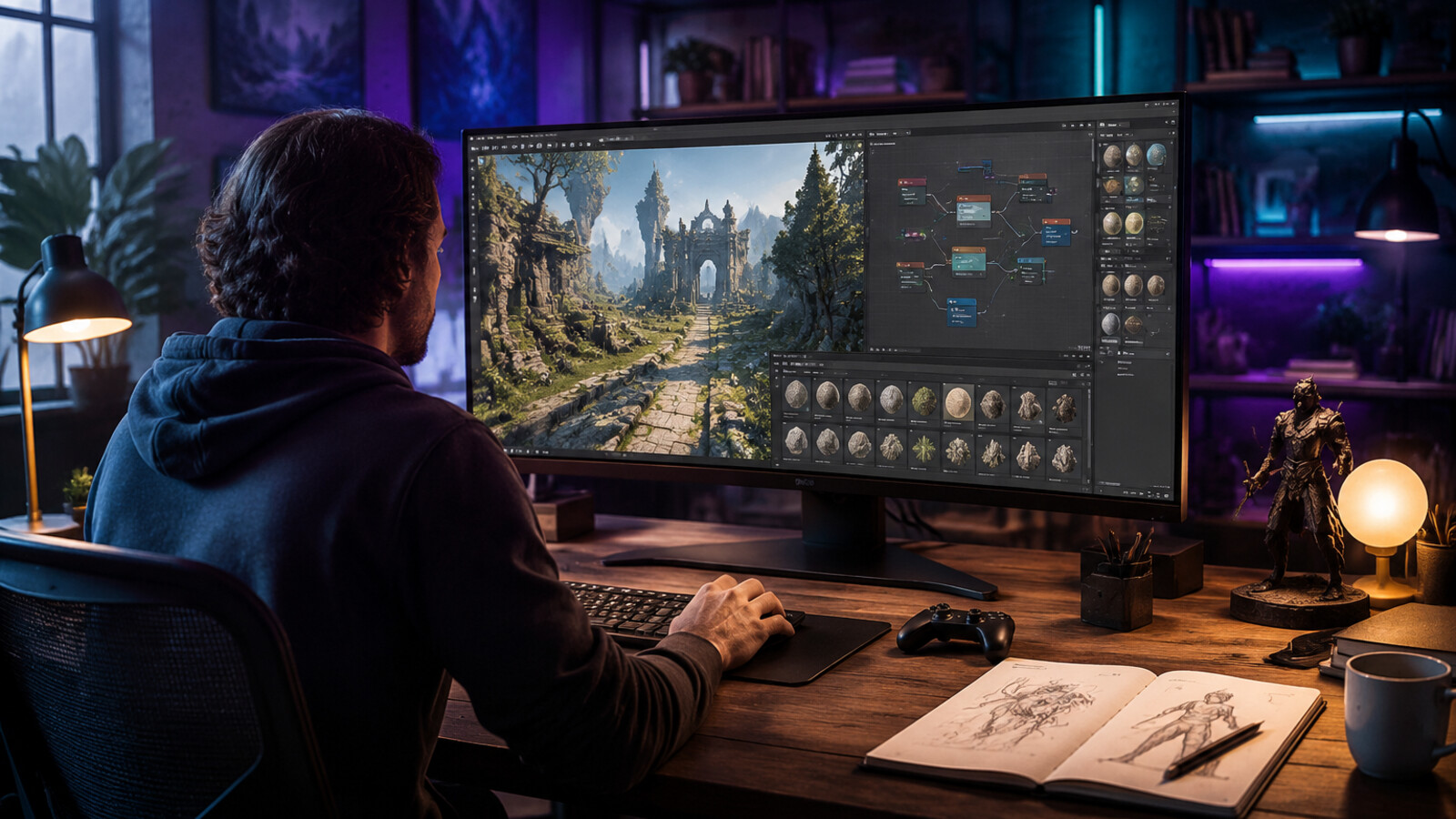
A prompt-first workspace such as SEELE AI can help you turn a narrow brief into a playable draft and request focused revisions. A visual tool, paper prototype, or conventional engine can also work. Choose the path that gets you to one controllable loop with the least unnecessary setup.
Use a brief like this:
Create a 30-second, one-screen prototype using only original abstract assets. The player drags one of two wind ribbons to guide a translucent seed courier across three floating garden platforms. Redirecting a ribbon makes the other route unstable. Reach three light beacons before the storm ring closes. Show route safety through platform glow and a short wind pulse. End with success or retry, then allow an immediate restart. Do not add named characters, dialogue, franchise references, copied art, music, story scenes, upgrades, or additional levels.
Check the result in this order:
- Does the input consistently change the route?
- Is the goal visible within the first few seconds?
- Does the constraint create a real choice?
- Can the player explain why a route is safe or unsafe?
- Does the round end and restart cleanly?
Temporary art should still be yours or clearly licensed for the prototype. “Temporary” does not mean “download a character, song, or map from the franchise.” Simple original shapes, generated assets you are entitled to use, your own recordings, or properly licensed materials keep the experiment easier to replace and share.
Run one playtest before adding more
Ask one person to play without telling them the source of your inspiration. Say: “Try this once and tell me what you think the goal and main choice are.” Then observe:
- how long it takes them to make the first meaningful input;
- whether they can state the goal;
- whether they notice the changing constraint;
- whether the feedback explains success and failure;
- whether they want to retry after the round ends.
Afterward, ask two questions: “What did you think would happen?” and “What choice felt most interesting?” Do not ask whether it feels like the franchise. That question encourages resemblance rather than improving the original loop.
Make one revision from the strongest observation. If the tester never notices an unsafe route, strengthen the platform glow or wind pulse. If there is no meaningful choice, make redirecting one current weaken the other. Keep character lore, custom music, progression, and extra levels out until the loop communicates itself.
Decide what to do after the test
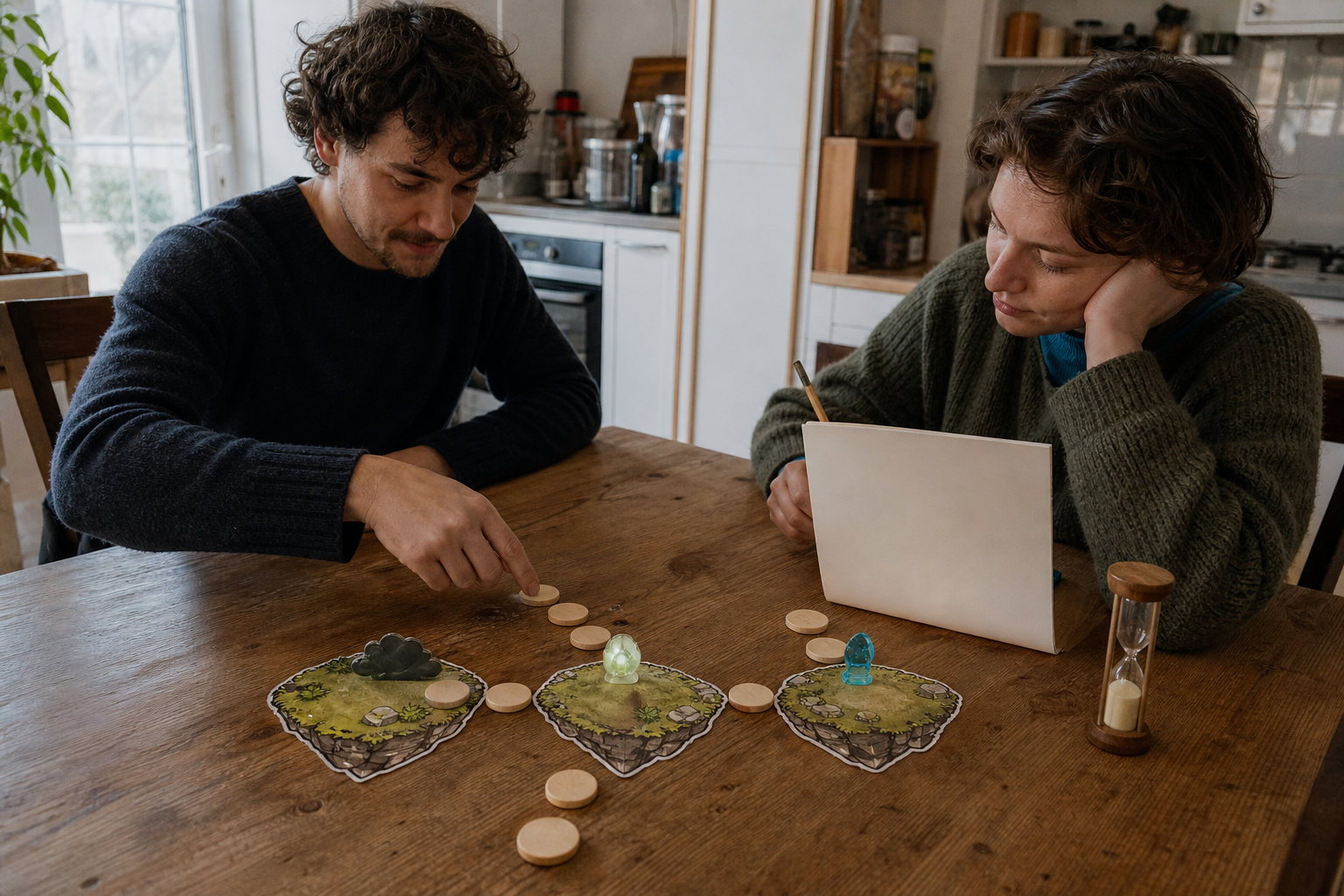
Continue when the player understands the action and goal, the constraint creates a choice, and the prototype remains interesting without franchise context. Your next step can be one more original mechanic, a stronger setting rule, or a second playtest.
Rewrite when the prototype only makes sense after you explain the reference, the character is still identifiable as a renamed version, or the fun depends on copied audiovisual material. Return to the blank-name test and replace the dependent part.
Stop or seek advice before release when you are unsure about rights, a platform's fan-content policy, a trademark-facing title, commercial use, or a third-party asset license. Preserve your design notes and prototype, but do not treat this general guide as permission or a legal determination.
Your next 60 minutes
Spend 10 minutes naming the feeling or mechanic, 10 minutes writing the original core-loop sentence, 10 minutes replacing character and world nouns, 20 minutes building one 30-second round, and 10 minutes watching one person play. End with one written observation and one next change.
The fastest start is not to recreate everything you love. It is to discover one transferable design idea, express it through your own connected choices, and learn whether that tiny original loop is enjoyable when somebody else can play it.
Frequently Asked Questions
Can I make a game inspired by a movie, anime, book, or existing game?
You can begin by identifying a general feeling, mechanic, structure, or design problem that inspires you, then express it through your own characters, world, story, art, audio, and terminology. Specific rights and risks vary, so this practical approach is not legal permission or a legal conclusion.
What should I avoid copying in a fan-inspired prototype?
Avoid importing or closely recreating recognizable characters, names, logos, music, voice lines, artwork, animations, maps, dialogue, plot scenes, and other distinctive story or presentation assets. A free release, small audience, disclaimer, or fan-made label should not be treated as automatic protection from rights or platform concerns.
How do I make an inspired game feel original instead of like a reskin?
Change a connected set of decisions: the player's action, constraint, feedback, character role and limitation, world rules, conflict, visual motifs, terminology, and sound identity. Changing only a color, costume detail, or spelling usually leaves the underlying resemblance too central to the design.
How small should my first fan-inspired game prototype be?
Aim for one original action, one visible goal, one changing constraint, one feedback signal, and one success or failure state in a 30-second round. Keep it to one screen and one restartable loop so a fresh player can test the interaction before you build story, progression, or polished assets.
Can I use placeholder art or music from the franchise while prototyping?
A cleaner workflow is to avoid franchise assets even as placeholders. Use your own simple shapes, recordings, model-generated assets you are entitled to use, or properly licensed materials. Starting with replaceable originals reduces dependency and makes later playtesting, collaboration, or sharing easier to manage.
What should I ask during the first playtest?
Ask the tester to play once and explain the goal, main action, and most interesting choice. Watch their first input, confusion, feedback recognition, and willingness to retry. Do not explain the source franchise first, because the prototype should communicate its own rules without borrowed context.