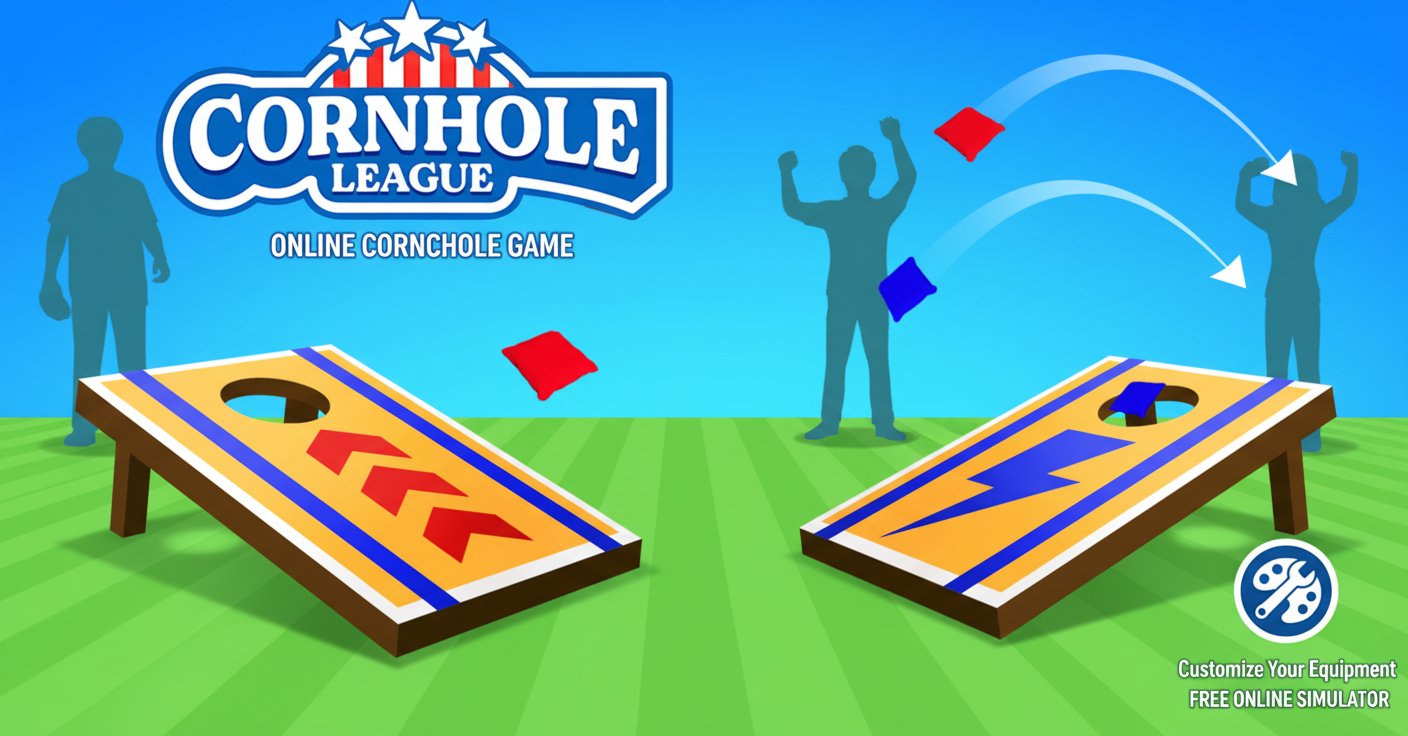
Cornhole is an outdoor target game where players throw bean bags at a raised board and score by landing on the surface or through the hole. If you only need the fast answer, standard scoring gives one point for a bag on the board, three for a bag through the hole, and uses cancellation scoring to play to 21.
Quick Facts
Players2 singles or 4 doublesGame length15 to 30 minutesCore equipment2 boards and 8 bean bagsStandard board spacing27 feet front edge to front edgeHow to set up
- Set two boards on level ground, 27 feet apart from front edge to front edge for adult regulation play.
- Use four bags of one color per side and make sure every player throws from behind the board front line.
- Decide whether you are playing singles or doubles because player positions change between those two formats.
Step-by-step rules
Players alternate throws until each side has thrown all four bags in the round.
A bag through the hole scores three points and a bag resting on the board scores one point.
Only the side with the higher round total keeps points after cancellation scoring is applied.
A foul throw scores zero and may not count even if the bag lands on the board.
Games typically end at 21 points, though some groups require a win by two.
Key takeaways
Singles vs doubles
In singles, both players usually throw from the same side and walk to the opposite board after the round. In doubles, partners stand at opposite boards so play flows continuously without walking after every exchange.
Why scoring causes confusion
Most casual disputes come from cancellation scoring and bounced bags. Solve both before the first throw so nobody argues after a close round.
Backyard default
For children or mixed-skill groups, reducing the board distance usually matters more than rewriting the entire rule set.
Common fouls
- Stepping over the foul line before the bag leaves your hand.
- Throwing out of turn in a formal match setting.
- Touching or moving a bag before the round has been fully scored.
- Using a bounced bag rule that your group did not agree on in advance.
Backyard variations
- Shorter board distance for younger players.
- No cancellation scoring, so both teams keep every point they earn each round.
- Win-by-two rule for longer close games.
- Party-mode penalties or dares attached to bags through the hole.
FAQ
How far apart should cornhole boards be?
Adult regulation spacing is 27 feet from front edge to front edge, but many casual groups move the boards closer for children or mixed-skill play.
How does cornhole scoring work?
A bag through the hole is three points, a bag on the board is one point, and cancellation scoring means only the higher side scores the difference each round.
What counts as a foul in cornhole?
The most common foul is crossing the front line before release, but touching bags early and breaking turn order can also count depending on rules used.
Can a bounced bag score in cornhole?
In many official rule sets, a bag that first touches the ground does not count. Casual groups sometimes allow local house rules, so confirm before play.
What are common backyard rule variations?
Shorter distances, full scoring instead of cancellation, and simplified foul handling are the most common backyard changes.