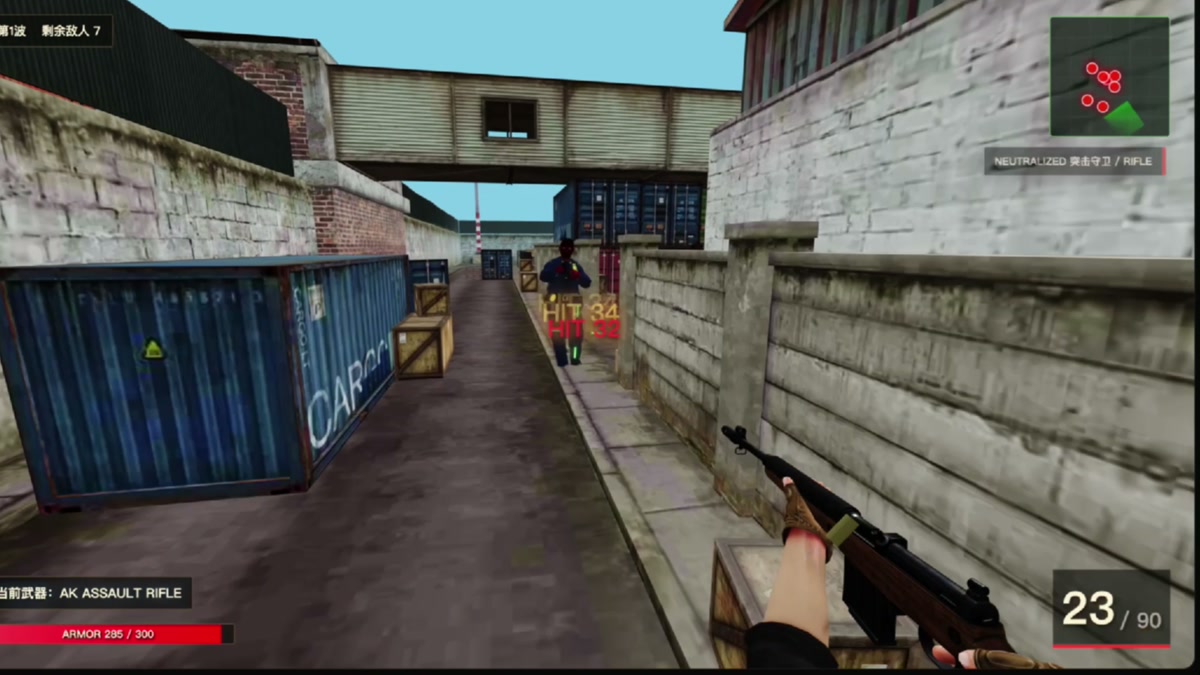
A useful game development devlog explains change. It tells the reader what the team wanted to improve, what changed between versions, what evidence informed the decision, and what remains unresolved. It is not a list of tasks completed and it is not a press release disguised as process documentation.
The best devlogs create continuity. A reader who missed two updates should still be able to understand the current build, the important tradeoff, and the next test.
Give every entry one development question
Start with a question that the update will answer:
- Can a new player understand the objective without text?
- Does the jump still feel controllable at higher speed?
- Can the level teach one mechanic before combining it with another?
- Does the inventory remain readable on a small screen?
A single question keeps the post from becoming a changelog dump. It also gives the conclusion a standard: what did this version teach you?
Establish the version and baseline
At the top of each entry, state:
- Build or version identifier.
- Date of the build or test.
- Platform and input method.
- What the previous version did.
- What changed in the current version.
- Known limitations that affect the evidence.
Readers cannot interpret “movement feels better now” if they do not know what changed. Name the variables where possible: acceleration curve, camera delay, input buffer, animation timing, collision shape, or level layout.
Separate change, reason, and evidence
Use a three-part structure for each important revision.
Change
Describe the visible or functional difference. “Reduced the camera follow delay and widened the landing area” is concrete.
Reason
Explain the design concern. “Players lost the character near the right edge and could not see the next landing.” This gives the change context.
Evidence
Show what supports the observation: an annotated screenshot, a short capture, a build link, tester notes, an issue, or a before-and-after comparison. Evidence does not need to be large-scale research. It needs to be accurately described.
Do not turn a few comments into a universal claim. Write “two testers missed the prompt” rather than “players cannot understand the game” when that is the evidence you have.
Include failures and abandoned directions
A failed experiment is useful when it changes the next decision. Explain:
- What you expected.
- What you tried.
- What happened.
- Why you reverted, narrowed, or changed direction.
- What constraint you will carry into the next attempt.
Avoid performative failure sections that exist only to make the story feel authentic. Include the experiment when it helps the reader understand the design. If the failure was caused by a rights issue, broken build, or misleading test setup, say so plainly.
Make tradeoffs explicit
Game development rarely improves every dimension at once. A faster character may feel more expressive but make level reading harder. A larger HUD may improve legibility but cover important play space. A detailed scene may support mood but reduce clarity or performance.
A useful devlog names the chosen priority and the cost:
Decision: keep the slower camera.
Benefit: the level layout stays readable during vertical movement.
Cost: fast direction changes feel less immediate.
Next test: add a small look-ahead zone without increasing camera shake.
This helps readers distinguish deliberate compromise from an overlooked problem.
Use proof that matches the claim
Choose evidence based on what you are discussing:
| Claim | Suitable evidence |
|---|---|
| A mechanic works | Playable build or unedited interaction capture |
| A layout became clearer | Before-and-after frame with annotations |
| A build changed | Version notes or commit-linked changelog |
| A tester was confused | Anonymized observation with test context |
| Performance changed | Repeatable measurement method and device context |
| Visual direction changed | Side-by-side exploration with selection criteria |
A polished trailer cannot prove that controls are responsive. A single screenshot cannot prove pacing. Match the artifact to the claim and label mockups or greyboxes accurately.
Choose a publishing rhythm you can sustain
Consistency matters more than frequency. Publish when there is a meaningful question and result, not because a calendar demands filler.
Three workable rhythms are:
- Per milestone: one entry after a playable slice, test, or release candidate.
- Biweekly: useful for active prototypes with enough change to compare.
- Event cadence: opening scope, midpoint decision, submission, and retrospective for a game jam.
If little changed, publish a short status note or wait. Do not inflate routine maintenance into a major breakthrough. An index page with dates, version numbers, and one-sentence summaries helps readers catch up.
Keep the reader oriented
Every entry should link to the previous relevant update and summarize the current state in two or three sentences. Use stable names for mechanics and features. If terminology changes, explain it.
For a portfolio, condense several devlog entries into one case study with the game creator portfolio guide. For a time-boxed community project, the AI game jam guide includes a submission and post-event structure.
Blank game devlog template
# [Project name] Devlog — [Version or development question]

Build:
Date:
Platform/input:
Previous entry:
Playable or evidence link:

## Current goal
What should this version prove or improve?

## Baseline
What did the previous version do? What limitation are you addressing?

## What changed
- Change 1:
- Change 2:
- Change 3:

## Why it changed
What observation, constraint, or test motivated each change?

## Evidence
Include a build, capture, screenshot, notes, or repeatable measurement.
State who or what was tested and any important limitations.

## Failed experiment or tradeoff
What did you try? What happened? What did you keep, revert, or postpone?

## Current state
What works now? What is still uncertain or broken?

## Next test
Name one question for the next version.

## Credits and disclosure
List collaborators, third-party assets, licenses, and relevant AI-assisted work.
Pre-publish checklist
- The entry has one clear development question.
- Build, date, platform, and previous state are identified.
- Changes are separated from reasons and evidence.
- Claims are no broader than the evidence.
- A playable claim has playable proof or an accurately labeled recording.
- Failures and tradeoffs affect the development story.
- Known issues are visible.
- Collaborators, asset sources, and AI use are disclosed where relevant.
- Images and clips are licensed for publication.
- The next test is specific.
- Links work outside your signed-in session.
Publish a devlog as a creator contribution
A public build log can fit the SEELE Creator Program when it clearly features SEELE AI, documents the process, and follows the approved contribution format. The SEELE Creator Program guide explains application materials and review expectations.
Do not assume acceptance or invent a result before the work exists. Review the official Creator Program page, then propose a narrow devlog series with a project question, publishing destination, evidence plan, and intended audience.
FAQ
How long should a game devlog entry be?
Long enough to explain one meaningful development question. A concise post with clear evidence is better than a long diary that hides the decision.
How often should I publish a devlog?
Choose a rhythm tied to meaningful changes: per milestone, biweekly during active development, or at defined event stages. Do not publish filler to preserve a schedule.
Should a devlog include failed experiments?
Yes, when the failure explains a decision, constraint, or next test. Include enough context for the reader to understand what you learned.
Do I need a playable build in every update?
No. The evidence should match the claim. Use a playable build for interaction claims, but use comparisons, notes, or measurements for other development questions.
Can a devlog be part of a SEELE Creator Program contribution?
Yes, a public build log is listed as an eligible contribution format. Check the official Creator Program page for current details and apply with a specific proposal.