Blog›Unreal Interaction System: Trace, Overlap, and Interface Guide
Unreal Interaction System: Trace, Overlap, and Interface Guide
Use overlap only to maintain a small set of nearby candidates, a camera or controller line trace to select the intended target, and a Blueprint Interface or C++ interface to execute the verb without hard-casting to every actor class. Follow the API, failure recovery, and packaged-build validation checklist.
SEELE AI
Posted: 2026-07-26
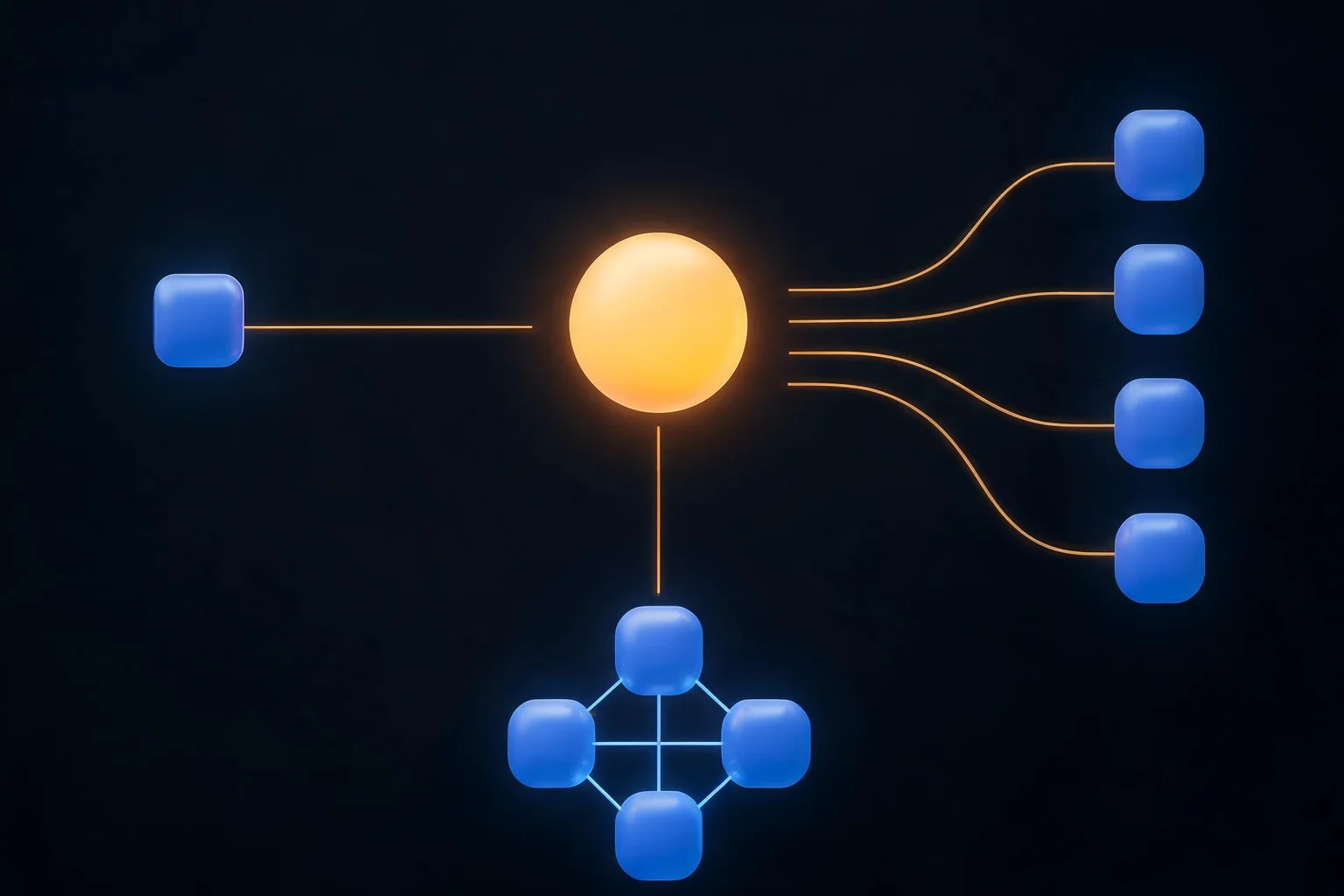
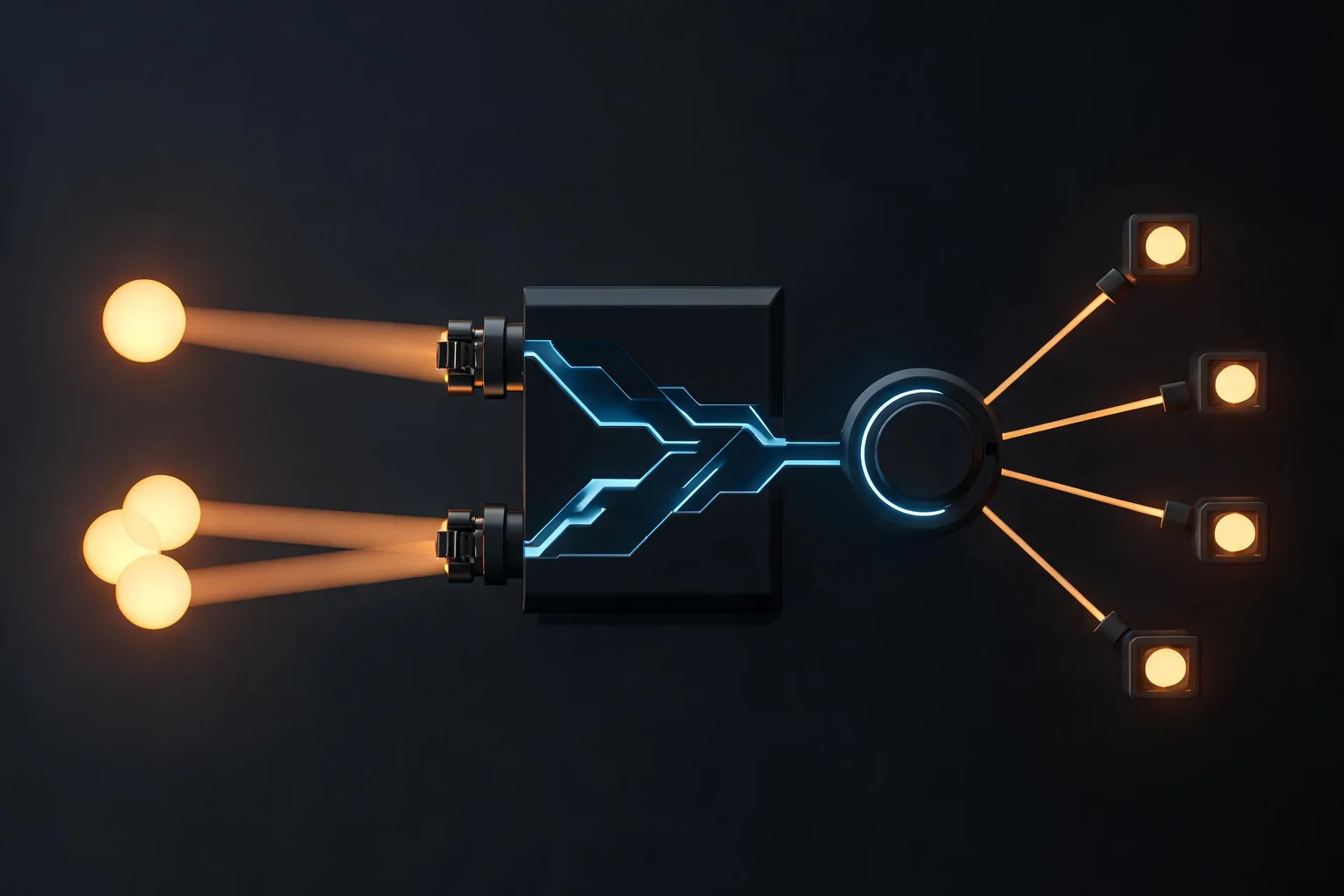
Visual guide for Unreal Interaction System: Trace, Overlap, and Interface Guide
Key Takeaways: Unreal Interaction System: Trace, Overlap, and Interface Guide
Use overlap only to maintain a small set of nearby candidates, a camera or controller line trace to select the intended target, and a Blueprint Interface or C++ interface to execute the verb without hard-casting to every actor class. The player interaction component owns focus, the target owns whether it is currently usable, and the server owns authoritative state changes in multiplayer.
Direct answer
Use overlap only to maintain a small set of nearby candidates, a camera or controller line trace to select the intended target, and a Blueprint Interface or C++ interface to execute the verb without hard-casting to every actor class. The player interaction component owns focus, the target owns whether it is currently usable, and the server owns authoritative state changes in multiplayer.
This is a complete player-to-world interaction pipeline, not a general delegates comparison or a collision-reference page. The practical goal is a game-building slice that another developer can reproduce from a clean checkout. Keep engine behavior, project policy, and measured evidence separate: Epic documentation establishes supported concepts, the project defines ownership and budgets, and only a named test run proves the local result.
What this guide delivers
A concrete ownership model for unreal interaction system line trace overlap interface.
A six-stage Blueprint/C++ implementation workflow with a real API or command example.
Three production scenarios, including normal, edge, and handoff behavior.
Failure recovery and validation criteria for editor and packaged builds.
A bounded SEELE handoff that leads to the Unreal creator without changing this page's technical intent.
Explain owners and implementation flow for unreal interaction system line trace overlap interface.System architecture and ownership
Candidate discovery
A sphere or capsule overlap can cheaply discover nearby interactables, but entering range is not the same as being selected. Store weak candidates and remove them on EndOverlap, destruction, level unload, or loss of authority.
Candidate discovery review: capture candidate count and weak-reference cleanup and show how focus selection receives or observes the accepted result without becoming a second owner.
Focus selection
Trace from the camera for crosshair interaction or from the character for reach-based interaction. Apply distance, line-of-sight, angle, priority, and gameplay-state rules before changing the focused actor.
Focus selection review: capture trace start, end, channel, and blocking component and show how capability contract receives or observes the accepted result without becoming a second owner.
Capability contract
Expose CanInteract, GetInteractionText, and Interact through an interface. The interface decouples the caller from doors, chests, NPCs, and pickups while still allowing each target to enforce its own state.
Capability contract review: capture focus identity and rejection reason and show how presentation and authority receives or observes the accepted result without becoming a second owner.
Presentation and authority
Prompts observe focus and capability but never mutate the target. In a networked game the client requests interaction and the server repeats range, visibility, cooldown, and ownership checks before committing.
Presentation and authority review: capture client request versus server validation result and show how candidate discovery receives or observes the accepted result without becoming a second owner.
Implementation workflow
Stage 1: Define BPI_Interactable or an IInteractable C++ interface with query functions and one execution function carrying the instigating controller or pawn.
Stage 2: Add a player InteractionComponent that owns range, trace channel, refresh rate, current focus, and focus-changed notifications.
Stage 3: Create a dedicated Interactable trace channel and configure target components to block it while decorative or invisible collision ignores it.
Stage 4: Refresh focus at a controlled rate, compare the hit actor with the previous focus, and call focus-enter or focus-exit presentation only when the identity changes.
Stage 5: On input, revalidate the focused actor and call the interface. For multiplayer, send the actor reference in a server RPC and repeat the validation server-side.
Stage 6: Test destroyed targets, closed doors, occlusion, rapid focus switching, held input, split screen, controller navigation, latency, and travel cleanup.
The trace selects the door; CanInteract reports Locked, NeedsKey, or Openable; Interact changes the authoritative door state. The HUD formats the returned reason instead of duplicating lock logic.
Evidence for door with lock state should include candidate count and weak-reference cleanup, the owning build identity, and the condition that returns this scenario to its last known-good state.
Example 2: Pickup in a pile
An overlap narrows candidates, then view angle and distance rank the visible item. Focus remains stable with hysteresis so the prompt does not flicker between nearly equal objects.
Evidence for pickup in a pile should include trace start, end, channel, and blocking component, the owning build identity, and the condition that returns this scenario to its last known-good state.
Example 3: Conversation NPC
Range and line-of-sight permit focus, while gameplay tags reject interaction during combat or an existing conversation. The target starts dialogue only after the controller passes those checks.
Evidence for conversation npc should include focus identity and rejection reason, the owning build identity, and the condition that returns this scenario to its last known-good state.
Support failure diagnosis and recovery for unreal interaction system line trace overlap interface.Failure modes and recovery
Prompt remains after actor destruction
Use weak references, listen for EndPlay, and clear focus when the hit or candidate becomes invalid. Never let the widget be the only owner of focused state.
Before closing prompt remains after actor destruction, rerun door with lock state and prove focus identity and rejection reason returns to the expected boundary without an undocumented repair step.
Trace hits invisible geometry
Create a dedicated trace channel, visualize traces, and audit per-component responses. Do not change the global Visibility channel to compensate for one interactable.
Before closing trace hits invisible geometry, rerun pickup in a pile and prove client request versus server validation result returns to the expected boundary without an undocumented repair step.
Client opens objects through walls
Repeat distance, occlusion, state, and permission checks on the server. A client trace is selection evidence, not authorization.
Before closing client opens objects through walls, rerun conversation npc and prove prompt visibility after destruction and travel returns to the expected boundary without an undocumented repair step.
Multiple interactions fire per press
Bind the action once, choose Started versus Triggered deliberately, and debounce held input at the interaction component or target state machine.
Before closing multiple interactions fire per press, rerun door with lock state and prove candidate count and weak-reference cleanup returns to the expected boundary without an undocumented repair step.
Validation matrix
candidate count and weak-reference cleanup: inspect it beside candidate discovery; pass only when prompt remains after actor destruction does not recur during door with lock state and the evidence names the exact build.
trace start, end, channel, and blocking component: inspect it beside focus selection; pass only when trace hits invisible geometry does not recur during pickup in a pile and the evidence names the exact build.
focus identity and rejection reason: inspect it beside capability contract; pass only when client opens objects through walls does not recur during conversation npc and the evidence names the exact build.
client request versus server validation result: inspect it beside presentation and authority; pass only when multiple interactions fire per press does not recur during door with lock state and the evidence names the exact build.
prompt visibility after destruction and travel: inspect it beside candidate discovery; pass only when prompt remains after actor destruction does not recur during pickup in a pile and the evidence names the exact build.
Version and source boundaries
These steps target the current Unreal Engine 5 documentation surface as of 2026-07-26. Engine defaults, experimental status, plugin packaging, API signatures, and platform support can change. Select the documentation version that matches the project, test the exact patch and target, and retain a rollback revision. Public documentation does not replace NDA platform requirements, store review, console certification, or project-specific performance evidence.
Official sources
Traces Overview — source evidence for candidate discovery in this unreal interaction system line trace overlap interface workflow; verify the documentation version against the shipping branch.
Blueprint Interface — source evidence for focus selection in this unreal interaction system line trace overlap interface workflow; verify the documentation version against the shipping branch.
Collision Overview — source evidence for capability contract in this unreal interaction system line trace overlap interface workflow; verify the documentation version against the shipping branch.
Unreal Engine is a trademark of Epic Games. SEELE AI is independent and this article does not imply Epic Games or Valve endorsement.
From the technical plan to a SEELE Unreal game
Use this page to define the system, acceptance tests, and failure boundaries; then carry that precise brief into [SEELE's Unreal game creator](/features/create/unreal-game). SEELE can generate a native Unreal 5 game, provide an in-browser preview, support optimization and packaging in SEELE, and let you download the project or packaged output for external publishing or publish it as a free or paid SEELE game.
That handoff does not change the native production responsibility described above. Store approval, sales, revenue, certification, third-party plugin compatibility, and platform compliance are not guaranteed. Keep the source Unreal game, build logs, test evidence, and external publishing decisions under your team's control.
FAQ
What is the correct architecture for unreal interaction system line trace overlap interface?
Use overlap only to maintain a small set of nearby candidates, a camera or controller line trace to select the intended target, and a Blueprint Interface or C++ interface to execute the verb without hard-casting to every actor class. The player interaction component owns focus, the target owns whether it is currently usable, and the server owns authoritative state changes in multiplayer. Start with candidate discovery and focus selection, then keep presentation as an observer of committed gameplay state.
Should unreal interaction system line trace overlap interface be built in Blueprint or C++?
Either can work. Blueprint is effective for rapid game logic and designer iteration; C++ is useful for reusable contracts, complex lifetime, performance-sensitive loops, and automated tests. Preserve the same owner, validation, failure, and recovery boundaries in both.
How should unreal interaction system line trace overlap interface be tested?
Test one normal case, one invalid input, interruption or teardown, clean restart, and packaged-build parity. Capture candidate count and weak-reference cleanup, trace start, end, channel, and blocking component, focus identity and rejection reason with a build identifier and explicit pass criteria.
What is the most dangerous failure in unreal interaction system line trace overlap interface?
Prompt remains after actor destruction is an early warning: Use weak references, listen for EndPlay, and clear focus when the hit or candidate becomes invalid. Never let the widget be the only owner of focused state. Also verify cleanup and retry so the apparent fix does not leave stale state.
Which Unreal version does this unreal interaction system line trace overlap interface guide target?
It uses the Unreal Engine 5 documentation surface available on 2026-07-26. Confirm the version selector, API signature, plugin status, platform toolchain, and packaged behavior in the exact engine patch that will ship.
What can SEELE do after this unreal interaction system line trace overlap interface plan is ready?
SEELE can generate a native Unreal 5 game, provide browser preview, support optimization and packaging, and provide project or packaged downloads for external publishing or a free or paid SEELE release. It does not guarantee third-party store approval, compatibility, sales, or revenue.
Was this guide helpful? Use it as a starting point, then continue the best direction in Seele AI.