
Name the streaming system
Traditional level streaming and World Partition use different ownership and diagnostics. Do not mix a streaming volume fix with a Data Layer problem or assume a Level Instance behaves like a persistent sublevel.
Separate loading from visibility
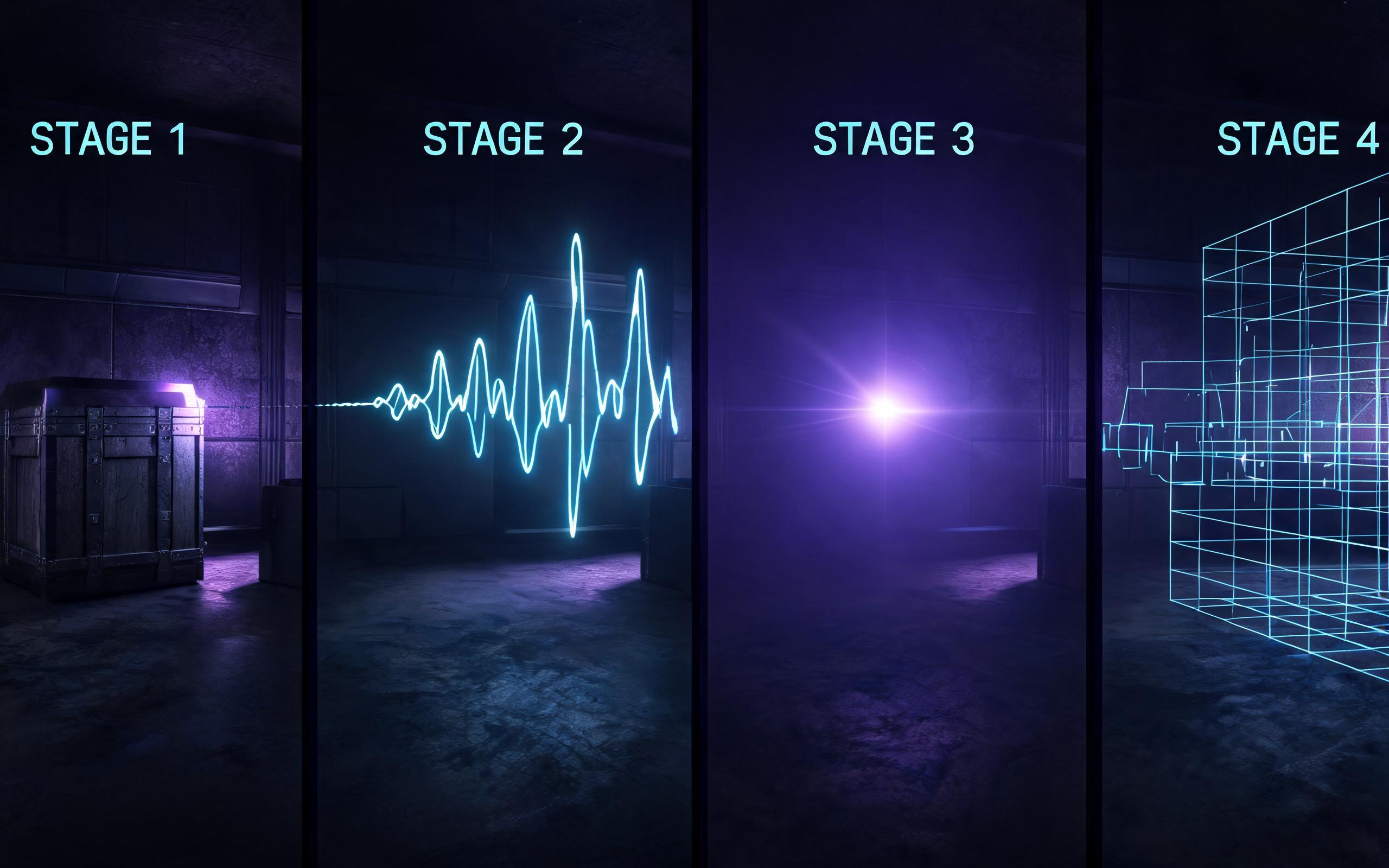
A level can be requested but not loaded, loaded but hidden, visible but transformed elsewhere, or present in editor while excluded from cooking. Log each state and check the actual package.

Reproduce with one room
Duplicate the smallest failing room into a clean test map. Remove gameplay dependencies, then restore triggers, data layers, blueprints, and packaging rules one at a time.
Decision and validation matrix
| Checkpoint | Owner or boundary | Acceptance evidence | Stop condition |
|---|---|---|---|
| Existence | Asset and cook inclusion | Package contains the room | |
| Load | Streaming request and authority | Loaded-state log | |
| Visibility | Visible flag/Data Layer | Actor is rendered | |
| Placement | Transform and origin | Known marker at expected coordinates |
Evidence map: what each checkpoint proves
Existence: evidence before confidence
Use this checkpoint to keep diagnosis falsifiable. For level stream rooms not showing unreal engine, the working boundary is “Asset and cook inclusion.” The reviewer should be able to inspect “Package contains the room” without relying on a polished screenshot or a verbal claim. Capture the exact source, version, settings, test target, and result that produced the evidence. If the result changes after a restart, package, account change, platform switch, or source update, treat the earlier result as stale. Stop and investigate when “Changing streaming distance before proving the asset cooks.” becomes the practical outcome, because continuing would mix a known uncertainty into later decisions.
Load: evidence before confidence
Record this checkpoint before changing the next variable. For level stream rooms not showing unreal engine, the working boundary is “Streaming request and authority.” The reviewer should be able to inspect “Loaded-state log” without relying on a polished screenshot or a verbal claim. Capture the exact source, version, settings, test target, and result that produced the evidence. If the result changes after a restart, package, account change, platform switch, or source update, treat the earlier result as stale. Stop and investigate when “Using editor visibility as runtime evidence.” becomes the practical outcome, because continuing would mix a known uncertainty into later decisions.
Visibility: evidence before confidence
Make this checkpoint visible in the handoff record. For level stream rooms not showing unreal engine, the working boundary is “Visible flag/Data Layer.” The reviewer should be able to inspect “Actor is rendered” without relying on a polished screenshot or a verbal claim. Capture the exact source, version, settings, test target, and result that produced the evidence. If the result changes after a restart, package, account change, platform switch, or source update, treat the earlier result as stale. Stop and investigate when “Calling load only on a client when server state owns it.” becomes the practical outcome, because continuing would mix a known uncertainty into later decisions.
Placement: evidence before confidence
Test this checkpoint in isolation before accepting the workflow. For level stream rooms not showing unreal engine, the working boundary is “Transform and origin.” The reviewer should be able to inspect “Known marker at expected coordinates” without relying on a polished screenshot or a verbal claim. Capture the exact source, version, settings, test target, and result that produced the evidence. If the result changes after a restart, package, account change, platform switch, or source update, treat the earlier result as stale. Stop and investigate when “Forgetting Level Instance or parent transforms.” becomes the practical outcome, because continuing would mix a known uncertainty into later decisions.
Scenario walkthroughs and edge cases
Scenario 1: Record the room path and streaming type
When the result is ambiguous, return to record the room path and streaming type. Then inspect Output Log during the load request. Keep the input set small enough that another person can reproduce the same result. Save the before state, the single change, and the observed after state instead of relying on memory. The failure pattern to guard against is “Changing streaming distance before proving the asset cooks.” If that risk appears, revert to the last accepted checkpoint, isolate the responsible system, and only then resume the level streaming troubleshooting workflow.
Scenario 2: Inspect Output Log during the load request
A production handoff should demonstrate inspect Output Log during the load request. Then confirm package inclusion and references. Keep the input set small enough that another person can reproduce the same result. Save the before state, the single change, and the observed after state instead of relying on memory. The failure pattern to guard against is “Using editor visibility as runtime evidence.” If that risk appears, revert to the last accepted checkpoint, isolate the responsible system, and only then resume the level streaming troubleshooting workflow.
Scenario 3: Confirm package inclusion and references
The fastest safe investigation usually starts with confirm package inclusion and references. Then check loaded and visible states separately. Keep the input set small enough that another person can reproduce the same result. Save the before state, the single change, and the observed after state instead of relying on memory. The failure pattern to guard against is “Calling load only on a client when server state owns it.” If that risk appears, revert to the last accepted checkpoint, isolate the responsible system, and only then resume the level streaming troubleshooting workflow.
Practical workflow
- Record the room path and streaming type.
- Inspect Output Log during the load request.
- Confirm package inclusion and references.
- Check loaded and visible states separately.
- Verify transform, origin, and Data Layers.
- Test standalone and packaged builds.
Handoff record for a second reviewer
A reliable level streaming troubleshooting handoff separates observed facts from assumptions. Use the following record to make the work repeatable:
- Record the room path and streaming type. Attach evidence for existence: package contains the room. Name the artifact or capture so its engine version, source revision, platform, and test date are recoverable. A reviewer should know what passed, what was not tested, and which change would invalidate the result.
- Inspect Output Log during the load request. Attach evidence for load: loaded-state log. Name the artifact or capture so its engine version, source revision, platform, and test date are recoverable. A reviewer should know what passed, what was not tested, and which change would invalidate the result.
- Confirm package inclusion and references. Attach evidence for visibility: actor is rendered. Name the artifact or capture so its engine version, source revision, platform, and test date are recoverable. A reviewer should know what passed, what was not tested, and which change would invalidate the result.
- Check loaded and visible states separately. Attach evidence for placement: known marker at expected coordinates. Name the artifact or capture so its engine version, source revision, platform, and test date are recoverable. A reviewer should know what passed, what was not tested, and which change would invalidate the result.
- Verify transform, origin, and Data Layers. Attach evidence for existence: package contains the room. Name the artifact or capture so its engine version, source revision, platform, and test date are recoverable. A reviewer should know what passed, what was not tested, and which change would invalidate the result.
- Test standalone and packaged builds. Attach evidence for load: loaded-state log. Name the artifact or capture so its engine version, source revision, platform, and test date are recoverable. A reviewer should know what passed, what was not tested, and which change would invalidate the result.
Questions the reviewer should be able to answer
- Can a second reviewer distinguish the existence decision from the wider level stream rooms not showing unreal engine claim? Ask them to locate the recorded boundary “Asset and cook inclusion,” reproduce “Package contains the room,” and explain whether “Changing streaming distance before proving the asset cooks.” would stop promotion. If any answer depends on private context or an uncaptured screen, the evidence package is incomplete.
- Can a second reviewer distinguish the load decision from the wider level stream rooms not showing unreal engine claim? Ask them to locate the recorded boundary “Streaming request and authority,” reproduce “Loaded-state log,” and explain whether “Using editor visibility as runtime evidence.” would stop promotion. If any answer depends on private context or an uncaptured screen, the evidence package is incomplete.
- Can a second reviewer distinguish the visibility decision from the wider level stream rooms not showing unreal engine claim? Ask them to locate the recorded boundary “Visible flag/Data Layer,” reproduce “Actor is rendered,” and explain whether “Calling load only on a client when server state owns it.” would stop promotion. If any answer depends on private context or an uncaptured screen, the evidence package is incomplete.
- Can a second reviewer distinguish the placement decision from the wider level stream rooms not showing unreal engine claim? Ask them to locate the recorded boundary “Transform and origin,” reproduce “Known marker at expected coordinates,” and explain whether “Forgetting Level Instance or parent transforms.” would stop promotion. If any answer depends on private context or an uncaptured screen, the evidence package is incomplete.
Common mistakes to avoid
- Changing streaming distance before proving the asset cooks.
- Using editor visibility as runtime evidence.
- Calling load only on a client when server state owns it.
- Forgetting Level Instance or parent transforms.
Related Unreal coverage
Official and primary sources
Source availability and product behavior can change. Recheck dates, versions, territories, licenses, and current support before acting.
Frequently asked questions
What is the direct answer for level stream rooms not showing unreal engine?
When streamed rooms do not appear, first identify the system that owns them: traditional sublevels, Level Instances, World Partition cells, or Data Layers. Confirm the level or actor exists in the packaged build, its transform is where expected, the load request executes on the correct authority, and visibility becomes true after loading. Then inspect logs and test a minimal room before changing streaming distances or rebuilding the whole world.
What should be verified first?
Record the room path and streaming type.
What is the main risk?
Changing streaming distance before proving the asset cooks.
What evidence should be saved?
Save the source version, settings, target platform, accepted output, and the result of the checkpoint “Package contains the room.” A screenshot without those boundaries is not enough to reproduce the decision.
When should the workflow stop?
Stop when the next action would depend on an unverified right, incompatible version, missing source, unsupported target, or a result that cannot be reproduced. Resolve that boundary before expanding the level streaming troubleshooting workflow.