
Key takeaways
- AI agents shift developer tools and SaaS from selling screens and seats toward selling completed, supervised work. The change is not simply a chat box: products need machine-readable capabilities, scoped permissions, durable receipts, usage controls, and pricing tied to value without hiding variable model and tool costs.
AI agents shift developer tools and SaaS from selling screens and seats toward selling completed, supervised work. The change is not simply a chat box: products need machine-readable capabilities, scoped permissions, durable receipts, usage controls, and pricing tied to value without hiding variable model and tool costs.
From user interface to executable capability
Traditional SaaS assumes a person navigates screens. An agent needs a stable API or tool contract, clear descriptions, typed inputs, predictable errors, and a way to inspect state. Products that expose only a visual interface may still be automated through a browser, but reliability and auditability are weaker. Designing an agent-ready capability layer benefits human integrations too.
The user experience changes from repeated clicks to intent, preview, approval, and review. Screens remain important for configuration, exceptions, and accountability. The winning pattern is often not “no UI” but a UI that explains what the agent plans to do, what data it used, and what actually changed.
Pricing units must follow controllable value
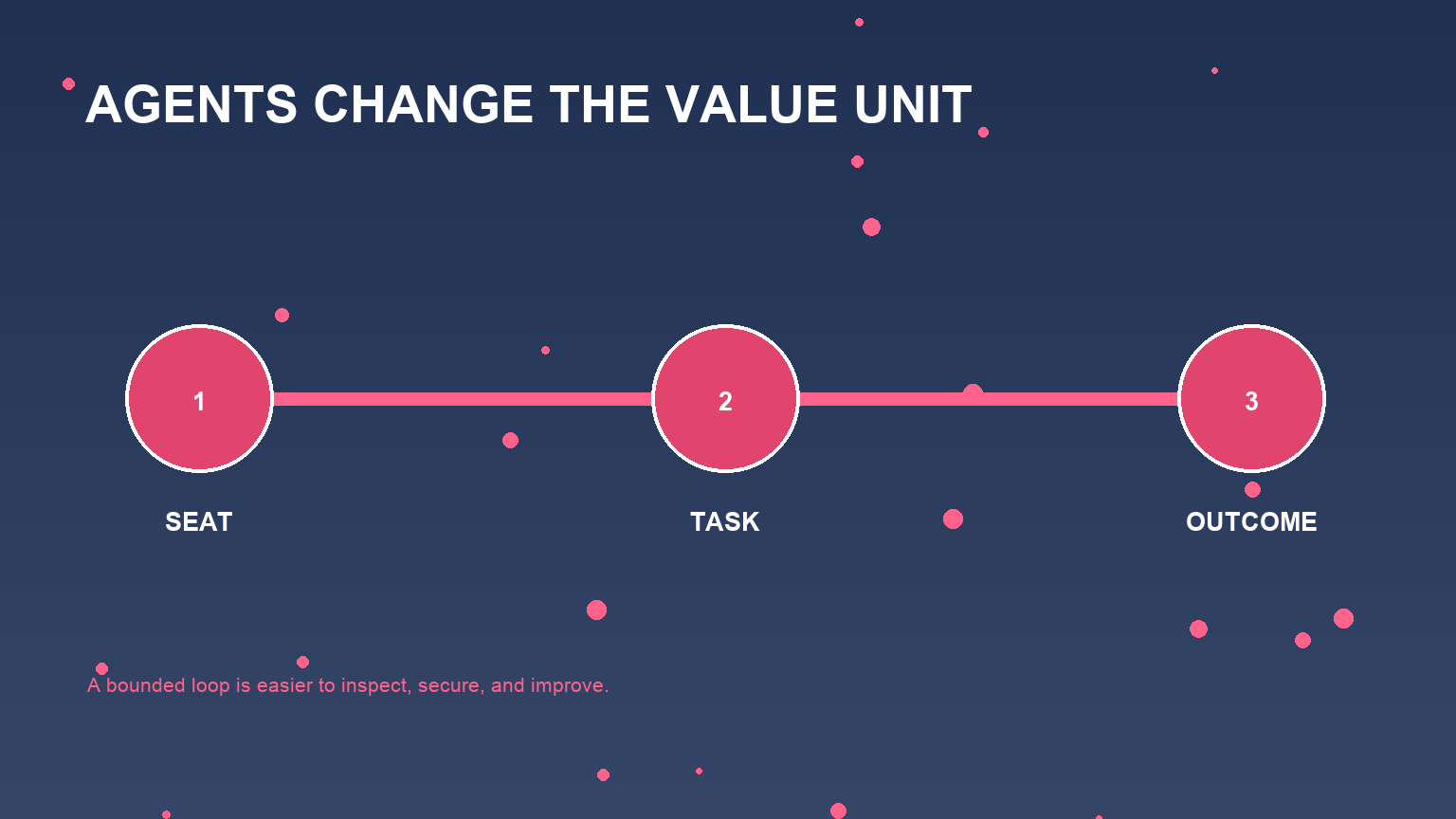
Per-seat pricing becomes less descriptive when one person supervises many automated runs or when agents act across teams. Alternatives include usage, workflow runs, outcomes, managed capacity, or hybrid plans. Each has risks. Token pricing is transparent to engineers but disconnected from business value; outcome pricing is attractive but requires a precise, fraud-resistant definition.
A practical model separates a predictable platform fee from metered compute or third-party costs, then adds budgets and alerts. Customers need to understand retries, failed runs, cached work, and human review. Pricing should not incentivize unsafe autonomy or discourage necessary verification.
Permissions become a product surface
Agents turn permissions from an admin afterthought into a core workflow. Customers need service identities, scoped roles, short-lived credentials, environment boundaries, approval policies, and complete audit trails. “Use the user’s token everywhere” creates attribution and offboarding problems. A product should distinguish read, draft, and commit actions.
Enterprise buyers will ask how prompts and tool results are retained, whether data trains models, where processing occurs, and how subprocessors are controlled. Product and security teams should answer with concrete architecture and contracts rather than generic AI language.
Reliability includes the whole workflow
A model can select the right action while a tool fails, times out, returns stale state, or reports a misleading success. Agent-ready SaaS needs idempotency, postcondition checks, resumable runs, replayable traces, and safe cancellation. Support teams need to see the same evidence the customer sees without exposing secrets.
Evaluation becomes a continuous product function. Maintain representative tasks, policy tests, adversarial inputs, and regression traces. Measure human correction time and error severity, not only completion rate. A faster run that creates more review work may not deliver value.
Defensibility moves toward context and trust
Model access alone is unlikely to remain a durable moat. Stronger advantages come from proprietary workflow knowledge, high-quality integrations, verified data, distribution, customer-specific policy, and a trusted record of execution. The product that owns the approval and evidence layer can be more valuable than a thin model wrapper.
Open protocols may reduce integration friction, but they also make switching easier. Vendors should compete on reliable capabilities, governance, and outcomes rather than lock-in through undocumented behavior. Clear export and migration paths can increase enterprise confidence.
A staged rollout for SaaS teams
Start with assistive features that draft or explain, then add bounded actions with previews, and only later consider supervised multi-step workflows. Pick one repeated customer job with measurable inputs and outputs. Define the failure budget and approval points before the demo.
Instrument cost, latency, correction, escalation, and support burden. Pilot with customers who can provide detailed feedback. Keep manual fallback and rollback. AI agents can expand a SaaS product’s value, but the business model works only when the company can explain and control how work is performed.
Implementation worksheet
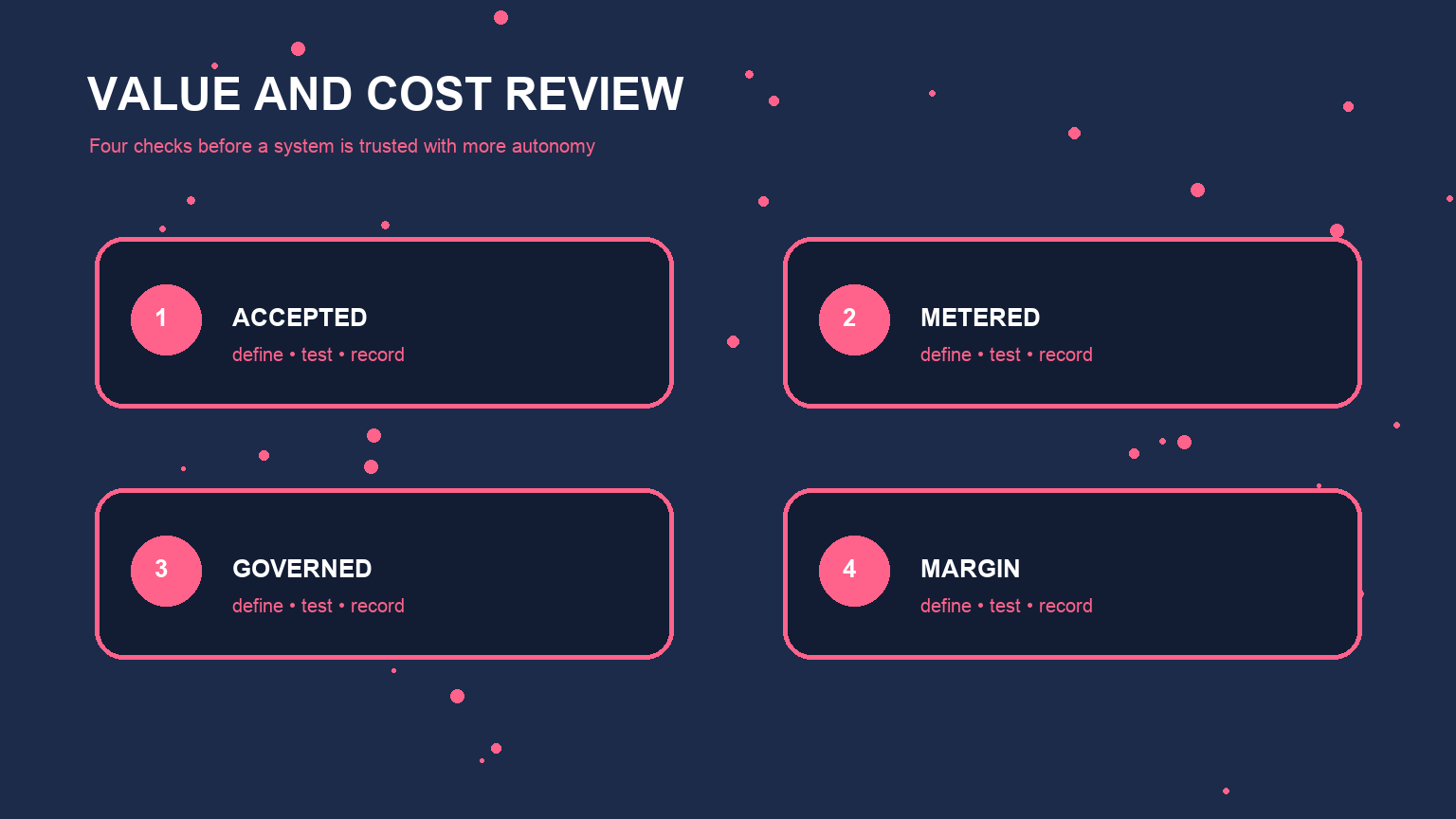
Select one customer job and write its current steps, cycle time, error cost, and approval owner. Prototype an agent-ready capability contract and instrument every run. Compare platform revenue, variable inference and integration cost, human correction time, support load, and customer value. Test seat, usage, workflow, and hybrid pricing against the same workload. A launch decision should include budget controls, failure treatment, data terms, migration paths, and a clear promise that does not depend on unlimited autonomy.
Frequently Asked Questions
Will AI agents replace SaaS user interfaces?
Not entirely. Agents can execute routine workflows, while interfaces remain important for configuration, preview, approval, exception handling, and audit.
What pricing model fits agentic SaaS?
Many products will use a hybrid of platform access and metered usage or workflow runs, with budgets and clear treatment of retries, failures, and third-party costs.
What makes a developer tool agent-ready?
Stable typed APIs or tools, scoped identities, predictable errors, idempotency, postcondition checks, audit receipts, and safe cancellation are key foundations.
Where is defensibility in agentic SaaS?
Workflow expertise, trusted integrations, verified context, governance, distribution, and reliable execution records are stronger moats than model access alone.