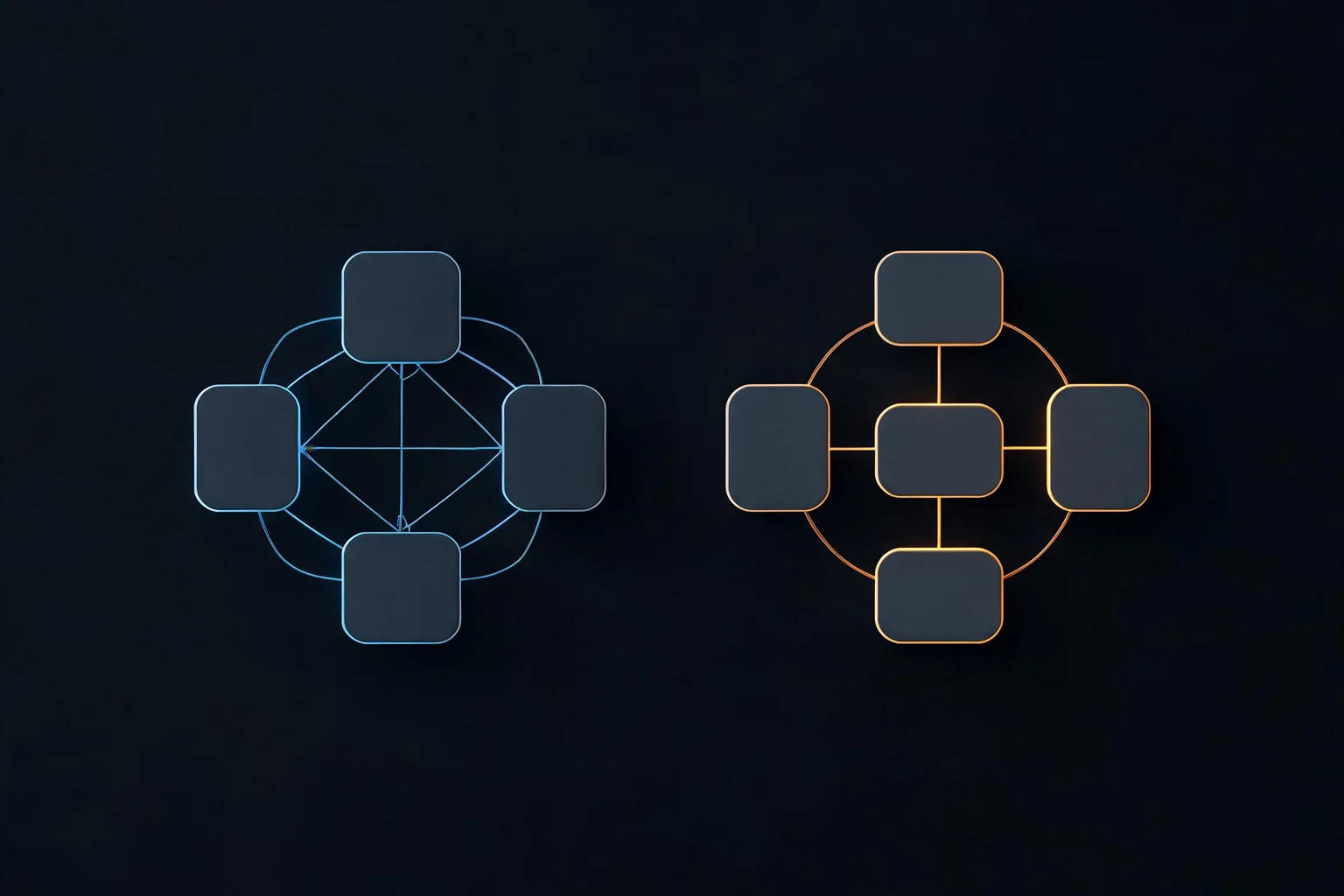

1. Define the authoritative server contract
The server contract begins with authority. The server owns match rules, damage, inventory changes, spawn eligibility, and persistent outcomes; clients submit inputs and may predict presentation. Mark every replicated property and RPC with its owner, validation rule, audience, update frequency, and recovery behavior. If two systems can author the same state, correction bugs and exploits follow.
Use one concrete trace: a client presses fire, the server validates weapon state and timing, applies damage, updates authoritative ammo, and replicates the result. Test a forged target, expired cooldown, lost packet, correction, and late join. A dedicated process is not secure simply because it has no local player or rendering window.
Define the authoritative server contract checklist
- State the decision for “Define the authoritative server contract” in one sentence.
- Record how authoritative server target is owned, versioned, and validated.
- Test the related query “unreal engine dedicated server” against the same acceptance criteria.
- Capture bandwidth, update frequency, correction, relevancy, join time, failure recovery, and security boundary.
- Keep a reversible working revision and write the limitation that would force rollback.
2. Create and package the dedicated server target
A dedicated-server build needs an explicit server target, compatible engine and plugin modules, cooked maps, command-line startup, and a game mode that reaches a playable state without local rendering. Epic documentation notes source-build requirements for the documented workflow; verify that constraint against the exact Unreal version and distribution used by the project.

Automate a clean checkout through server compile, cook, stage, package, and boot. The smoke test should wait for a known readiness log or health signal, connect two matching clients, start a match, and shut down cleanly. Save artifact hashes, config, command line, map, ports, build version, and the earliest failure line.
Create and package the dedicated server target checklist
- State the decision for “Create and package the dedicated server target” in one sentence.
- Record how session lobby and authentication flow is owned, versioned, and validated.
- Test the related query “unreal online subsystem tutorial” against the same acceptance criteria.
- Capture bandwidth, update frequency, correction, relevancy, join time, failure recovery, and security boundary.
- Keep a reversible working revision and write the limitation that would force rollback.
3. Design sessions lobbies authentication and travel
Sessions and lobbies are discovery records, not the authoritative match itself. Define identity, entitlement, party membership, region, capacity, admission, reservation expiry, reconnect token, and travel ownership. Decide how the session record is reconciled when the server starts slowly, crashes after allocation, or accepts a player the backend has already removed.
Exercise the lifecycle as a state machine: create party, search, reserve, allocate, authenticate, join, travel, play, disconnect, reconnect, complete, and destroy. Test version mismatch and full capacity explicitly. Seamless travel is useful only when the gameplay framework, player state, and backend records agree about what survives.
Design sessions lobbies authentication and travel checklist
- State the decision for “Design sessions lobbies authentication and travel” in one sentence.
- Record how replication under latency and packet loss is owned, versioned, and validated.
- Test the related query “unreal engine lobby system” against the same acceptance criteria.
- Capture bandwidth, update frequency, correction, relevancy, join time, failure recovery, and security boundary.
- Keep a reversible working revision and write the limitation that would force rollback.
4. Validate replication under real network conditions
Network validation needs impaired conditions. Run at least two packaged clients with emulated latency, jitter, loss, and constrained bandwidth. Observe property update rates, reliable RPC queues, relevancy, dormancy, prediction error, correction, join time, and replicated payload size. A zero-latency listen-server session hides the failures a remote authoritative host must resolve.
Define scenario gates such as p95 correction distance, maximum join time, bandwidth per player, and recovery after a brief outage. Include late join, host patch mismatch, duplicate input, packet reordering, and a client that disappears during travel. Record both server and client timestamps so one event can be reconstructed across logs.
Validate replication under real network conditions checklist
- State the decision for “Validate replication under real network conditions” in one sentence.
- Record how deployment observability security and cost is owned, versioned, and validated.
- Test the related query “unreal engine dedicated server” against the same acceptance criteria.
- Capture bandwidth, update frequency, correction, relevancy, join time, failure recovery, and security boundary.
- Keep a reversible working revision and write the limitation that would force rollback.
5. Deploy observe and secure the service
Deployment adds responsibilities the editor does not model: immutable artifacts, regional placement, port and firewall rules, secrets, orchestration, autoscaling, log and metric collection, crash dumps, draining, abuse controls, and patch rollback. Separate build configuration from environment secrets and refuse to start when required compatibility data is missing.

A production dashboard should answer whether allocation succeeds, servers become ready, players authenticate, matches complete, bandwidth stays bounded, and crashes or disconnects cluster by build and region. Security review should cover client-trusted fields, replayed RPCs, admin surfaces, dependency updates, denial-of-service limits, and log redaction.
Deploy observe and secure the service checklist
- State the decision for “Deploy observe and secure the service” in one sentence.
- Record how authoritative server target is owned, versioned, and validated.
- Test the related query “unreal online subsystem tutorial” against the same acceptance criteria.
- Capture bandwidth, update frequency, correction, relevancy, join time, failure recovery, and security boundary.
- Keep a reversible working revision and write the limitation that would force rollback.
6. Budget bandwidth compute persistence and scale
Estimate capacity from measured matches, not a desktop idle process. Capture CPU by thread, peak and resident memory, network egress, tick stability, startup time, map transition, log volume, and persistent-store calls for representative player counts. Repeat with bots only after confirming that the bot workload resembles actual player traffic.
Convert the measurements into instances per host, safe matches per region, warm capacity, scale-up delay, and cost per player-hour. Add load balancer, orchestration, telemetry, database, egress, support, and incident overhead. Preserve headroom for patches and pathological matches instead of filling every machine to a synthetic average.
Budget bandwidth compute persistence and scale checklist
- State the decision for “Budget bandwidth compute persistence and scale” in one sentence.
- Record how session lobby and authentication flow is owned, versioned, and validated.
- Test the related query “unreal engine lobby system” against the same acceptance criteria.
- Capture bandwidth, update frequency, correction, relevancy, join time, failure recovery, and security boundary.
- Keep a reversible working revision and write the limitation that would force rollback.
7. Ship with a reproducible multiplayer runbook
The release runbook should identify artifact promotion, compatibility rules, config ownership, secret rotation, readiness, smoke tests, canary percentage, rollback, drain behavior, database changes, and incident contacts. A server build that launches manually is not releasable until those steps are repeatable and observable.
Run a game-day failure: deploy a bad canary, detect it from a player-facing signal, stop allocation, drain or terminate affected matches according to policy, restore the previous artifact, and reconcile session records. Record the recovery time and every undocumented intervention; those gaps become release work, not footnotes.
Ship with a reproducible multiplayer runbook checklist
- State the decision for “Ship with a reproducible multiplayer runbook” in one sentence.
- Record how replication under latency and packet loss is owned, versioned, and validated.
- Test the related query “unreal engine dedicated server” against the same acceptance criteria.
- Capture bandwidth, update frequency, correction, relevancy, join time, failure recovery, and security boundary.
- Keep a reversible working revision and write the limitation that would force rollback.
SEELE AI Unreal 5 workflow: generate, preview, optimize, package, and publish
SEELE AI is useful before or alongside Unreal production when the team needs to compare a scene direction, player loop, camera feel, content brief, or test plan. Open the canonical Unreal landing page, choose a real workspace card, and carry the prompt into the browser generation workspace with its source attribution intact.
SEELE AI can generate a native Unreal 5 game, preview it in-browser, optimize and package it, and provide a downloadable game or packaged build for external publishing or paid Seele games. Sales are not guaranteed.
Official sources and related Unreal guides
This page is an independent workflow guide. Engine behavior changes across releases, plugins, platforms, and project settings, so confirm version-specific details in Epic documentation and preserve the evidence used for your decision.
Unreal Engine is a trademark of Epic Games. SEELE AI is independent and this guide is not an Epic endorsement.
- Setting up dedicated servers — first-party material for product scope, workflow, version, or policy checks; use only the claims the source actually states.
- Networking and multiplayer in Unreal Engine (reviewed July 2026) — first-party material for product scope, workflow, version, or policy checks; use only the claims the source actually states.
- Online Services in Unreal Engine (reviewed July 2026) — first-party material for product scope, workflow, version, or policy checks; use only the claims the source actually states.
Frequently asked questions
What is an Unreal dedicated server?
It is a headless authoritative build that runs gameplay state without rendering a local player view.
Do I need a source build?
Many dedicated-server workflows require an Unreal source build and explicit server target configuration. Verify your engine version.
Is replication enough for matchmaking?
No. Sessions, discovery, authentication, admission, travel, capacity, and failure recovery are separate concerns.
How should I test network behavior?
Use multiple packaged clients with latency, loss, late join, reconnect, correction, and bandwidth measurements.
Where should the server run?
Choose regions from player latency, compliance, cost, autoscaling, observability, and operational support requirements.
What proves server readiness?
A reproducible build, launch runbook, load evidence, security review, telemetry, rollback, and failure-recovery test.