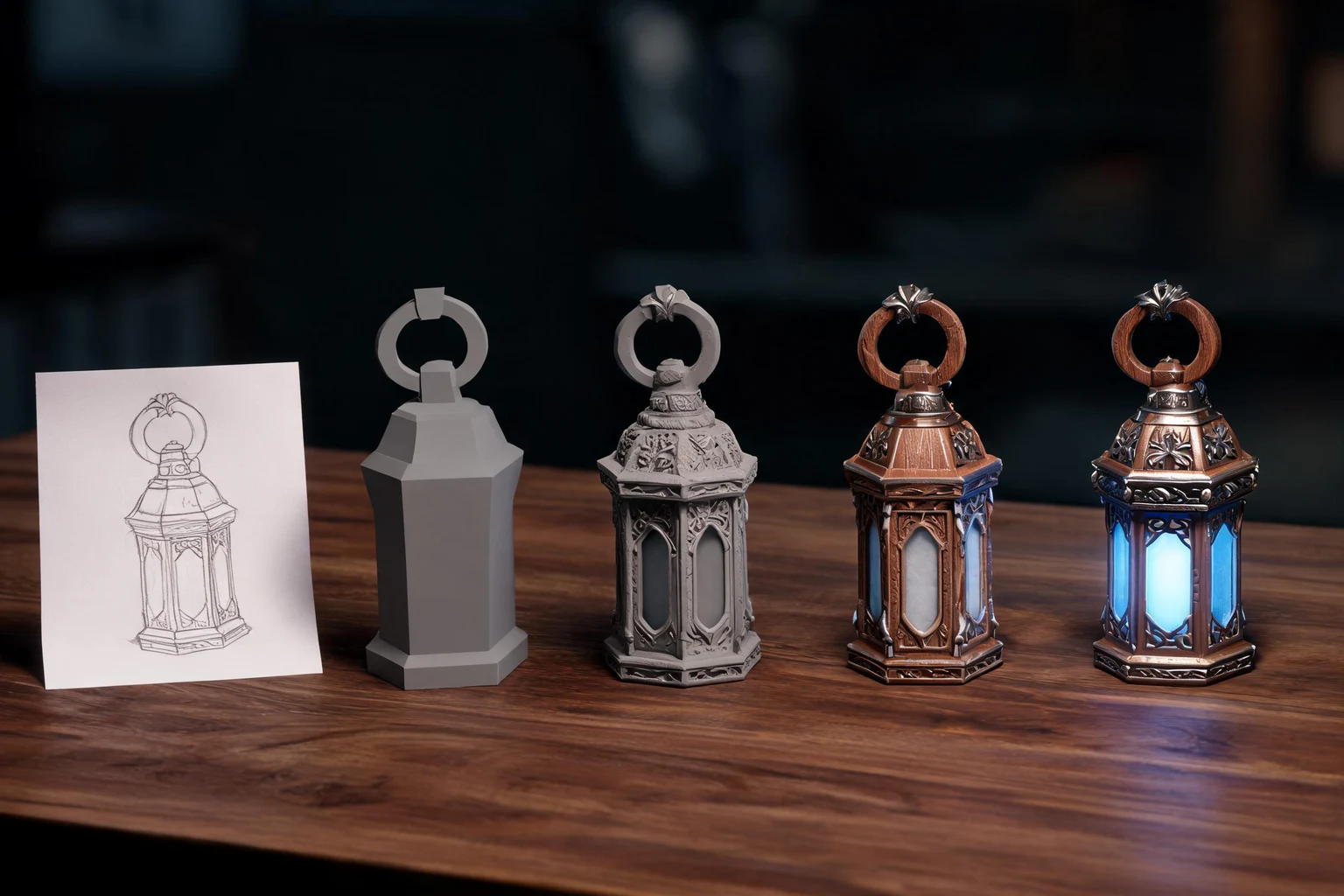
AI-assisted game development is easier to coordinate when a team assigns an owner to each decision. A designer owns the brief, a developer owns integration, an artist or art director owns visual direction, and a producer or project lead owns the acceptance decision. One person may hold several roles on a small team, but the handoff still needs to be explicit.
This is a team guide, not a general prototype checklist. Its focus is how a brief moves between people, what information travels with it, and what counts as an acceptable result at each stage.
Key Takeaways - Name an owner for the brief, generated output, integration, and review. - Define acceptance criteria before prompting so the next person can evaluate the result. - Record what was observed, what remains unknown, and who owns the next action.
Assign roles around decisions
A compact team can use four decision roles:
| Role | Owns | Handoff artifact |
|---|---|---|
| Design lead | Player promise, core loop, scope boundaries | Approved one-page brief |
| Builder | Prompt execution, integration, build notes | Prototype and change summary |
| Visual lead | Style constraints and asset review | Reference sheet and asset notes |
| Reviewer or producer | Acceptance decision and unresolved risks | Test record with next actions |
These are responsibilities, not required job titles. On a solo project, the creator can switch roles, but should still make each decision separately. A builder should not treat a generated answer as approved design merely because the tool produced it.
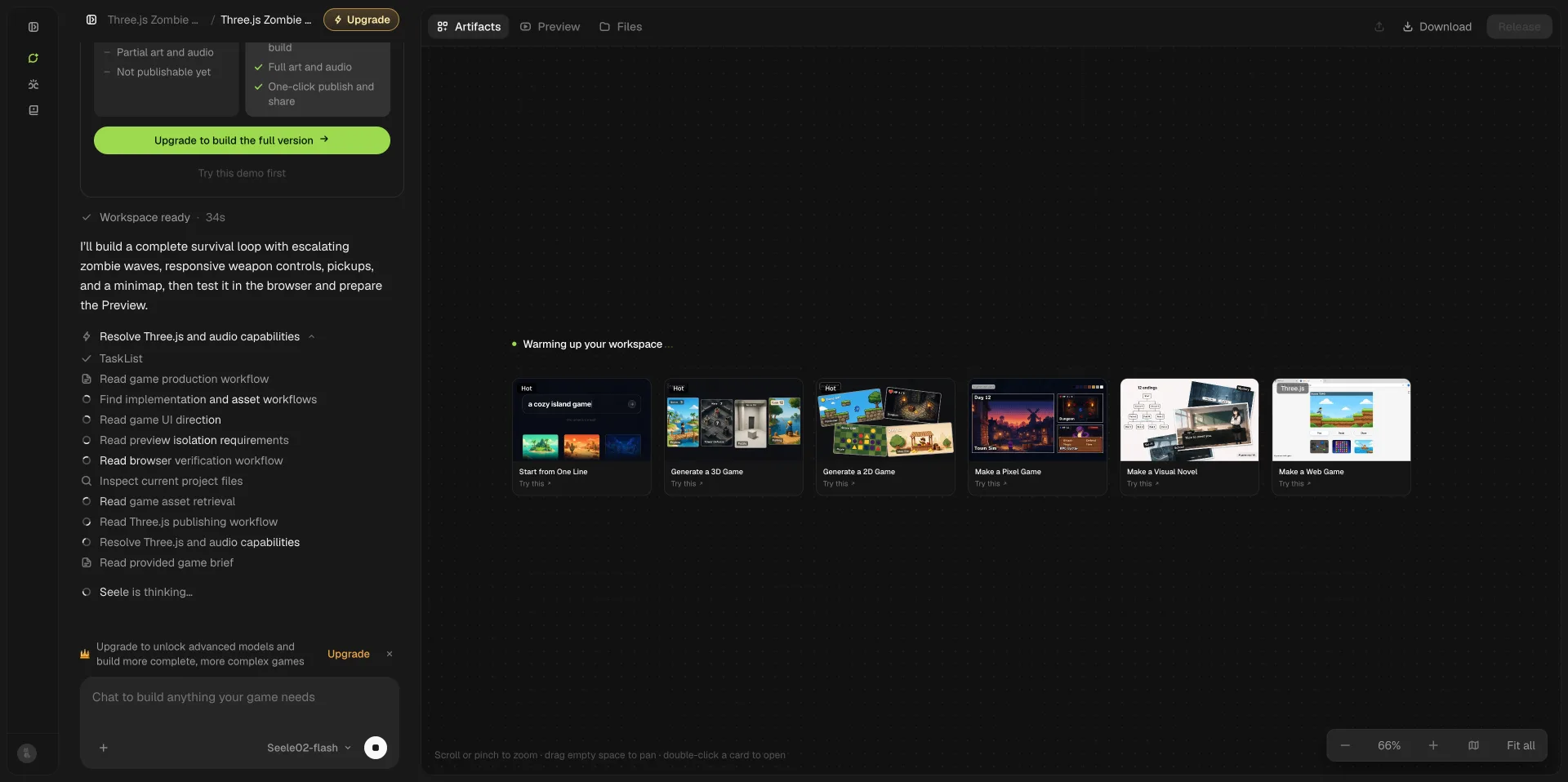
For example, the supplied October 2026 test record describes a Three.js first-person zombie-survival prompt. The brief owner can specify the requested controls and HUD; the builder can produce a preview; the reviewer can then test only what the available build and recording expose. That division keeps a task request separate from a verified outcome.
Put acceptance criteria in the handoff
“Make a playable prototype” is not enough to guide the next person. Write criteria that a reviewer can observe. A short handoff might require: the project opens in the intended environment; the player can reach the first encounter; the main action produces visible feedback; and the reviewer can identify any blocker without guessing what the prompt meant.
Separate criteria into three categories:
- Must pass: necessary to test the central game idea.
- Should pass: useful polish that can be deferred if the core test works.
- Unknown until tested: behavior the current build or available evidence has not established.
When a build becomes available, the builder should attach the preview location, a concise change summary, known limitations, and steps to reproduce the main test. Avoid sending only a screenshot of a successful-looking panel. The next person needs enough context to repeat the test.
Keep review notes tied to evidence
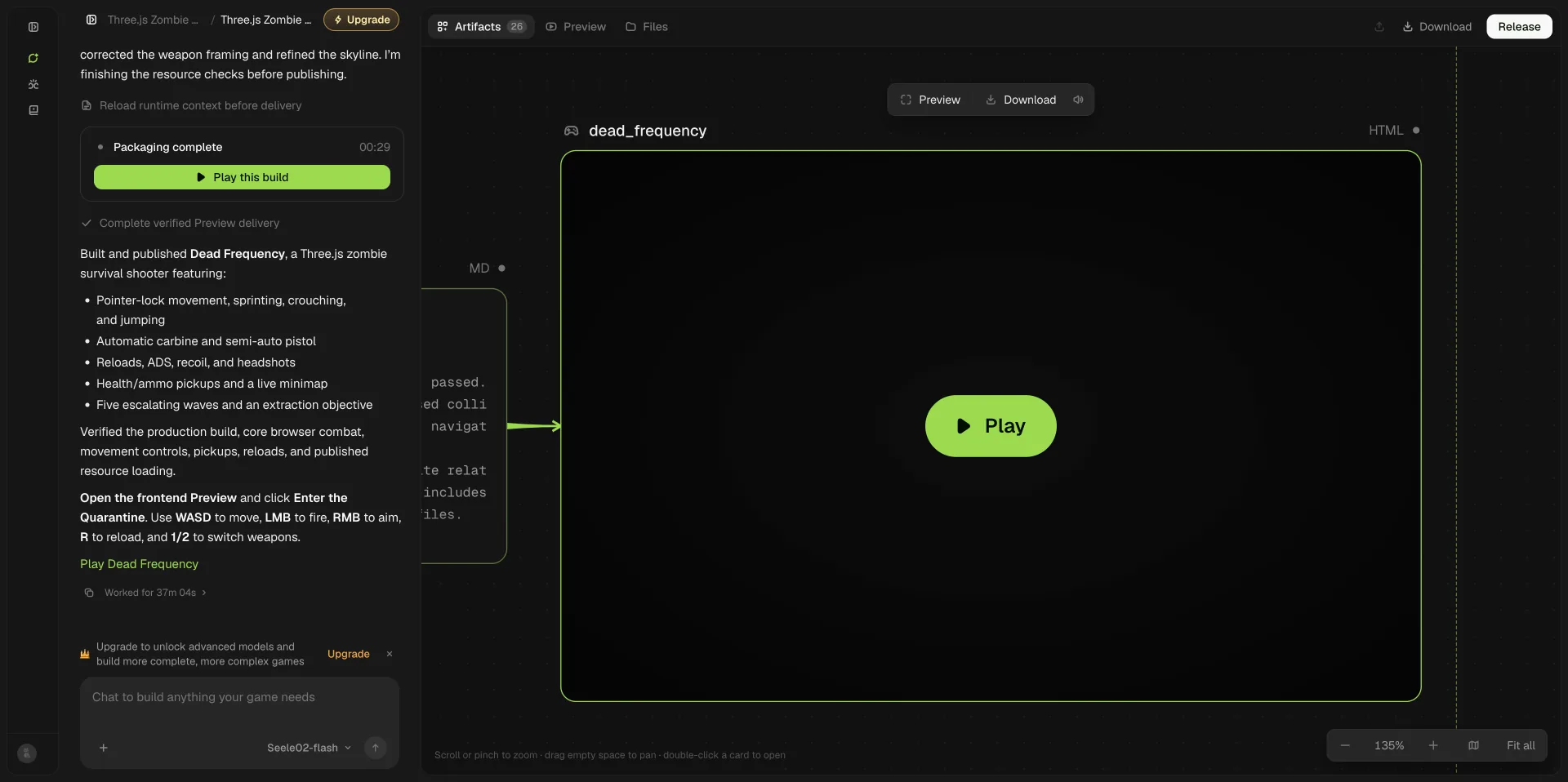
The reviewer should report what they directly observed, the test conditions, and what was not checked. The provided zombie test record states that a 21.5-second gameplay recording shows part of the first wave. It lists visible elements such as a first-person weapon view, health and ammunition HUD, minimap, wave count, enemies, and a pickup prompt. It also states that the record does not independently verify every requested feature, all five waves, or browser compatibility.
That distinction matters in a team handoff. “Requested” belongs in the brief. “Visible in the clip” belongs in the observation. “Works across browsers” belongs in unknown until a separate compatibility test supports it. A reviewer can then assign follow-up work without turning an assumption into a requirement already marked complete.
Make release ownership explicit
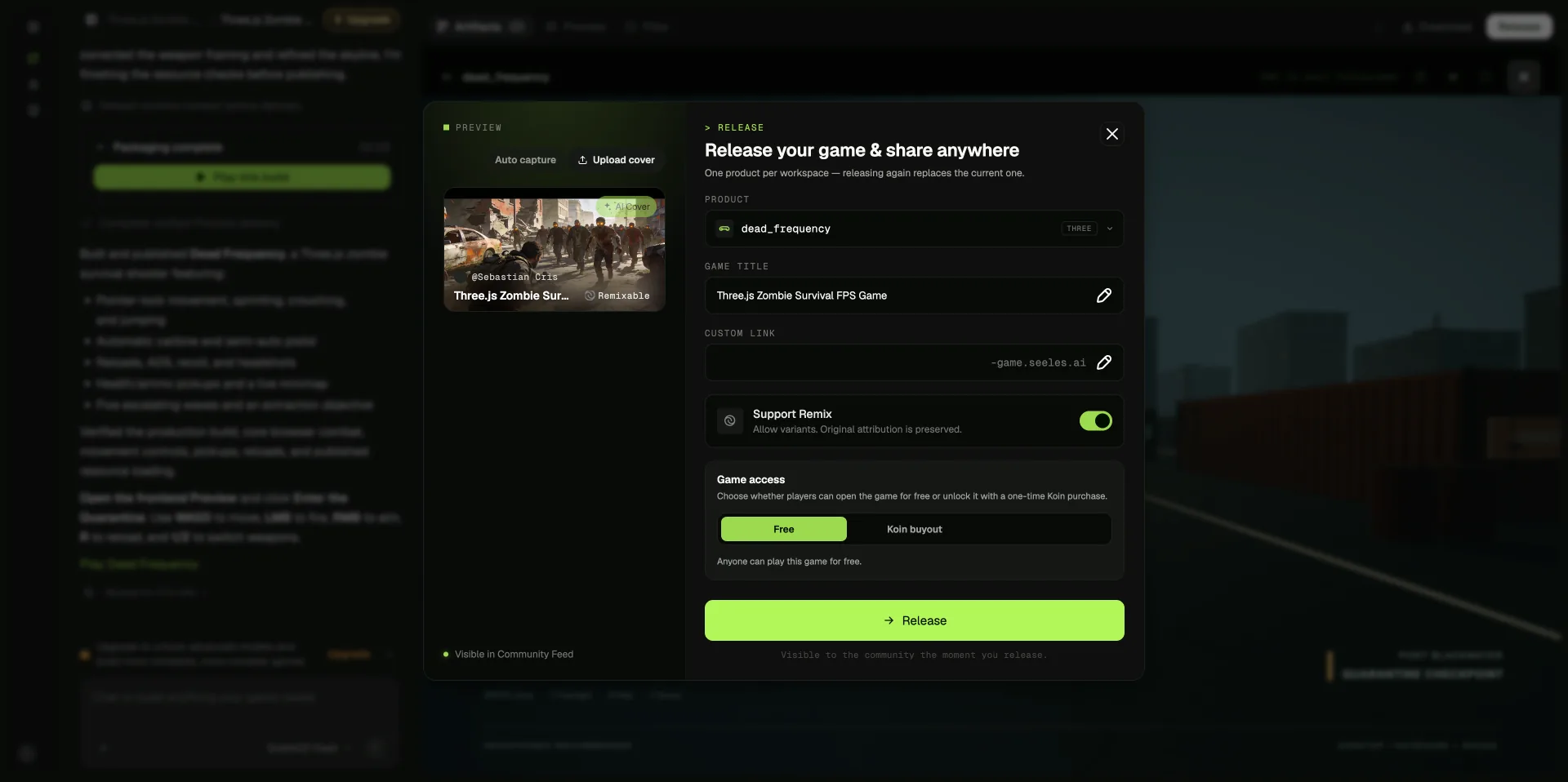
The release decision should have one accountable owner. That person checks whether the title and description match the current build, confirms the intended access setting, and verifies that unresolved questions are either addressed or disclosed. A release interface alone does not confirm that the project is ready or has been published.
A useful handoff ends with a short decision: accept for the next prototype iteration, return for a specific fix, or pause because a key assumption remains untested. The decision should identify a person and a next step. “Needs polish” is too broad to act on; “the objective is not visible before the first encounter” points to a concrete revision.
Keep the team loop small
Use one shared brief and one review record rather than creating a new process for every tool. After each cycle, update only the criteria that changed. This keeps AI output inside the team’s existing design and production responsibilities.
For the review checkpoint itself, see a human-reviewed prototype workflow. Teams planning a first build can start with a game brief-to-prototype workflow. The zombie shooter prompt walkthrough shows the supplied test record and its limits.
AI can speed up drafting and exploration. Clear ownership and acceptance criteria are what let a small team decide whether the result is useful.
A handoff example for a small indie team
Consider a three-person team exploring a first-person survival concept. One person owns design, one builds the prototype, and one reviews playtests and release readiness. Titles matter less than named decisions: the design owner approves the player promise, the builder reports what was implemented, and the reviewer records what was actually tested. A single person may hold two roles, but the handoff still needs to say which decision they are making at that moment.
The brief can fit on one page. It states the player’s first action, the goal of the first encounter, the feedback that signals danger or progress, the controls required for the test, and features deliberately left out. The team then writes acceptance checks in plain language. “The HUD works” is too broad. “A new player can distinguish health from ammunition during the opening encounter” gives the reviewer a task they can perform and a result they can record.
A useful handoff packet has four parts:
- Approved brief: the player promise, scope, and open assumptions.
- Build note: what was added or changed, including known omissions.
- Review card: the steps to perform and the result expected for each check.
- Decision record: what the team observed, what remains unknown, and who owns the next action.
This is enough structure to prevent a common coordination problem: the designer thinks a mechanic is in scope, the builder assumes it is a later feature, and the reviewer evaluates a different promise. The packet does not need a new project-management system. A shared document or issue can work if the team keeps one current version and identifies the build it describes.
Resolve disagreements with a test, not a louder opinion
Small teams often disagree about whether an interaction is clear, whether a feature belongs in the prototype, or whether a generated visual is close enough to the intended style. First separate preference from a testable claim. “I prefer the darker lighting” is a direction choice. “Players cannot see the pickup prompt before they pass the item” is a usability claim that can be checked.
When the disagreement is testable, agree on a small observation before changing the build. Ask several people who have not seen the feature to try the same short task. Do not coach them during the first attempt. Record whether they found the objective, what they tried, where they hesitated, and what they thought the feedback meant. A handful of observations is not a statistical study; it is a way to discover concrete issues worth investigating. Avoid converting informal feedback into precise population claims.
When the disagreement is a creative choice, name the decision owner and the reason for the choice. The team can still record a dissenting concern and a condition that would trigger revisiting the decision. This keeps a discussion from reopening every time someone sees a new generated variation.
Keep asynchronous work reviewable
AI-assisted work can produce many drafts quickly. That increases the value of a clear change summary. A builder should describe the intended change, list files or assets affected when relevant, state what was checked, and flag anything that still needs validation. A reviewer should be able to distinguish a generated proposal from a merged or tested implementation.
For example, a note might say: “Added a wave counter and pickup prompt to the prototype. The counter is visible during the recorded portion of wave one; pickup collection has not yet been tested. Next: verify the collection action and its inventory effect.” That note is more useful than “Added pickups and waves,” because it makes the boundary of the evidence visible.
Use a simple status vocabulary consistently: proposed, implemented, observed, failed, not tested, and accepted for this scope. Do not label a task “done” when the brief, implementation, and evidence refer to different versions. If a new build changes controls or scene flow, keep the previous review note attached to the old build and repeat affected tests on the new one.
A practical team cadence
A short project can review its brief before generation, inspect the first build together, and end each playtest with a decision meeting. The meeting should answer three questions: what did we learn, what remains unknown, and what is the smallest next action? If the team cannot answer those questions, it may need a clearer test rather than another round of prompting.
At the end of a session, the decision owner records whether the team will continue, revise, test further, or stop. Name a person and a due point for each next action. This cadence keeps experimentation moving while preserving the context needed by someone who did not attend.
What if the tool generates something outside the brief?
Treat it as an unrequested suggestion. Keep it only if the decision owner confirms that it supports the test and the team can review its impact. Otherwise, remove it or mark it out of scope so the prototype remains interpretable.
Does every teammate need to review every output?
No. Assign review according to the risk and expertise required. A visual lead can check art direction, a developer can inspect integration, and a producer can verify scope and release criteria. Share the combined decision record so each person understands what the team has accepted.