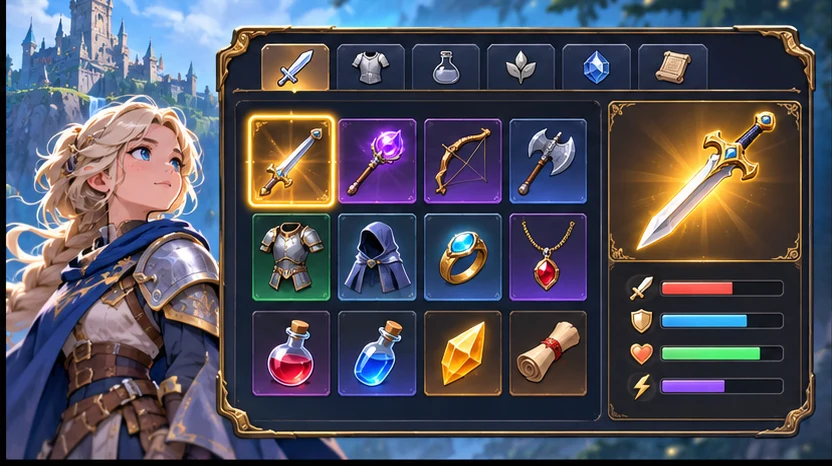

Build a focused first pass
Use your game context to prepare a game UI concept with hierarchy, target resolution, and visible interaction states.

Make the art read at the size players see it. Ask seeleAgent for a game UI concept with hierarchy, target resolution, and visible interaction states. Describe what you are making and how the player will use it.
Partners and teams

















How it works
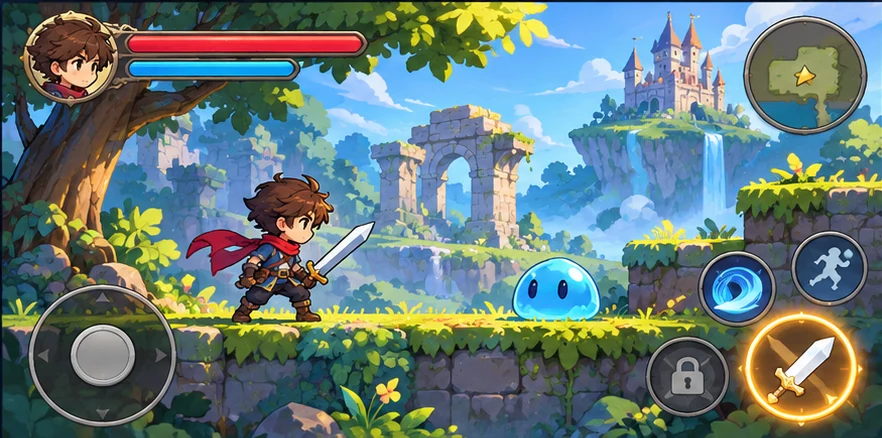
Describe the genre, camera or screen size, and what the player should notice or do. Start with a game UI concept with hierarchy, target resolution, and visible interaction states.
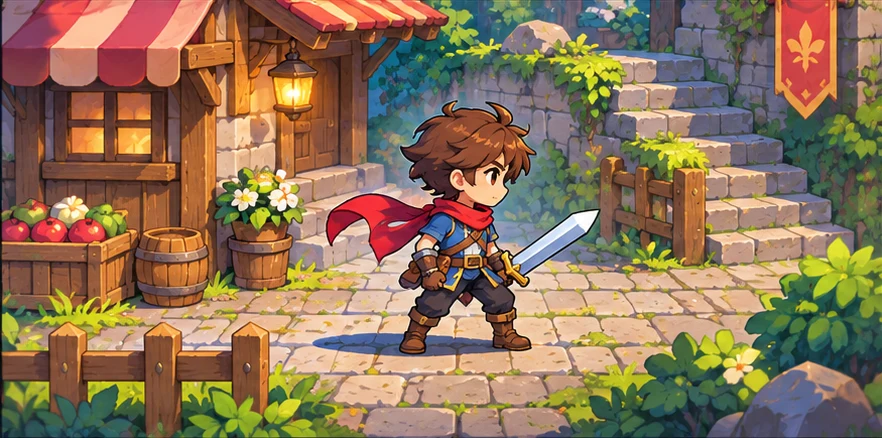
Ask for two versions around the same scene or player action. Vary one choice at a time so you can compare the result.
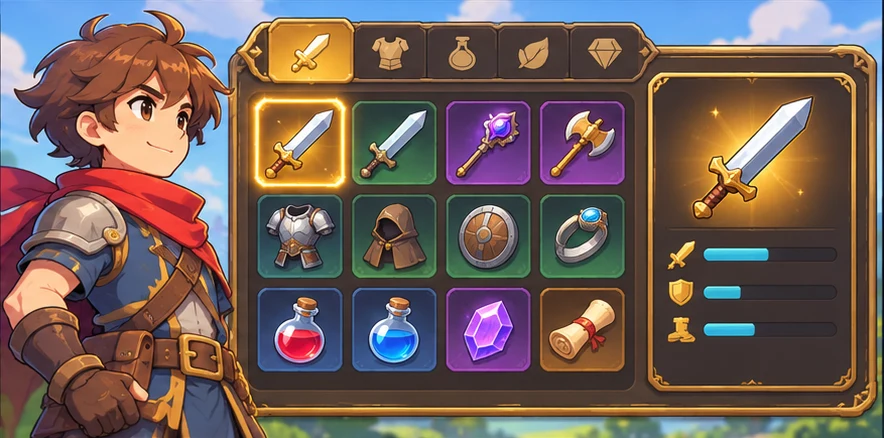
Use a small scene or sample to check your choice. The subject reads against a busy tile background. Keep the decisions you want to carry into your next pass.
Pick a starting point
Use a starting prompt from this tool and adapt it to your own game.
Create a clean RPG inventory UI with item grid, details panel, and readable rarity colors.
Why SEELE
Use your game context to prepare a game UI concept with hierarchy, target resolution, and visible interaction states.

Keep the same game scene and compare two approaches before deciding what to make.

Set one acceptance check for the next pass. The subject reads against a busy tile background.
FAQ
AI Game UI Generator is a SEELE AI workflow for turning a game asset brief into structured prompts, variants, review notes, and production handoff inputs.
It can create strong production inputs, but final game use still needs human review for originality, style fit, platform policy, and engine requirements.
Start with the asset type, genre, camera or UI context, size constraints, style direction, and what the asset must do for the player.
Use the generated direction inside SEELE AI workflows for 2D assets, 3D assets, textures, sprites, UI, animation, browser previews, or Unity-oriented handoff.
Describe the game, the moment the player sees or uses the result, and the constraint that matters most. Ask for a game UI concept with hierarchy, target resolution, and visible interaction states.
Try it in a small scene or review it from the player camera. For the first example, check that the subject reads against a busy tile background.
Yes. Pick one small scene or interaction and describe what the player should see or do. You can revise the prompt as the idea becomes clearer.
Bring a game idea to Workspace and work through a game UI concept with hierarchy, target resolution, and visible interaction states.
Write a game prompt