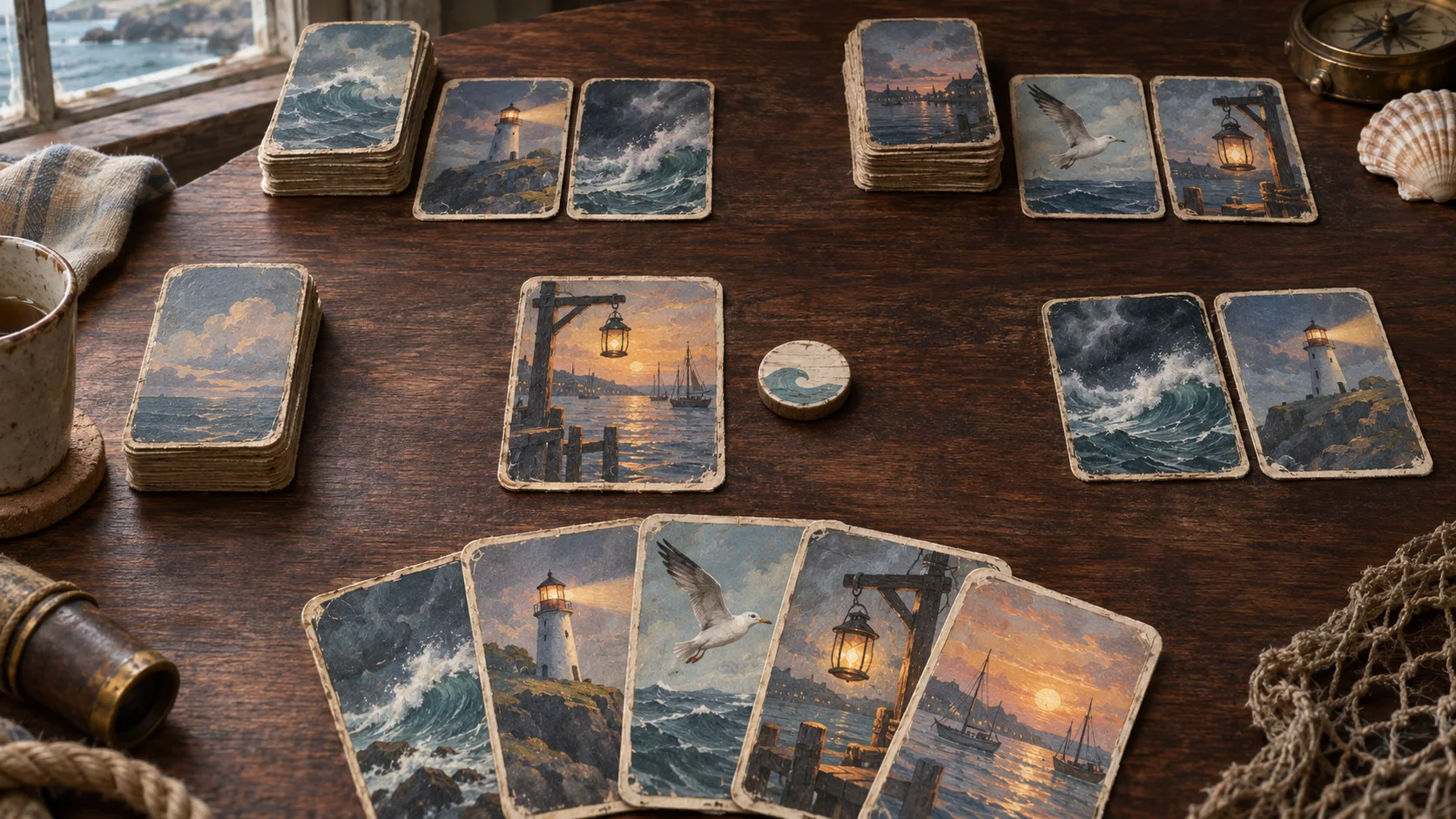


Define the turn before the card pool
A clear sequence makes it easier to judge whether individual effects fit.

Define what players draw, choose, and risk before adding more cards. Outline an original card game by setting the turn sequence, the player’s choices, and how a round ends. Start with a small deck and one opponent, then review whether card effects are understandable and each choice has a cost.
Partners and teams

















How it works
Turn a space hangar into a playable challenge with three holographic targets.
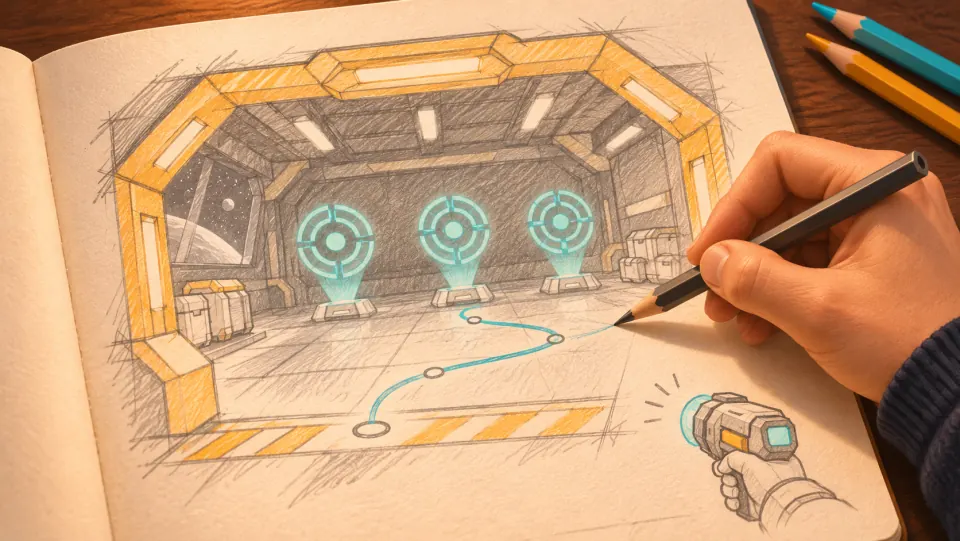
The player enters a space hangar and has to move into position to hit three holographic targets.
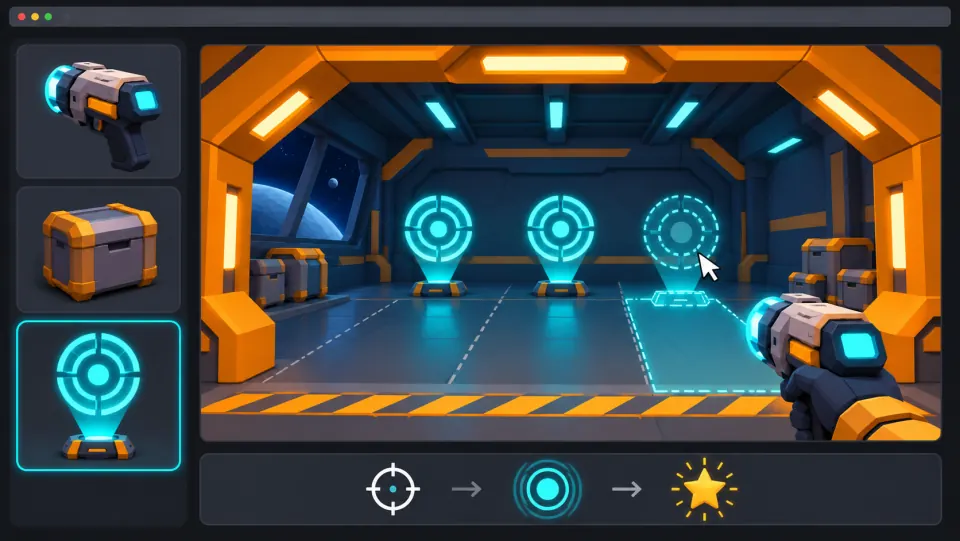
Ask seeleAgent to build the hangar, place the targets, and add first-person controls, hit effects, and scoring.
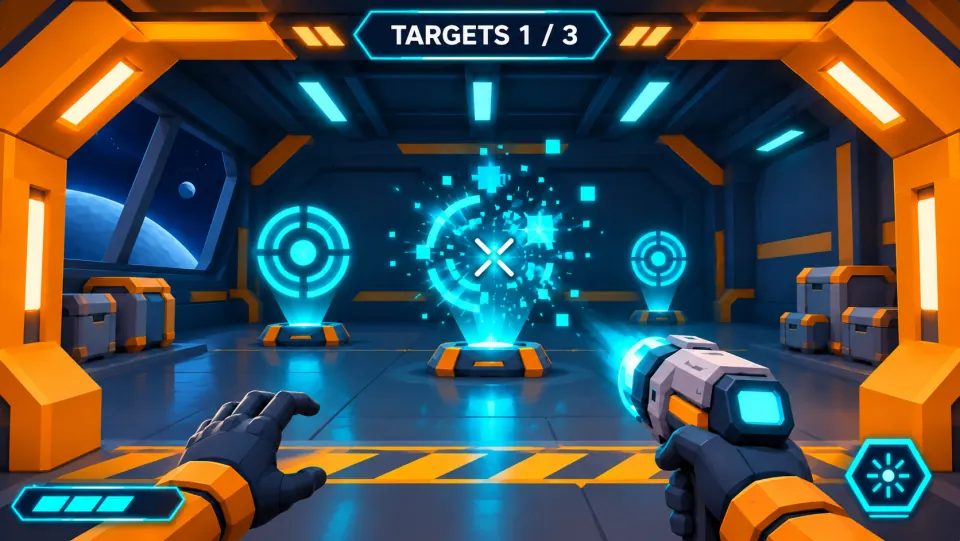
Aim and fire at a target. It should burst into pixels on impact, and the hit counter should go up.
Make a game for freePick a starting point
Work on timing, counterplay, deck rewards, or feedback for card actions.
Show the draw, resource change, play, response, and end condition in order.
Design the first turn of an original two-player card battler. Each player draws one card, gains two energy, and may play one creature or tactic. Show the turn order, one example hand, the opponent’s response, and the condition that ends the round. Use made-up card names and keep the rules to three effects.
 Make each turn easy to follow ↗
Why SEELE
A clear sequence makes it easier to judge whether individual effects fit.

State what the card changes and what it costs to play.

Offer upgrades, additions, and removals with distinct trade-offs.

Show energy, targets, health, and discard changes as they happen.

A powerful effect is easier to balance when opponents have a response.

Use a short match to find confusing timing or effects before expanding the deck.
Made with SEELE
These games are playable. Pick one and give it a try.
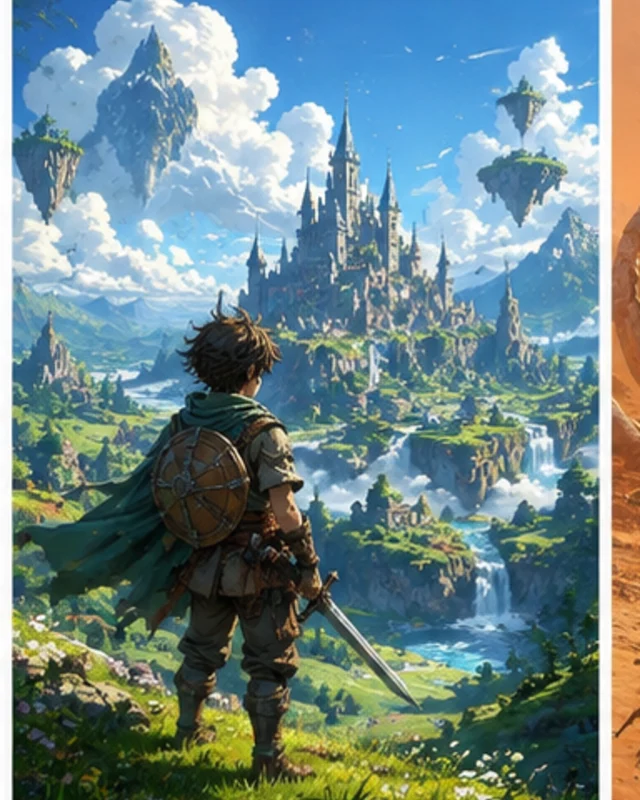
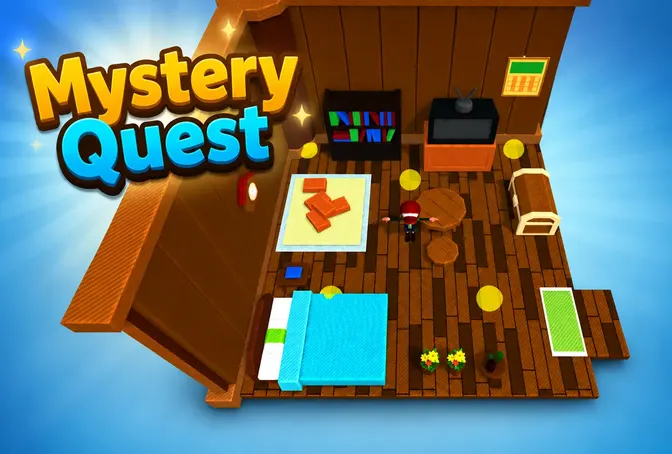 AdventureAdventure GamePlay the example ↗
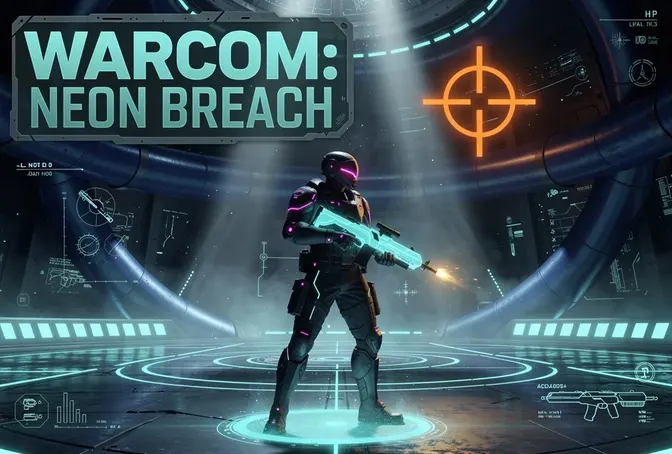 ShooterWarcom: Neon BreachPlay the example ↗
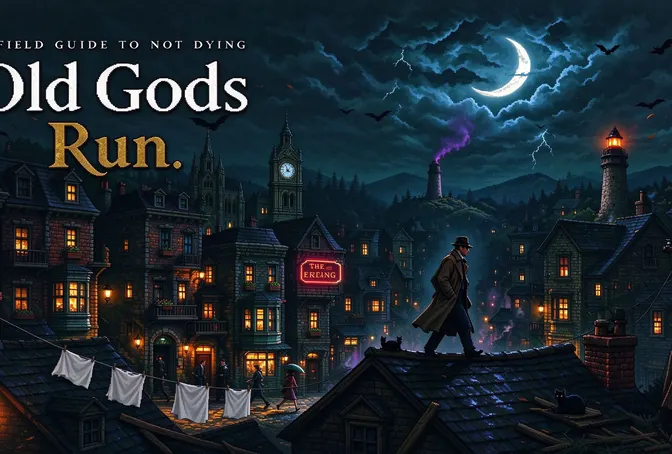 ActionOld Gods RunPlay the example ↗
 CasualCaution! Egg on the Car RoofPlay the example ↗
 RunnerNeon Night Rush: Barrier DashPlay the example ↗
 PuzzleMuseum ExhibitionPlay the example ↗
 SimulationMilky Way Idle 3DPlay the example ↗
 CasualSnowfall & Starry GiftsPlay the example ↗
 RPGCrownfall-The-Three-Realms-CoverPlay the example ↗
 SimulationFLYING CARPlay the example ↗
Who it’s for
A compact ruleset gives designers and teams a shared test before building a large card pool.
Set turn order, card effects, and a win condition for a first playable test.
Simulation Builder ↗
Explain rules and edge cases before building a full card set.
AI Game Generator from Prompt ↗
Compare reward choices and how they change a deck over a run.
AI Game Generator for Unreal Engine (UE5) ↗Compare
Clear timing and visible costs help players understand why a choice matters.
| Feature | A testable card game ruleset | A large card list without a clear turn |
|---|---|---|
| Turn | Draw, resource change, action, and response are ordered | Players guess when an effect resolves |
| Card text | Cost, target, and outcome are easy to parse | One card combines several hidden rules |
| Balance | Strong effects include a clear risk or counterplay | A powerful card has no meaningful response |
| Progression | Rewards offer different deck trade-offs | Every reward only adds another card |
| Playtest | A small match checks timing and clarity | A large card pool is written before rules are tested |
Reviews
Explore related game design pages for the next prototype step.
FAQ
It can help outline a card game loop, turn sequence, effects, encounters, or deck rewards. Review the rules in a small match before expanding the card pool.
Name the cost, target, timing, and result. Use one main effect per card while testing, then add keywords once the basic rules are clear.
Define the order for drawing, gaining resources, playing cards, resolving responses, and ending the turn. Keep the same order unless a card explicitly changes it.
Give it a cost, limitation, or counterplay that players can see. Test it in several match states rather than judging from a single ideal use.
Yes. Describe how players gain, upgrade, remove, or transform cards, and what trade-off each reward creates.
Start with enough cards to test the core turn and a few distinct choices. Add more only after players understand the current effects.
Give each option a different cost or use case. A choice matters when it changes the next turn, manages a risk, or supports a different strategy.
State whether the effect happens when played, at turn start, after combat, or when a condition is met. Test edge cases where two effects trigger together.
You can plan multiplayer rules, but implementation and network behavior require separate development and testing. Define turn ownership, disconnect handling, and how simultaneous actions resolve.
A generated outline or prototype is not a finished release. Review rules, balance, implementation, art, accessibility, and playtest feedback before shipping.
You can outline card types, deck limits, and progression. If cards are sold or traded, also define ownership, fairness, and marketplace rules before implementation.
Make cost, target, effect, and current state visible. Check text at the smallest screen size and provide a clear response for unavailable actions.
Use original material or content you have rights to use. A genre reference does not grant permission to copy protected characters, names, or artwork.
Play through complete matches, check timing and edge cases, review balance across different hands, and make sure players can understand every card state.
Describe the goal, the player’s choices, and what ends the round.
Plan a card game →