
Seele AI · Create
AI Game Quest Writer for Quest Writing
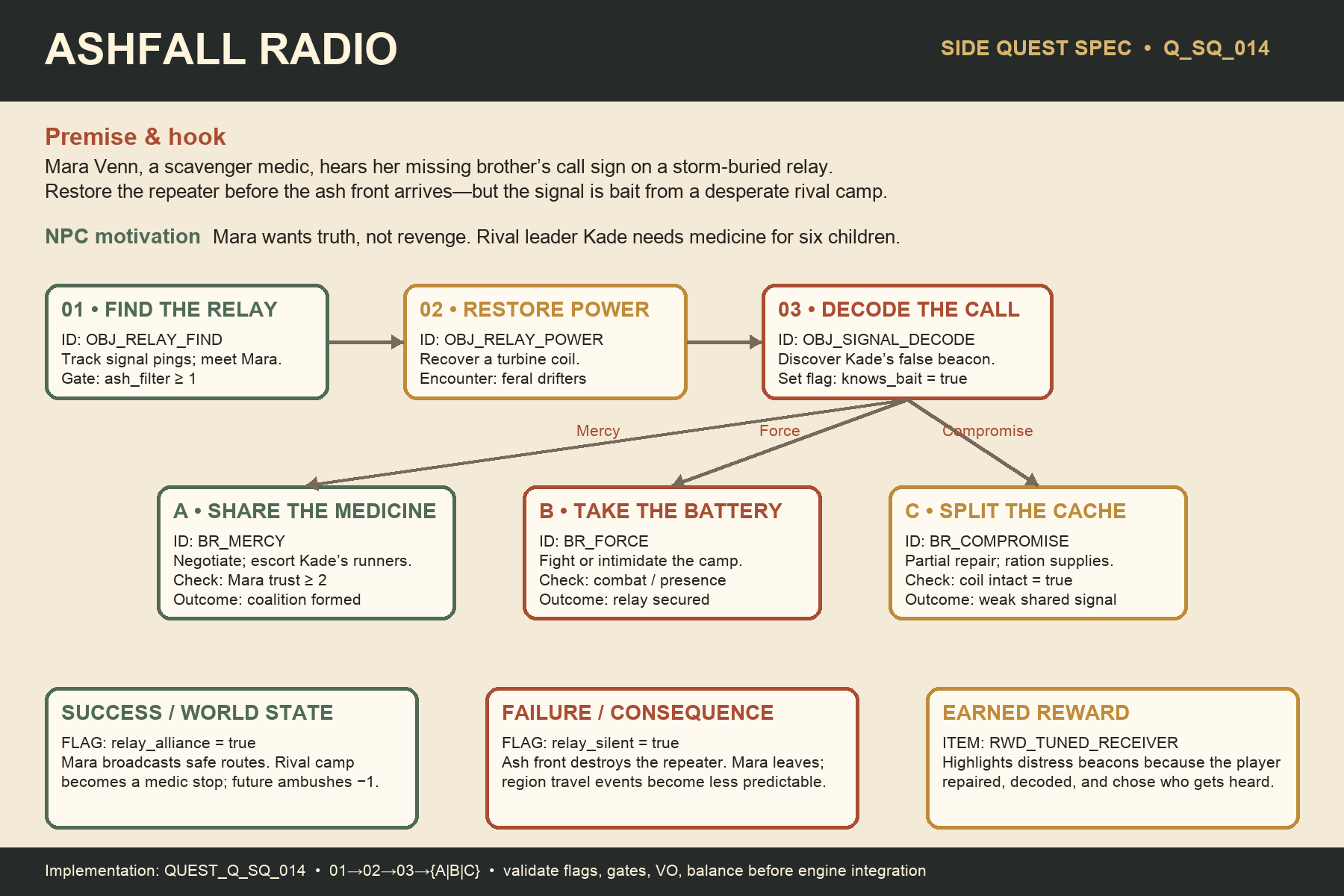
Write branching side quests with rewards that feel earned.
An AI game quest writer helps designers turn a story hook into a reviewable side-quest specification: premise, NPC motivations, objective chain, branch gates, success, failure and partial outcomes, world-state consequences, earned reward logic, dialogue and encounter beats, plus IDs and state notes for an implementation handoff.
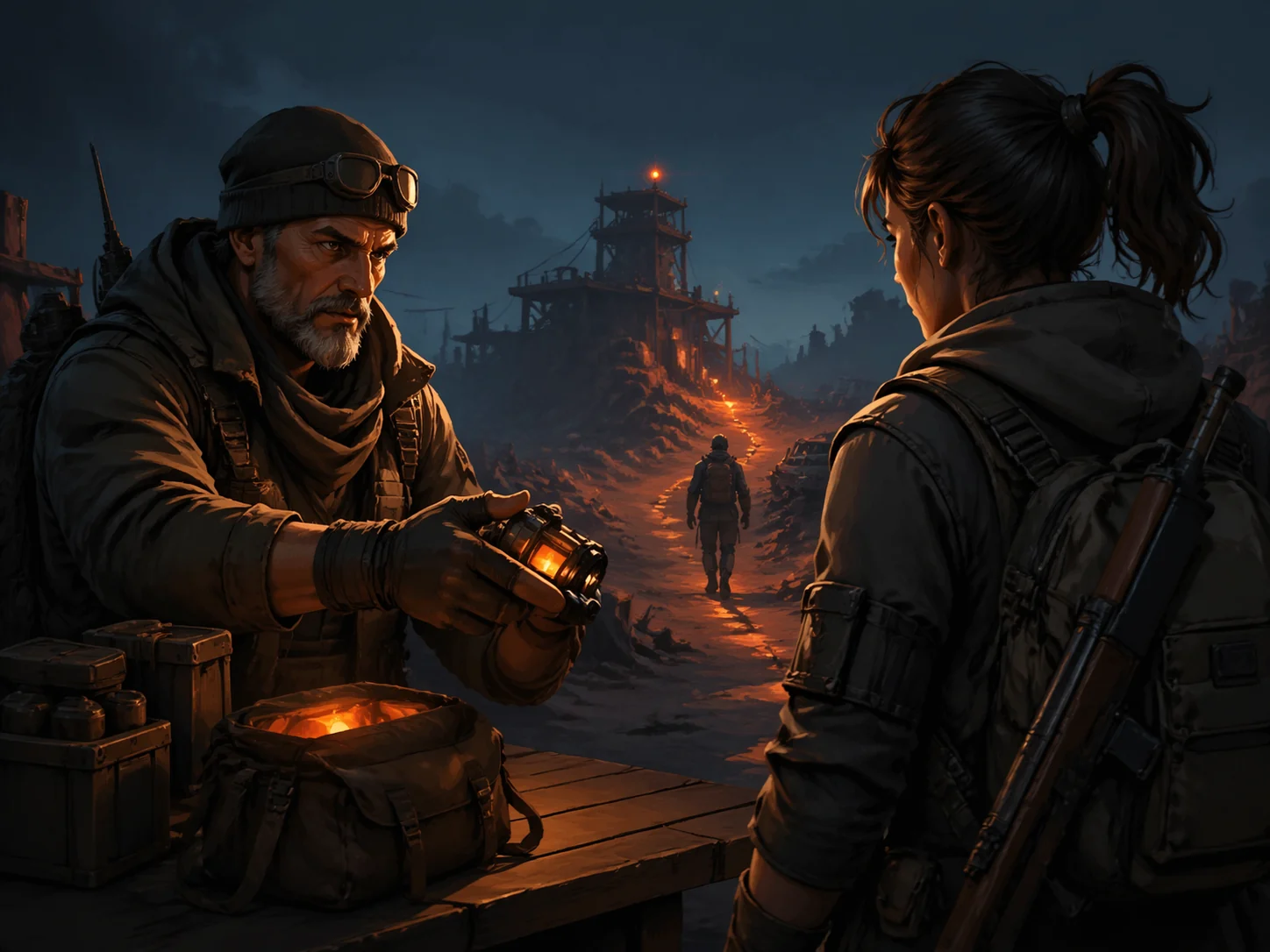
The working loop
Shape A Branching Quest That Ships
Move from narrative intent to a testable design handoff without hiding the human decisions.
Frame Premise And Motivations
Describe the setting, player hook, NPC goals, tone, constraints, and intended playtime. The draft establishes stakes, conflicting motivations, and the reason the player becomes involved.
Build Objectives And Branches
Choose objective order, gates, decision points, encounter beats, and information revealed before each choice. The quest is organized into states with meaningful branch costs and reachable outcomes.
Review Outcomes And Handoff
Check success, failure, partial outcomes, consequences, reward rationale, edge cases, and scope. The design becomes a structured handoff for engine mapping and team review.
What leaves the page
Quest Artifacts Ready For Review
Branching Quest Specification
A readable premise, NPC motivation set, objective chain, gates, branches, dialogue beats, and encounter beats.
Outcome And Reward Matrix
Success, failure, and partial states tied to consequences, world-state changes, and a journey-justified reward.
Implementation State Notes
Stable IDs, flags, transitions, conditions, inventory checks, and edge cases for mapping into a state machine or JSON schema.
Fit and limits
Draft Faster, Keep Design Judgment Human
Best for
- Exploring side-quest premises and hooks before scripting begins
- Comparing branch gates, consequences, and reward rationales in one reviewable structure
- Preparing quest IDs and state notes for a narrative-design and engineering handoff
Still needs human review
- Narrative continuity, cultural sensitivity, accessibility, localization, tone, and player agency
- Combat difficulty, reward economy, pacing, exploit paths, save-state behavior, and QA coverage
- Final state-machine or JSON implementation, engine integration, dialogue recording, and production approval
- The Ashfall Radio proof is an illustrative generated sample, not a Seele UI screenshot, not playable gameplay, and not an integrated game.
Before you start
FAQ
What does an AI game quest writer create?
An AI game quest writer can turn a premise into a structured quest draft with NPC motivations, objectives, gates, branches, dialogue or encounter beats, outcomes, consequences, and reward logic. Treat that draft as design material: a human designer should test pacing, continuity, tone, difficulty, and whether every choice maps cleanly to implementation states.
How do I make branching side quests feel meaningful?
Give each branch a different cost, beneficiary, and world-state consequence rather than changing only the final line of dialogue. Define the information or inventory gate that unlocks each choice, show what the player learns before deciding, and carry the result into later encounters, NPC availability, faction attitude, or travel conditions.
Can this workflow write success, failure, and partial outcomes?
Yes. Ask for explicit completion states and define what persists after each one. A success state can unlock an ally, failure can remove an opportunity without ending the campaign, and a partial outcome can preserve one resource while sacrificing another. Review every state to ensure the campaign remains playable and narratively coherent.
How should a quest reward feel earned?
Connect the reward to the actions, people, and systems the player engaged with. A tuned receiver is justified after repairing and decoding a radio relay; a faction token makes sense after building trust. Avoid unrelated loot, and verify that mechanical value, economy balance, narrative symbolism, and acquisition timing all support the journey.
Can I hand the quest draft to a game engine?
Use the draft as an implementation handoff, not engine-ready code. Request stable quest, objective, branch, item, dialogue, and world-state IDs plus entry conditions and completion flags. Then map those notes into your own state machine, JSON schema, scripting system, localization pipeline, save data, and QA test cases with engineering review.
Is the Ashfall Radio diagram a Seele product screenshot?
No. It is an original illustrative generated sample created for this page to demonstrate the requested one-page quest specification. It is not a Seele UI screenshot, not playable gameplay, and not an integrated game. Its IDs, characters, locations, branches, rewards, and consequences are fictional design examples that still require human review.
Next move
Build AI Game Quest Writer for Quest Writing faster in Seele AI
Turn a rough creation goal into a clearer prompt, direction, and next step inside Seele AI.