

Make report timing visible
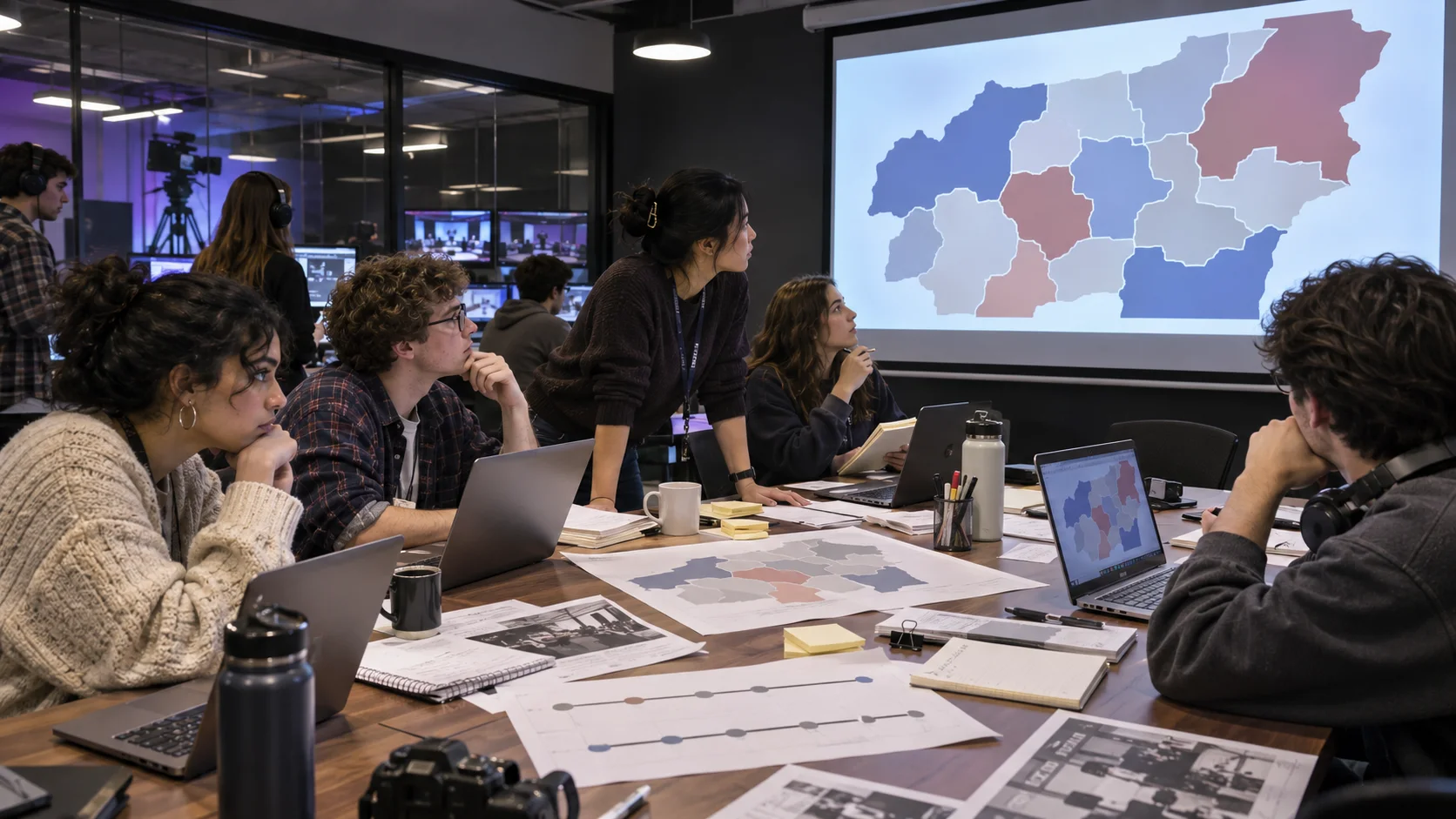
Show which fictional districts have reported and which are still waiting for a later batch.

Follow delayed reports, changing uncertainty, and the choices behind a clear explanation. Design a nonpartisan election-night simulation using invented districts and outcomes. Show how reporting batches arrive, what remains uncertain, and how a newsroom can explain the count without presenting a forecast or live result.
Partners and teams

















How it works
Build your own single-player racing game. Design a coastal track, add nitro boosts and checkpoints, then race against the clock.

Imagine a silver sports car racing past waterfalls, cherry blossoms, and neon gates.
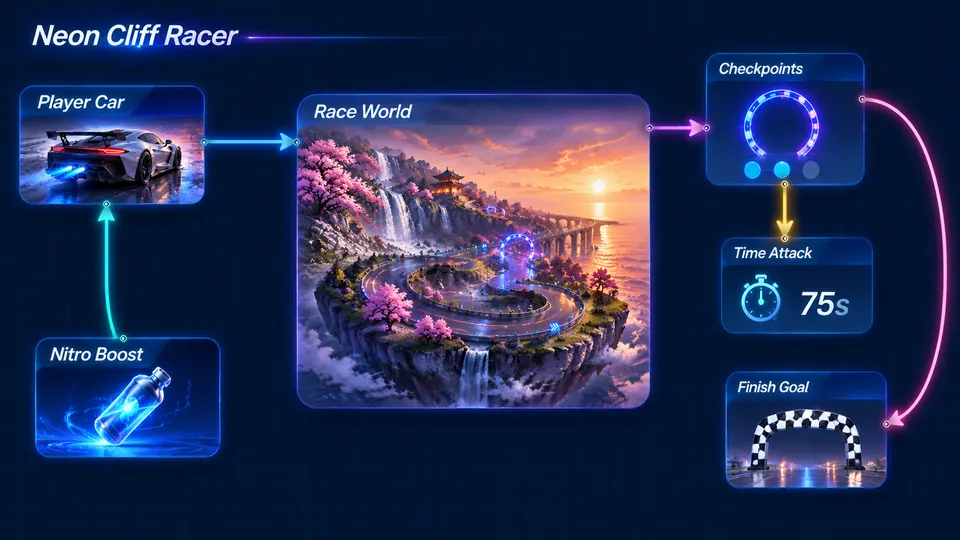
Connect your sports car, coastal track, checkpoints, nitro boost, and finish line.
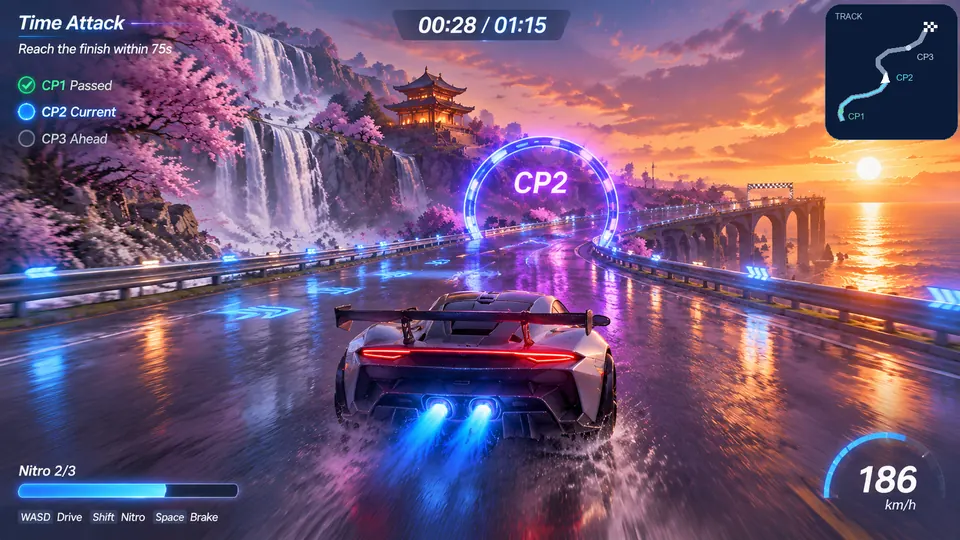
Drive through three neon gates, activate nitro, and finish within 75 seconds.
Make a game for freePick a starting point
Explore reporting delays, uncertainty labels, newsroom choices, and a media-literacy debrief.
Use made-up jurisdictions and arrivals so players can follow how partial information becomes a fuller count.
Create an election-night learning scenario for three fictional districts: Harbor, Pine, and Mesa. Give each district an invented number of ballots and have reports arrive in two batches at different times. Label every figure fictional, show which districts have not reported, and avoid declaring a winner until the scenario’s stated counting rule is met.
 Stage reports in clear batches ↗
Why SEELE
Show which fictional districts have reported and which are still waiting for a later batch.

Label what has been reported, what is assumed for the scenario, and what remains unknown.

Give the player a reason to explain uncertainty without treating a partial lead as a call.

Invent districts and numbers so the experience teaches process without making claims about a real race.

Ask players how to communicate a delay, a partial count, or a change in the scenario.

Review source labels, assumptions, and whether the player can distinguish reported information from a projection.
Made with SEELE
These games are playable. Pick one and give it a try.
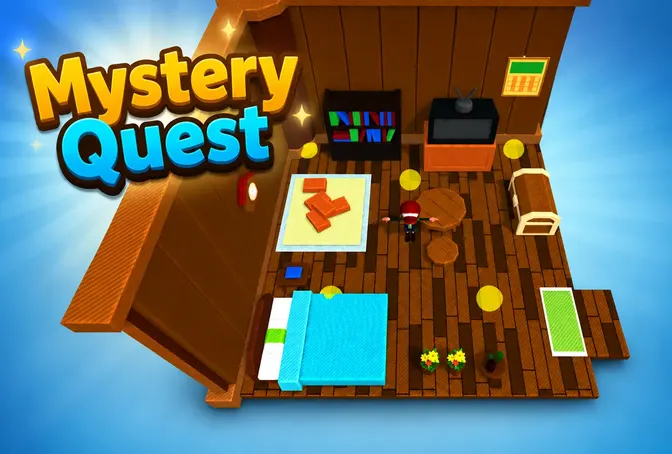 AdventureAdventure GamePlay the example ↗
 ShooterWarcom: Neon BreachPlay the example ↗
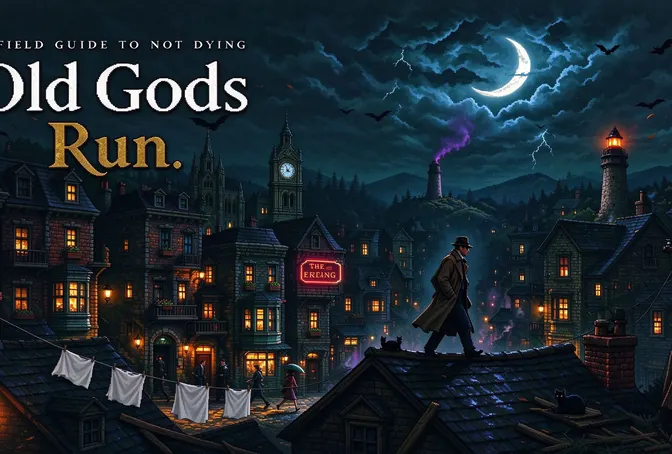 ActionOld Gods RunPlay the example ↗
 CasualCaution! Egg on the Car RoofPlay the example ↗
 RunnerNeon Night Rush: Barrier DashPlay the example ↗
 PuzzleMuseum ExhibitionPlay the example ↗
 SimulationMilky Way Idle 3DPlay the example ↗
 CasualSnowfall & Starry GiftsPlay the example ↗
 RPGCrownfall-The-Three-Realms-CoverPlay the example ↗
 SimulationFLYING CARPlay the example ↗
Who it’s for
Use an invented election scenario to discuss reporting and communication without making claims about a current race.
Use invented districts to walk learners through a count without relying on current results.
2026 Midterm Election Simulator ↗
Practice how an update can explain partial information and reporting delays clearly.
Create AI Dating Sim Maker with AI ↗
Create a nonpartisan interactive around counting, communication, and player decisions.
Interactive Election Story ↗Compare
The page supports a fictional learning scenario. Use verified official sources for live election information.
| Feature | Fictional election-night simulation | Live election coverage |
|---|---|---|
| Data source | Invented districts and scenario numbers | Live reporting that requires verified sources and updates |
| Main lesson | How reporting batches and uncertainty affect an explanation | Which candidate or party is leading |
| Player choice | Publish a labeled update, wait, or explain a delay | Call a real race or predict an outcome |
| Result labels | Clearly distinguish fictional counts from assumptions | Separate live counts, estimates, and projections from multiple sources |
| Intended use | Fictional learning or game-design exercise | Current election coverage from verified reporting organizations |
Reviews
Explore related simulation, story, and game-design pages for building an interactive lesson.
FAQ
No. This is a fictional simulator for learning or prototyping, not a source for live results, race calls, or forecasts.
Use invented jurisdictions by default. A historical or educational use of real places needs clear context and review so the scenario cannot be mistaken for current reporting.
Yes. Define fictional reporting batches, show which areas have not reported, and label every count and assumption as part of the scenario.
Choose a specific lesson, such as how partial reports arrive or how to communicate uncertainty. Avoid implying that a fictional result predicts a real election.
Separate reported totals from outstanding ballots, label the time and source within the scenario, and state that the count is incomplete.
A reported count describes ballots included in a published tally. A projection estimates an outcome using a method and available information. A simulation should label these separately and explain its assumptions.
For a general learning game, use invented people and parties. If a project includes real political figures, obtain editorial and legal review and make the context unmistakable.
It should not make real-world race calls. In a fictional scenario, state the game’s own completion rule and label the resulting outcome as invented.
Use fictional entities, balanced language, transparent scenario rules, and equivalent treatment of competing positions. Ask an independent reviewer to check framing and examples.
A delayed batch leaves part of the fictional count unknown. The player can decide how to communicate that uncertainty while waiting for the scenario’s next report.
You can design a fictional exercise around source labels, partial counts, and careful explanations. Review it with newsroom or civic-education specialists before using it as training material.
Show the fictional jurisdiction, reporting status, the values included so far, the scenario source label, and what remains unknown. Keep assumptions visible.
Check whether players can tell what is fictional, distinguish a count from a projection, identify missing information, and explain uncertainty without overstating the result.
No. It does not provide current election data or predictions. Consult official election authorities and established news organizations for real-world information.
Use invented districts and reporting batches to explore how a careful result explanation works.
Start a fictional scenario →