
Seele AI · Create
Create Slides
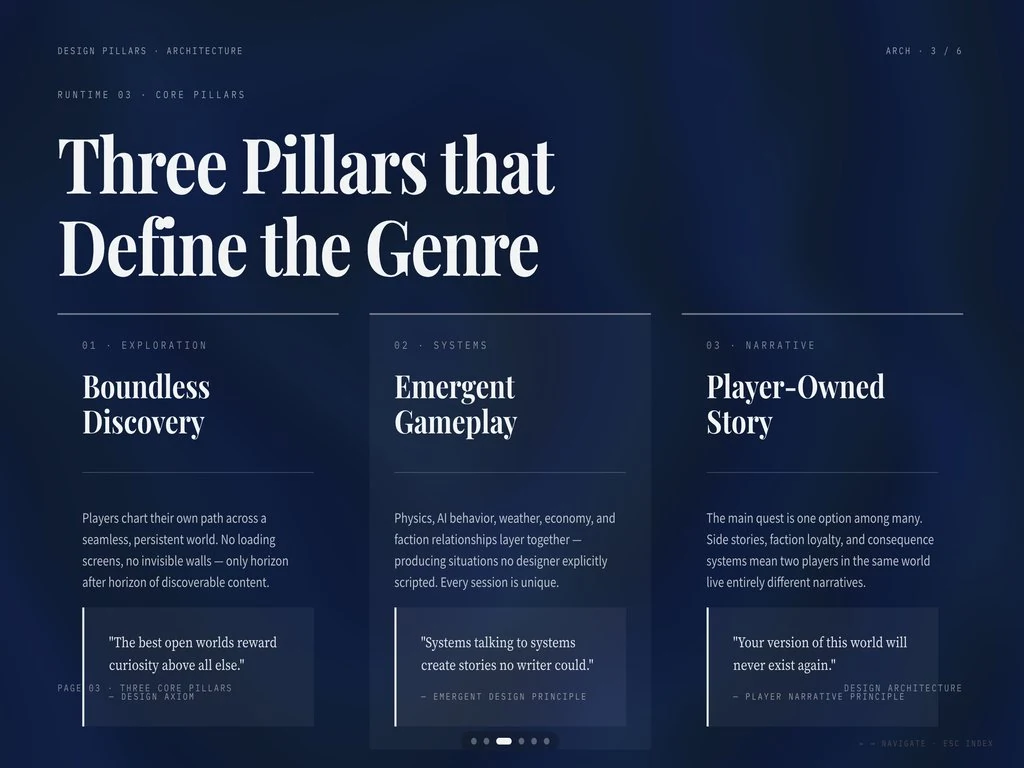
Build a web slide deck that pitches your game's core hook.
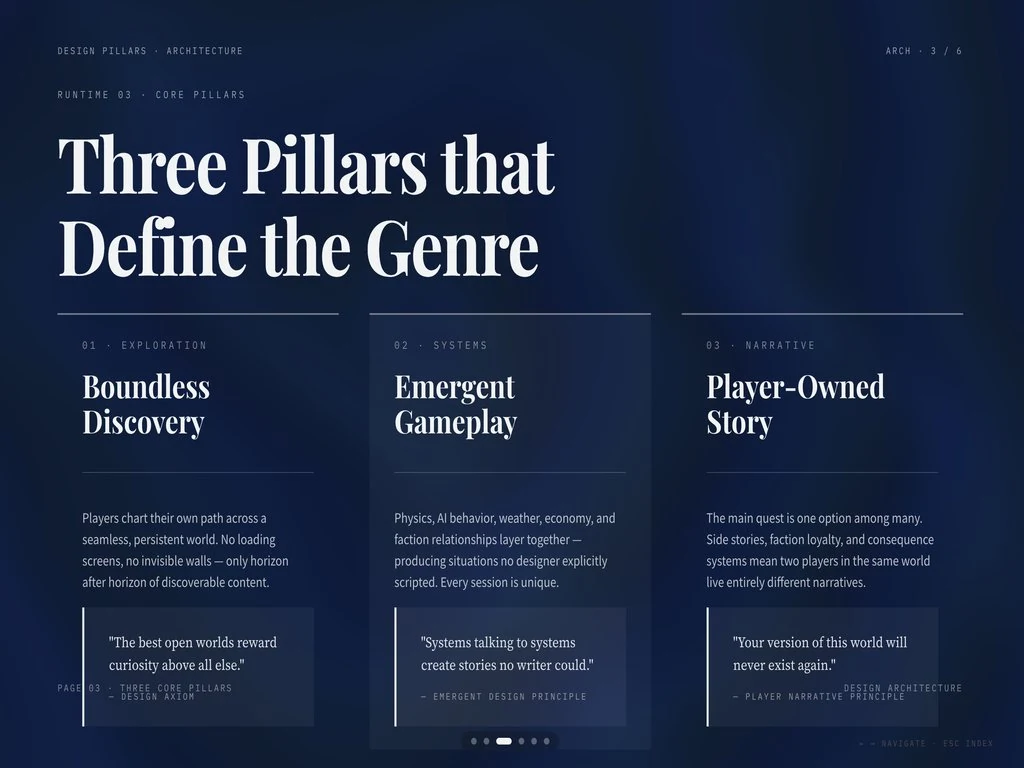
Use this game pitch web slider generator to shape an open-world concept into a focused six-slide deck with a clear hook, gameplay pillars, player journey, and next step.
The working loop
Shape The Pitch In Three Passes
Move from the core player promise to a reviewable six-slide story.
Define The Core Hook
Describe the world, player role, target audience, and the one idea the deck must sell. Seele organizes the premise and identifies the strongest pitch angle.
Generate Six Slides
Run the prompt and keep one decision or message on each page. Seele drafts a web slider covering the hook, pillars, loop, world, progression, and next step.
Review And Refine
Correct unsupported claims, scope the mechanics, and request tighter copy or visual direction. Seele applies the feedback while preserving the deck structure.
What leaves the page
Pitch Artifacts You Can Review
Each output keeps the concept concrete without pretending the underlying game is already built.
Six-Slide Story
A page-by-page narrative from core hook to next step.
Gameplay Pillars
Named principles that connect player actions, systems, and progression.
Review Checklist
Specific decisions to validate for scope, claims, audience, and production risk.
Fit and limits
Use The Deck As A Pitch Draft
Best for
- Turning an open-world concept into a concise six-slide narrative
- Aligning collaborators around the hook, player fantasy, and design pillars
- Exploring alternative positioning before investing in a full pitch deck
Still needs human review
- Validate that gameplay, platform, schedule, and scope claims match the actual project
- Confirm market, audience, legal, brand, and investor-facing statements before sharing
- Prototype the mechanics and review final visual quality; a slide draft does not prove feasibility
Before you start
FAQ
What should a six-slide game pitch include?
A useful six-slide structure covers the core hook and player fantasy, the design pillars, the moment-to-moment gameplay loop, the world and progression, the intended audience or differentiation, and a clear next step. Adjust the order when a specific mechanic or visual identity is the strongest selling point.
Can I use the generator for a game that is still an early concept?
Yes. Treat the deck as a structured concept draft. Mark assumptions clearly, avoid presenting unbuilt mechanics as finished features, and use human review plus prototypes to validate feasibility before making production or publishing commitments.
How specific should the prompt be?
Include the genre, player role, core fantasy, world premise, two or three differentiating systems, audience, tone, and the decision the deck should support. Concrete constraints produce a more focused pitch than broad requests such as making an exciting open-world game.
Does the generated slider prove the gameplay will work?
No. A slider communicates design intent; it is not evidence of a playable build, technical feasibility, market demand, schedule, budget, or production quality. Validate those areas with prototypes, research, estimates, and the appropriate human reviewers.
Next move
Build Slides faster in Seele AI
Turn a rough creation goal into a clearer prompt, direction, and next step inside Seele AI.